
Buying Guide
The Best USB4 Docks with 10GbE: Picks and Trade-offs
We looked at 4 USB4 docks with 10GbE side by side, with the trade-offs that separate them and who each one suits.
By Jamie Cole, Lead Product Researcher
9 min read4 products evaluated
We may earn a commission from purchases made through links in this guide. Learn more.
A dock with genuine built-in 10 Gigabit Ethernet, not just a standalone USB-C to 10GbE adapter, is aimed squarely at professionals who need fast, reliable NAS or server access alongside display and storage expansion, and these docks consistently cluster in the premium price tier.
We compared this lineup on real 10GbE port count, thermal management under sustained network load, and Thunderbolt generation requirements, since delivering consistent 10Gbps network throughput alongside high-bandwidth displays and storage requires robust internal engineering.
Quick Picks
Our 4 recommendations at a glance. Tap a pick for the full verdict.

Best Overall
OWC Thunderbolt 5 Dual 10GbE Network Dock
Buyers who want dual 10GbE ports for two separate high-speed network connections
Our take Check price for OWC Thunderbolt 5 Dual 10GbE Network Dock (opens in a new tab)

Best with Built-in Storage
Sonnet Echo 21 Thunderbolt 5 SuperDock
Buyers who want built-in NVMe storage combined with genuine 10GbE networking
Our take Check price for Sonnet Echo 21 Thunderbolt 5 SuperDock (opens in a new tab)
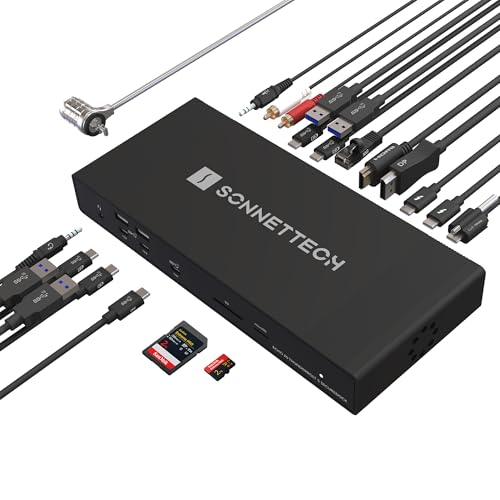
Best Value
Sonnet Echo 20 Thunderbolt 5 SecureDock
Buyers who want the same core 10GbE capability as the Echo 21 without the storage slot premium
Our take Check price for Sonnet Echo 20 Thunderbolt 5 SecureDock (opens in a new tab)

Best for Mac Pro Workflows
iVANKY 26-in-1 FusionDock Ultra
Buyers who specifically own a MacBook Pro M-Series Max and need maximum RAID and display connectivity
Our take Check price for iVANKY 26-in-1 FusionDock Ultra (opens in a new tab)
Our Picks
Best Overall1 of 4
OWC Thunderbolt 5 Dual 10GbE Network Dock on Amazon (opens in a new tab)
5GbE port on the front, give it more network connectivity than any single-10GbE-port dock in this comparison, ideal for setups needing simultaneous connections to two separate high-speed networks.
Best for
- Buyers who want dual 10GbE ports for two separate high-speed network connections
Why we like it
Its 3 Thunderbolt 5 ports each support up to 80Gb/s bi-directional data and 120Gb/s display bandwidth.
Compared to the Sonnet picks below, this one's display support scales up to three 8K@60Hz displays with DSC, or two 8K@120Hz, flexible high-resolution combinations. Its 2-year OWC limited warranty and detailed OS compatibility requirements (specific macOS and Windows version minimums by host chip) reflect a thoroughly documented enterprise-grade product.
Best for buyers who want dual 10GbE ports for connecting to two separate high-speed networks simultaneously.
Key dimensions & specs
- 2x 10GbE + 1x 2.5GbE ports
- 3x Thunderbolt 5 ports, 80Gb/s data + 120Gb/s display
- Up to three 8K@60Hz or two 8K@120Hz displays
Pros
- Dual 10GbE ports, more network connectivity than single-port competitors
- Flexible high-resolution display support up to three 8K@60Hz
- Detailed documented OS version requirements by exact host chip
Cons
- Requires specific minimum macOS/Windows versions by host generation
- Same price as the Sonnet Echo 21 despite no built-in SSD slot
Best with Built-in Storage2 of 4
Sonnet Echo 21 Thunderbolt 5 SuperDock on Amazon (opens in a new tab)
2 NVMe SSD slot supporting up to 8TB is a distinct feature versus the OWC pick above, letting you add fast internal-feeling storage directly to the dock alongside its 10Gb Ethernet networking.
Best for
- Buyers who want built-in NVMe storage combined with genuine 10GbE networking
Why we like it
Its 21 total interfaces include 3 Thunderbolt 5 ports, 9 USB ports at 10Gbps, HDMI, DisplayPort, SD and microSD readers, and audio I/O.
Compared to the OWC pick above, this one trades a second 10GbE port for integrated SSD expansion, a different feature tradeoff depending on whether networking or storage matters more to your workflow. Its 140W Power Delivery covers demanding laptops while the single Thunderbolt cable handles data, video, storage, and charging simultaneously.
Best for buyers who want built-in NVMe storage expansion combined with genuine 10GbE networking.
Key dimensions & specs
- Built-in M.2 NVMe slot, up to 8TB
- 10Gb Ethernet, 21 total interfaces
- 140W Power Delivery, up to 80Gbps data
Pros
- Built-in NVMe storage expansion alongside 10GbE networking
- 21 total interfaces cover nearly every peripheral need
- 140W charging handles demanding laptops in a single cable
Cons
- Single 10GbE port versus the OWC pick's dual ports
- SSD sold separately, adding to the total cost
Best Value3 of 4
Sonnet Echo 20 Thunderbolt 5 SecureDock on Amazon (opens in a new tab)
This dock specifically states its 10GbE networking is designed for ultra-fast connections to NAS systems using standard Cat6 or Cat6A cabling, a practical detail for buyers planning a network-attached storage workflow.
Best for
- Buyers who want the same core 10GbE capability as the Echo 21 without the storage slot premium
Why we like it
Its 20 total interfaces closely mirror the pricier Echo 21's connectivity without the built-in NVMe slot, delivering the lowest price among the premium 10GbE docks in this comparison.
Compared to the Echo 21 pick above, this one is $50 less while retaining the same 3 Thunderbolt 5 ports, 9 USB ports at 10Gbps, HDMI, DisplayPort, and 10Gb Ethernet, making it the better value if you don't need integrated SSD storage. Its 140W Power Delivery matches the Echo 21's laptop charging capability.
Best for buyers who want the same core 10GbE and display capability as the Echo 21 without paying for a storage slot they may not use.
Key dimensions & specs
- 10Gb Ethernet with standard Cat6/Cat6A support
- 3x Thunderbolt 5 ports, 20 total interfaces
- 140W Power Delivery, up to 80Gbps data
Pros
- Lower price than the Echo 21 with nearly identical core connectivity
- Specifically documented for standard Cat6/Cat6A NAS networking
- Same 140W charging and Thunderbolt 5 performance as the pricier Echo 21
Cons
- No built-in NVMe storage slot like the Echo 21
- Still a premium price relative to non-10GbE docks
Best for Mac Pro Workflows4 of 4
iVANKY 26-in-1 FusionDock Ultra on Amazon (opens in a new tab)
This dock is specifically engineered exclusively for the Mac ecosystem, described as the world's first docking station utilizing dual 80/120Gbps silicon architecture, delivering display support up to two 8K@60Hz or four 6K@60Hz monitors simultaneously on MacBook Pro M-Series Max systems.
Best for
- Buyers who specifically own a MacBook Pro M-Series Max and need maximum RAID and display connectivity
Why we like it
Its triple-layer thermal system combines an NTC-controlled fan, internal copper heat sinks, and a floating chassis design creating a chimney effect for sustained cooling during 24/7 operation.
Compared to the OWC and Sonnet picks above, this one's 4 dedicated 80/120Gbps downstream ports are specifically designed for connecting multiple high-speed RAID arrays simultaneously while maintaining 140W PD passthrough. Its 26-in-1 interface count includes an Optical Audio Toslink port for lossless sound and an independent 45W PD USB-C port specifically for fast-charging an iPad or iPhone without extra adapters.
Best for buyers who specifically own a MacBook Pro M-Series Max and want maximum display and RAID array connectivity.
Key dimensions & specs
- Dual 80/120Gbps silicon, Mac-exclusive
- 10Gbps Ethernet, 4x 80/120Gbps downstream ports
- Triple-layer thermal system for 24/7 sustained operation
Pros
- novel dual-silicon architecture for maximum Mac throughput
- Triple-layer cooling specifically engineered for sustained 24/7 use
- Independent 45W USB-C port for fast-charging phones and tablets
Cons
- Highest price in this comparison at $649.99
- Exclusively designed for Mac, not compatible with Windows workflows
How We Chose These USB4 Docks with 10GbE
Each pick was assessed across 5 criteria weighted for real-world use.
- Compared single versus dual 10 Gigabit Ethernet port configurations.
- Compared cooling designs for sustaining high-bandwidth network and data throughput.
- Compared docks offering integrated NVMe SSD slots against pure connectivity-focused designs.
- Compared cross-platform compatibility against Mac-exclusive engineering.
- Compared overall port and connector count beyond just networking.
What to Look for in a USB4 Dock with 10GbE
Key buying criteria so you get the right fit the first time.
Docks With Built-in 10GbE Consistently Cost More Because the Underlying Network Chip and Cooling Requirements Are More Complex
99 or higher, reflecting the real engineering cost of integrating genuine 10 Gigabit Ethernet alongside Thunderbolt 5 data and display bandwidth in a single dock, since 10GbE controllers generate meaningfully more heat and require more sophisticated power delivery than standard Gigabit Ethernet. 5GbE or standard Gigabit Ethernet, where the price jump reflects genuine hardware complexity rather than pure brand markup. 5GbE dock options, since this reflects real component and engineering cost differences, not just marketing positioning.
Dual 10GbE Ports Serve a Different Use Case Than a Single 10GbE Port Plus Storage Expansion
The OWC pick's two independent 10GbE ports let you maintain simultaneous connections to two separate high-speed networks (for example, a production network and a backup network), a capability the single-10GbE-port Sonnet picks can't replicate regardless of their other strengths like built-in NVMe storage. This matters if your specific workflow requires dual independent high-speed network connections, and matters less if a single 10GbE connection to one network, paired with local NVMe storage instead, better serves your actual needs. Determine whether your workflow needs two independent 10GbE network connections or would benefit more from a single 10GbE port paired with built-in local storage before choosing between the OWC and Sonnet approaches.
Advanced Thermal Design Becomes Necessary to Sustain Peak Bandwidth During Extended High-Load Use
The IVANKY pick's triple-layer thermal system, combining an NTC-controlled fan, internal copper heat sinks, and a floating chassis chimney-effect design, is specifically engineered to sustain its 120Gbps peak performance during 24/7 operation, a meaningfully more elaborate cooling approach than a simpler dock might use. This matters if you run the dock under sustained heavy load for extended periods, such as continuous RAID array access or all-day video editing sessions, where inadequate cooling could cause thermal throttling that reduces real-world performance, and matters less for lighter, intermittent use. Check a dock's specific stated thermal design approach if your typical workload involves sustained, maximum-bandwidth operation for extended periods rather than brief, occasional use.
Mac-Exclusive Dual-Silicon Architecture Delivers Maximum Throughput But Locks You Into a Single Platform
The IVANKY pick's dual 80/120Gbps silicon architecture is specifically engineered exclusively for the Mac ecosystem, unlocking display and bandwidth capabilities the listing describes as previously impossible on standard Mac docks, but this Mac-exclusive design means it offers no meaningful functionality if you ever need to use it with a Windows or Linux system. This matters if you're committed entirely to the Mac ecosystem and want the absolute maximum performance that platform-specific engineering can deliver, and matters significantly if there's any chance you'll need cross-platform compatibility in the future, where the OWC and Sonnet picks' broader compatibility would serve you better long-term. Consider your long-term platform commitment before choosing a Mac-exclusive dock over a cross-platform alternative with slightly different performance characteristics.
Standard Cat6 or Cat6A Cable Compatibility Determines Whether You Need Specialized Networking Infrastructure
The Sonnet Echo 20 SecureDock specifically confirms its 10GbE port works with standard Cat6 or Cat6A cabling rather than requiring specialized fiber or Cat6A-only infrastructure, meaning most existing home or office network cabling can support the connection without upgrades. This matters if you're integrating the dock into an existing network setup with standard cabling already in place, where confirmed Cat6/Cat6A compatibility avoids an unexpected infrastructure upgrade cost, and matters less if you're building a new network from scratch anyway. Check a dock's specific stated cable compatibility for its 10GbE port before assuming your existing network cabling will support the full 10Gbps speed.
How to Choose a USB4 Dock with 10GbE
| Dual 10GbE ports for two separate networks | OWC Thunderbolt 5 Dual 10GbE Network Dock |
|---|---|
| Built-in NVMe storage combined with 10GbE | Sonnet Echo 21 Thunderbolt 5 SuperDock |
| The same core capability at a lower price | Sonnet Echo 20 Thunderbolt 5 SecureDock |
| Maximum display and RAID connectivity for Mac Pro Max |
Cross-Platform Dock vs Mac-Exclusive Dock
- Works across Mac, Windows, Chromebook, and iPad Pro, giving genuine flexibility if your workflow spans multiple platforms.
- Engineered specifically for Mac's dual-silicon architecture, delivering maximum throughput but only for MacBook Pro M-Series Max systems.
If you work across Mac and Windows or use non-Mac devices, the OWC or Sonnet picks are the safer, more flexible choice. If you specifically own a MacBook Pro M-Series Max and want the absolute maximum Mac-optimized performance, the IVANKY pick delivers that.
| OWC Dual 10GbE Dock or Sonnet Echo 20 |
For NAS-Connected Home or Studio Networks Specifically
- A dock specifically documented to work with standard Cat6 or Cat6A cabling, so you can connect to your existing NAS setup without needing specialized network hardware.
- The Sonnet Echo 20 SecureDock specifically states its 10GbE is designed for ultra-fast NAS connections using standard Cat6 or Cat6A cabling.
- 99, the lowest price in this comparison.
Frequently Asked Questions
Do I need special networking equipment to use these docks' 10GbE ports?
The Sonnet Echo 20 specifically confirms compatibility with standard Cat6 or Cat6A cabling, so most existing network setups with reasonably modern cabling should support the full 10Gbps speed without needing specialized fiber infrastructure.
What's the most common mistake buyers make when choosing a USB4 dock with 10GbE?
5Gbps Ethernet, with genuine 10GbE consistently appearing only at this comparison's premium price tier.
Is the IVANKY FusionDock Ultra worth its significant price premium if I use both Mac and Windows devices?
No, since the IVANKY pick is specifically engineered exclusively for the Mac ecosystem, buyers who need cross-platform compatibility should choose the OWC or either Sonnet pick instead, which all support Mac, Windows, Chromebook, and iPad Pro.
How do I decide between the OWC's dual 10GbE ports and the Sonnet Echo 21's built-in NVMe storage?
If your workflow requires two independent high-speed network connections simultaneously, the OWC's dual ports serve that specific need, but if local fast storage matters more than a second network connection, the Sonnet Echo 21's built-in NVMe slot is the better fit.
Will these docks work with older Thunderbolt 3 laptops, or do they require Thunderbolt 5?
The OWC pick specifically states Thunderbolt 3 support is available but Mac-only and requires a specific macOS version, so checking each pick's exact minimum host generation and OS version requirements for your specific device is worth doing before purchase.
Can I use the Sonnet Echo 21's built-in NVMe slot without buying a separate SSD?
2 NVMe SSD slot requires you to purchase and install a compatible SSD separately, as the dock itself only provides the enclosure and connection infrastructure, not the storage drive itself.
Bottom Line
Best overall: OWC Thunderbolt 5 Dual 10GbE Network Dock — best overall pick in this roundup. See the full verdicts above for every pick, with pros, cons and who each one suits.
Browse all usb4 docks with 10gbe on Amazon — Prime-eligible options with current pricing.