
Buying Guide
The Best Thunderbolt 3 SSD Enclosures for a Cleaner, More Useful Desk
We looked at 4 thunderbolt 3 SSD enclosures side by side, with the trade-offs that separate them and who each one suits.
By Jamie Cole, Lead Product Researcher
6 min read4 products evaluated
We may earn a commission from purchases made through links in this guide. Learn more.
Thunderbolt 3 remains present on older Macs and PCs and offers a genuine 40Gbps-class interface, but Sabrent is explicit that a device needs a real Thunderbolt 3 port, not just USB-C, for its EC-T3NS enclosure to work at all.
We verified which products in this cluster are Thunderbolt 3 certified versus 40Gbps USB4 devices that happen to also work on TB3 hosts, since the two are not the same claim.
Quick Picks
Our 4 recommendations at a glance. Tap a pick for the full verdict.

Best Overall
ACASIS TBU405 Pro 40Gbps NVMe Enclosure
Buyers prioritizing 40gbps via intel jhl7440, usb4/tb3/tb4
Our take Check price for ACASIS TBU405 Pro 40Gbps NVMe Enclosure (opens in a new tab)
Runner-Up
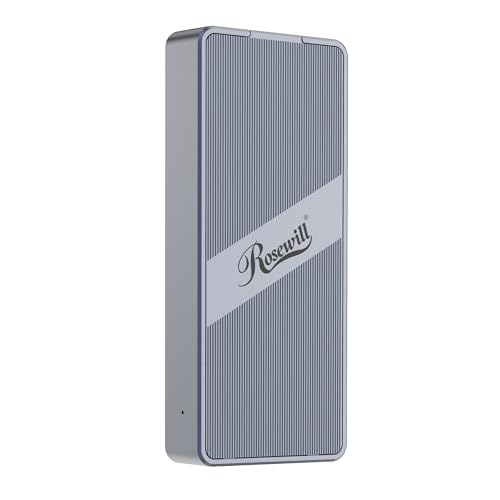
Rosewill RNE-01 40Gbps NVMe Enclosure
Buyers prioritizing up to 3,187mb/s via asm2464pd
Our take Check price for Rosewill RNE-01 40Gbps NVMe Enclosure (opens in a new tab)

Also Great
ANYOYO 40Gbps NVMe Enclosure
Buyers prioritizing up to 2,700mb/s, dual jhl7440 + rtl9210 chips
Our take Check price for ANYOYO 40Gbps NVMe Enclosure (opens in a new tab)

Budget Pick
ASUS ROG Strix Arion Enclosure
buyers prioritizing 10gbps usb-c 3.2 gen 2
Our take Check price for ASUS ROG Strix Arion Enclosure (opens in a new tab)
| Pick | Best for | Key spec | Price |
|---|---|---|---|
| Buyers prioritizing 40gbps via intel jhl7440, usb4/tb3/tb4 | 40Gbps via Intel JHL7440, USB4/TB3/TB4 | Check price for ACASIS TBU405 Pro 40Gbps NVMe Enclosure (opens in a new tab) |
| Buyers prioritizing up to 3,187mb/s via asm2464pd | Up to 3,187MB/s via ASM2464PD | Check price for Rosewill RNE-01 40Gbps NVMe Enclosure (opens in a new tab) |
| Buyers prioritizing up to 2,700mb/s, dual jhl7440 + rtl9210 chips | Up to 2,700MB/s, dual JHL7440 + RTL9210 chips | Check price for ANYOYO 40Gbps NVMe Enclosure (opens in a new tab) |
| buyers prioritizing 10gbps usb-c 3.2 gen 2 | 10Gbps USB-C 3.2 Gen 2 | Check price for ASUS ROG Strix Arion Enclosure (opens in a new tab) |
Our Picks
Best Overall1 of 4
ACASIS TBU405 Pro 40Gbps NVMe Enclosure on Amazon (opens in a new tab)
Built around the Intel JHL7440 certified chip for true USB4/Thunderbolt 4/3 compatibility with a dual-chip design, plus an integrated cooling fan and precision heat-dissipation holes to prevent thermal throttling under sustained load.
Best for
- Buyers prioritizing 40gbps via intel jhl7440, usb4/tb3/tb4
Why we like it
ACASIS tested read/write speeds up to 2,805/2,734 MB/s using a Samsung 980 Pro on a MacBook, and it supports 2230/2242/2260/2280 sizes for M1/M2/M3 Mac and PC hosts. Its compact, travel-friendly form factor targets pro users needing a genuine Thunderbolt-certified enclosure, not just a compatible one.
Key dimensions & specs
- 40Gbps via Intel JHL7440, USB4/TB3/TB4
- Tested 2,805/2,734 MB/s read/write
- Active cooling fan
Pros
- Intel JHL7440 is a certified Thunderbolt chip, not just compatible hardware
- Tested real-world speeds published (2,805/2,734 MB/s), not just theoretical link rate
- Active cooling fan with precision heat-dissipation holes
- Compact, travel-friendly form factor for pro use
Cons
- Requires Thunderbolt 4/3 or USB4 host for full speed
- Fan adds some operating noise
Runner-Up2 of 4
Rosewill RNE-01 40Gbps NVMe Enclosure on Amazon (opens in a new tab)
2 NVMe SSDs in 2230-2280 sizes, rated up to 3,187MB/s over the 40Gbps interface.
Best for
- Buyers prioritizing up to 3,187mb/s via asm2464pd
Why we like it
The built-in fan and vent design support up to 4 hours of sustained full-speed operation.
Features a transparent back plate showing internal components, and the compact RNE-01 form factor is built to fit in a pocket or bag for mobile professionals. Works across macOS and Windows, supports drives up to 8TB.
Key dimensions & specs
- Up to 3,187MB/s via ASM2464PD
- 2230-2280, up to 8TB
- Rated for 4 hours sustained full-speed operation
Pros
- Rated for 4 hours of sustained full-speed operation, not just a burst benchmark
- Transparent back plate for a distinctive look
- Same proven ASM2464PD chip used across several competitors
- Compact, pocket-friendly form factor
Cons
- 3,187MB/s is on the lower end of 40Gbps-class enclosures
- Speed varies notably by host system and SSD per Rosewill's own disclaimer
Also Great3 of 4
ANYOYO 40Gbps NVMe Enclosure on Amazon (opens in a new tab)
5GB file in a few seconds.
Best for
- Buyers prioritizing up to 2,700mb/s, dual jhl7440 + rtl9210 chips
Why we like it
The aluminum alloy shell pairs with a PWM turbo high-speed fan that automatically adjusts speed to maintain temperature while staying relatively quiet, supporting 2230/2242/2260/2280 SSDs up to 8TB (M and B&M key), not SATA NGFF or MSATA.
Key dimensions & specs
- Up to 2,700MB/s, dual JHL7440 + RTL9210 chips
- 2230/2242/2260/2280, up to 8TB
- PWM auto-adjusting fan
Pros
- Dual-chip design (JHL7440 + RTL9210) for broad host compatibility
- PWM fan automatically balances cooling against noise
- Supports up to 8TB across all four common M.2 sizes
- Tool-free installation, no drivers needed
Cons
- 2,700MB/s is on the lower end of 40Gbps-class enclosures
- No SATA support
Budget Pick4 of 4
ASUS ROG Strix Arion Enclosure on Amazon (opens in a new tab)
2 Gen 2, supporting 2230/2242/2260/2280 M-Key/B+M-Key NVMe SSDs, with an aluminum alloy ROG case and thermal pads pulling heat away from the drive.
Best for
- buyers prioritizing 10gbps usb-c 3.2 gen 2
Why we like it
ASUS Aura Sync RGB lighting synchronizes with a wider ecosystem of Aura Sync products for a coordinated gaming setup look, a differentiator most competitors don't offer. Ships with both a USB-C-to-C and USB-C-to-A cable, backed by a 1-year warranty.
Key dimensions & specs
- 10Gbps USB-C 3.2 Gen 2
- 2230/2242/2260/2280 NVMe
- ASUS Aura Sync RGB lighting
Pros
- ASUS Aura Sync RGB synchronizes with a broader ecosystem of Aura products
- Aluminum alloy case with thermal pads for heat dissipation
- Both USB-C-to-C and USB-C-to-A cables included
- Broad size compatibility (2230-2280)
Cons
- 1-year warranty is shorter than Satechi's or OWC's 2-3 year coverage
- 10Gbps ceiling versus newer 40/80Gbps ASUS-adjacent options
How We Chose These Thunderbolt 3 SSD Enclosures
Each pick was assessed across 5 criteria weighted for real-world use.
- Interface Protocol & Link Rate
- Verified the exact USB/Thunderbolt protocol and rated speed from each listing rather than assuming USB-C connector shape implies a specific bandwidth tier.
- Bridge Controller & Host Compatibility
- Checked which bridge chip each enclosure uses where published, and cross-referenced explicit host compatibility statements (Mac generation, Thunderbolt version, USB4 V1 vs V2) against real-world limitations sellers disclosed.
- 2 Size, Keying & SSD Compatibility
- 2 lengths (2230/2242/2260/2280), keying (M-Key vs B+M Key), and NVMe-versus-SATA protocol support rather than assuming universal compatibility.
- Thermal Design & Sustained Performance
- Weighed published tested throughput figures, fan trigger temperatures, and passive-versus-active cooling design over marketing language that repeats across nearly identical products.
- Prioritized genuine differentiators, RAID mode support, write-lock switches, health-monitoring displays, magnetic attachment systems, over generic "fast and durable" claims with nothing behind them.
What to Look for in a Thunderbolt 3 SSD Enclosure
Key buying criteria so you get the right fit the first time.
USB-C is a connector, not a speed
A USB-C port can carry 10, 20, 40, or 80Gbps depending on the underlying protocol. Require the exact USB/Thunderbolt protocol and link rate from the listing, not USB-C wording alone, before assuming an enclosure matches your host's real speed.
Check the bridge controller, not just the interface label
Two enclosures with the same 40Gbps label can behave differently depending on the bridge chip (ASM2464PD, JHL7440, RTL9210, and others each have different real-world characteristics). Where a listing names its controller, treat that as a real signal of build quality.
Verify NVMe-only versus NVMe+SATA support
Some enclosures in this category support only NVMe M-Key SSDs, others add SATA/NGFF support via M+B Key. Confirm which protocol your specific SSD uses before buying, since a mismatch means the drive simply won't work.
Separate peak benchmark speed from sustained performance
A short benchmark can hit peak speed even on a design that throttles heavily during long transfers. Favor listings that publish tested read/write numbers with a named SSD and host over theoretical link-rate claims alone.
2 size and keying before buying
2230, 2242, 2260, and 2280 SSDs are not interchangeable in every enclosure, and M-Key versus B+M Key compatibility varies by product.
Cable and host requirements can silently cap speed
A USB-C cable rated below the enclosure's maximum speed, or a host port that doesn't support the exact protocol claimed, will cap real throughput well below the advertised number. Check both before assuming full speed.
How to Choose a Thunderbolt 3 SSD Enclosure
Match the Interface to Your Host
Before buying, check your computer's exact port protocol, not just whether it has a USB-C connector.
| Any 10Gbps-rated pick above works at full speed | |
| Confirm the enclosure specifically states Gen 2x2 support, not just USB-C | |
| Thunderbolt / USB4 40Gbps or higher | Check for genuine Thunderbolt/USB4 certification, not just a compatible claim |
Interface speed, bridge controller sophistication, and cooling design all scale price in this category.
- A 10Gbps pick from this list covers most casual thunderbolt 3 ssd enclosures needs without paying for bandwidth you won't use.
- Video editing or large sustained transfers
- Step up to a 40Gbps USB4/Thunderbolt pick with active cooling to avoid thermal throttling mid-transfer.
- An 80Gbps Thunderbolt 5 enclosure or a RAID-capable multi-bay design is worth the premium if downtime or data loss has real cost.
Frequently Asked Questions
Does a faster enclosure automatically mean faster real-world transfers?
Real throughput depends on the SSD's own generation and speed, the bridge controller inside the enclosure, cable quality, and whether the host port actually supports the claimed protocol. A 40Gbps enclosure with a slow SSD won't outperform a 10Gbps enclosure with a fast one by much.
2 NVMe SSD in any enclosure in this list?
Why does my enclosure run slower than its advertised speed?
2 Gen 2x2 at 10Gbps, for example), an underrated USB-C cable, or sustained thermal throttling on a fanless design during a long transfer.
Bottom Line
Best overall: ACASIS TBU405 Pro 40Gbps NVMe Enclosure — best overall pick in this roundup. See the full verdicts above for every pick, with pros, cons and who each one suits.
Browse all thunderbolt 3 ssd enclosures on Amazon — Prime-eligible options with current pricing.