
Buying Guide
The Best Mechanical Ergonomic Keyboards for a Better Desk Setup
We looked at 6 mechanical ergonomic keyboards side by side, with the trade-offs that separate them and who each one suits.
By Jamie Cole, Lead Product Researcher
9 min read6 products evaluated
We may earn a commission from purchases made through links in this guide. Learn more.
Most mechanical ergonomic keyboards ship with standard-weight switches rather than the lighter actuation force sometimes recommended for RSI-focused buyers, and exact actuation force isn't always stated on the listing, worth treating that as buyer-advisory guidance and verifying the current spec sheet rather than assuming a lighter feel by default. Whether the switches are hot-swappable also matters for anyone who wants to customize feel later without buying a whole new board.
It's also worth checking keycap material, ABS keycaps tend to develop a shine faster than PBT over months of use, and stabilizer quality on larger keys like the space bar and shift keys is often the actual source of rattle on a mechanical board, regardless of how good the switches themselves feel.
Quick Picks
Our 6 recommendations at a glance. Tap a pick for the full verdict.

Best Overall Split Ergonomic Pick
Logitech Ergo K860 Wireless Ergonomic Split Keyboard with Wrist Rest
Buyers who want the most reviewed split ergonomic keyboard even without true mechanical switches
Our take Check price for Logitech Ergo K860 Wireless Ergonomic Split Keyboard with Wrist Rest (opens in a new tab)

Best True Mechanical Ergonomic Pick
Cloud Nine C989M Ergonomic Mechanical Keyboard for PC, Kailh Tactile Switches
Buyers who want genuine mechanical tactile switches in an ergonomic curved layout
Our take Check price for Cloud Nine C989M Ergonomic Mechanical Keyboard for PC, Kailh Tactile Switches (opens in a new tab)

Best Wireless Mechanical Ergonomic Pick
X9 Performance Wireless Mechanical Ergonomic Keyboard (BT + 2.4G + Wired)
Buyers who want mechanical switches with flexible connection options at a lower price
Our take Check price for X9 Performance Wireless Mechanical Ergonomic Keyboard (BT + 2.4G + Wired) (opens in a new tab)
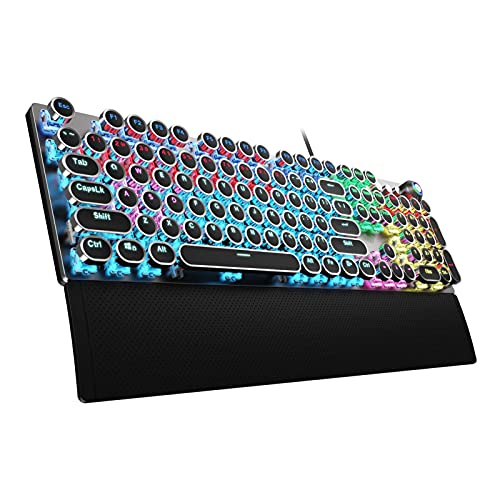
Best Typewriter-Style Mechanical Pick
AULA F2088 Typewriter Style Mechanical Gaming Keyboard, Blue Switch
Buyers who want mechanical typing feel first and a standard layout rather than a split ergonomic design
Our take Check price for AULA F2088 Typewriter Style Mechanical Gaming Keyboard, Blue Switch (opens in a new tab)

Best Split Mechanical RGB Pick
RAGNOK Ergonomic Mechanical Keyboard, Split Keyboard Wireless with RGB
Buyers who want a split mechanical keyboard with RGB
Our take Check price for RAGNOK Ergonomic Mechanical Keyboard, Split Keyboard Wireless with RGB (opens in a new tab)

Best Alice-Layout Mechanical Pick
RK ROYAL KLUDGE A72 Alice Ergonomic Wireless Mechanical Keyboard, Split
Buyers who want a mechanical, compact Alice-layout split keyboard
Our take Check price for RK ROYAL KLUDGE A72 Alice Ergonomic Wireless Mechanical Keyboard, Split (opens in a new tab)
Our Picks
Best Overall Split Ergonomic Pick1 of 6
Logitech Ergo K860 Wireless Ergonomic Split Keyboard with Wrist Rest on Amazon (opens in a new tab)
This is a scissor-switch, not a mechanical-switch keyboard, included here as the highest-reviewed split ergonomic option for buyers comparing switch feel across the category.
Best for
- Buyers who want the most reviewed split ergonomic keyboard even without true mechanical switches
Why we like it
Its negative-tilt split frame delivers strong ergonomic benefit even without mechanical switches underneath.
On price, it comes in below Cloud Nine C989M Ergonomic Mechanical Keyboard for PC, which is worth weighing if cost is your deciding factor between the two.
On the other side, No hot-swap switch customization.
Key dimensions & specs
- Scissor-switch key mechanism, not mechanical
- Split, negative-tilt frame
- Rechargeable battery
Pros
- Strong ergonomic split design
- Reliable multi-device wireless
- Included wrist rest
Cons
- Not a true mechanical-switch keyboard
- Highest price in this guide
- No hot-swap switch customization
Best True Mechanical Ergonomic Pick2 of 6
Cloud Nine C989M Ergonomic Mechanical Keyboard for PC, Kailh Tactile Switches on Amazon (opens in a new tab)
A genuine mechanical ergonomic keyboard using Kailh tactile switches, a standard switch type that keeps replacement options open if a switch fails.
Best for
- Buyers who want genuine mechanical tactile switches in an ergonomic curved layout
Why we like it
Verify the current listing for hot-swap socket support before assuming you can customize switch feel without desoldering.
On the other side, Highest price among true mechanical picks.
Key dimensions & specs
- Kailh tactile mechanical switches
- Ergonomic curved layout
- Standard switch type for replacement availability
- Premium build
Pros
- Genuine mechanical tactile switches
- Standard Kailh switch type aids long-term replacement
- Curved ergonomic layout
Cons
- Verify hot-swap support before assuming easy customization
- Exact actuation force not stated, treat as buyer-advisory
- Highest price among true mechanical picks
Best Wireless Mechanical Ergonomic Pick3 of 6
X9 Performance Wireless Mechanical Ergonomic Keyboard (BT + 2.4G + Wired) on Amazon (opens in a new tab)
4G, and wired connection options in one board, useful for buyers who want mechanical switch feel without locking into a single connection type.
Best for
- Buyers who want mechanical switches with flexible connection options at a lower price
Why we like it
Its lower price makes mechanical switches more accessible than the premium Cloud Nine pick.
On the other side, Exact switch specs not fully detailed.
Key dimensions & specs
- Mechanical switches
- Bluetooth, 2.4G, and wired connectivity
- Ergonomic layout
- Budget mechanical price point
Pros
- Three connection modes in one board
- Lower price than premium mechanical picks
- Genuine mechanical switch feel
- Flexible for buyers undecided on connection type
Cons
- Verify stabilizer quality on larger keys
- Exact switch specs not fully detailed
Best Typewriter-Style Mechanical Pick4 of 6
AULA F2088 Typewriter Style Mechanical Gaming Keyboard, Blue Switch on Amazon (opens in a new tab)
A retro typewriter-style mechanical keyboard using blue switches, a clicky, tactile switch type popular for typing feel rather than a curved or split ergonomic layout specifically.
Best for
- Buyers who want mechanical typing feel first and a standard layout rather than a split ergonomic design
Why we like it
The real tradeoff against that pick: Not a split or negative-tilt ergonomic layout.
On the other side, Limited wrist-positioning benefit compared to true ergonomic designs.
Key dimensions & specs
- Blue clicky mechanical switches
- Typewriter-style retro design
- Standard row-stagger layout, not split
Pros
- Satisfying clicky tactile feedback
- Distinctive retro typewriter aesthetic
- low-cost mechanical price
Cons
- Not a split or negative-tilt ergonomic layout
- Loud clicky switches may not suit shared spaces
- Limited wrist-positioning benefit compared to true ergonomic designs
Best Split Mechanical RGB Pick5 of 6
RAGNOK Ergonomic Mechanical Keyboard, Split Keyboard Wireless with RGB on Amazon (opens in a new tab)
A split mechanical keyboard with wireless connectivity and RGB lighting, combining true mechanical switches with an actual two-piece ergonomic frame rather than the standard row-stagger layout of the AULA pick in this guide.
Best for
- Buyers who want a split mechanical keyboard with RGB
Why we like it
That combination is less common at this price point than a one-piece mechanical board.
On the other side, Less established brand track record than Logitech or Cloud Nine.
Key dimensions & specs
- Genuine mechanical switches
- Split, wireless ergonomic frame
- RGB backlighting
- Two-piece design
Pros
- True split mechanical layout, not just row-stagger
- RGB backlighting included
- Wireless connectivity
- Reasonable price for a split mechanical board
Cons
- Verify stabilizer quality on current listing
- Less established brand track record than Logitech or Cloud Nine
Best Alice-Layout Mechanical Pick6 of 6
RK ROYAL KLUDGE A72 Alice Ergonomic Wireless Mechanical Keyboard, Split on Amazon (opens in a new tab)
A wireless mechanical keyboard using the Alice layout, a split design with rotated key clusters that keeps a more compact footprint than a fully separated two-piece board.
Best for
- Buyers who want a mechanical, compact Alice-layout split keyboard
Why we like it
It's a mechanical switch keyboard rather than the scissor-switch K860 also listed in this guide, giving buyers a true mechanical Alice-style option to compare.
On the other side, Fixed layout, not tenting-adjustable.
Key dimensions & specs
- Genuine mechanical switches
- Alice split layout
- Wireless connectivity
- Compact split footprint
Pros
- Highest rating among mechanical picks in this guide
- True mechanical switches in a compact Alice layout
- Wireless connectivity
- Reasonable price for a genuine mechanical split board
Cons
- Alice layout has its own separate learning curve
- Fixed layout, not tenting-adjustable
How We Chose These Mechanical Ergonomic Keyboards
Each pick was assessed across 4 criteria weighted for real-world use.
- Distinguished true mechanical-switch keyboards from scissor-switch ergonomic boards marketed alongside them, since the feel and customization potential differ significantly.
- Hot-swap and standard switch type availability
- Noted where hot-swap sockets or a standard switch type were disclosed, both of which affect long-term customization and replacement flexibility.
- Actuation force as buyer-advisory, not invented specs
- Where exact actuation force wasn't stated, flagged it as something to verify on the current listing rather than assuming a lighter, RSI-friendly feel by default.
- Stabilizer quality on larger keys
- Weighed verified buyer feedback on space bar and shift key rattle, since stabilizer quality is often the actual source of a board feeling cheap regardless of switch quality.
What to Look for in a Mechanical Ergonomic Keyboard
Key buying criteria so you get the right fit the first time.
Understand what split, curved, and vertical layouts each actually change about your hand position
A curved keyboard bends the key rows into an arc that reduces how far your fingers reach across the board but keeps both hands in a fixed relative position, a split keyboard physically separates the two halves so each hand and wrist can angle independently to a more natural position, and a fully vertical keyboard rotates the hands toward a handshake-like orientation that reduces forearm rotation (pronation) more aggressively than either curved or split designs.
These are meaningfully different interventions, not just cosmetic variations on the same idea, and the amount of adjustment period and the specific relief they provide differs: a curved board requires almost no adaptation, a split board requires learning a new hand spacing, and a vertical board requires the most significant adaptation period but addresses forearm rotation most directly.
If a specific pain type (wrist deviation, forearm rotation, shoulder width) has been identified, match the layout type to that specific issue rather than assuming any keyboard labeled "ergonomic" addresses the same problem.
Check the key switch type, since it affects both typing feel and finger force required
Ergonomic keyboards commonly use one of three switch technologies: membrane (a soft rubber dome under each key, quiet and inexpensive but requiring the key to bottom out fully to register), scissor or low-profile (a shorter, more stable keystroke similar to a laptop keyboard), or mechanical (an individual physical switch per key with more configurable actuation force and travel distance, generally louder but often preferred for tactile feedback and reduced bottoming-out force).
This matters for anyone with existing wrist or finger strain specifically because mechanical switches can be selected for lighter actuation force, requiring less pressure to register a keystroke than a standard membrane keyboard, a genuine factor in repetitive strain rather than just a preference for typing feel.
If finger fatigue or strain is a specific concern, check for stated actuation force (measured in grams) rather than assuming all keyboards require the same finger pressure to type.
Confirm wireless connection type matches your actual devices, and know the battery tradeoffs
4GHz USB receiver (generally lower latency and more reliable than Bluetooth, but requires a free USB port and the receiver can be lost), or wired USB (zero latency and no battery to manage, but no cable-free movement).
Multi-device Bluetooth models that support pairing with several devices and switching between them are a genuine convenience for anyone alternating between a work laptop and a personal computer, but this feature isn't universal even among Bluetooth keyboards.
Check the specific connection type and, for wireless models, confirm multi-device pairing support explicitly if you need to switch between more than one computer regularly, and factor in that backlit wireless models draw more power and need more frequent charging than non-backlit equivalents.
Check for a negative tilt option and separate wrist rest, since flat isn't always neutral
A truly neutral wrist position during typing involves the hands tilting slightly downward from the wrist toward the keys (negative tilt), which is the opposite of the upward tilt most standard and even many "ergonomic" keyboards default to with their built-in feet, and only some ergonomic models offer an actual negative-tilt adjustment or come with a design that achieves this angle by default.
A separate, adequately sized wrist rest matters independently of the keyboard's own tilt, since resting the wrist (not just the palm) on a support surface during typing reduces the upward bend at the wrist that a raised keyboard back otherwise creates.
Check specifically for a stated negative tilt option or a naturally downward-sloping design, and confirm whether a wrist rest is included versus needing to be purchased separately, rather than assuming any "ergonomic" label includes proper tilt geometry.
Weigh review volume against star rating, since some ergonomic keyboards share variants with different genuine track records
Ergonomic keyboards, especially from smaller brands, are frequently sold in multiple color or configuration variants that share the same underlying design and sometimes the same pooled review history despite being technically separate listings, which can make one specific variant's review count look artificially large or, conversely, leave a new design with almost no independent track record despite looking similar to an established model.
A keyboard central to your daily work deserves a design with substantial, focused review history behind it, not just a plausible-looking rating built on a thin or shared sample.
When comparing keyboards, especially similarly-designed variants from the same brand, check both the star rating and the review count together, and read a handful of reviews to confirm they describe the exact variant you're considering.
How to Choose a Mechanical Ergonomic Keyboard
| Recommended pick in this comparison | |
|---|---|
| Cloud Nine C989M Ergonomic Mechanical Keyboard for PC | |
| Independent hand and wrist angling | Logitech Ergo K860 Wireless Ergonomic Split Keyboard with Wrist Rest |
| AULA F2088 Typewriter Style Mechanical Gaming Keyboard | |
| No firm budget ceiling, prioritizing switch quality or ergonomics | Cloud Nine C989M Ergonomic Mechanical Keyboard for PC |
- Zero input latency and no battery to manage, including no backlight battery drain if illuminated. In this comparison: check each listing's connection type directly.
- Cable-free desk setup, at the cost of battery management and, for Bluetooth, potentially more input latency. In this comparison: Logitech Ergo K860 Wireless Ergonomic Split Keyboard with Wrist Rest, X9 Performance Wireless Mechanical Ergonomic Keyboard, RAGNOK Ergonomic Mechanical Keyboard.
By Switch Type and Typing Feel
| AULA F2088 Typewriter Style Mechanical Gaming Keyboard | |
| Tactile feedback, lighter actuation force | Cloud Nine C989M Ergonomic Mechanical Keyboard for PC |
For Wrist Pain or Carpal Tunnel Specifically
- A genuine split or vertical layout (not just a curved surface), a negative tilt option or naturally downward-sloping design, and an included wrist rest sized for your hand.
- You want what Cloud Nine C989M Ergonomic Mechanical Keyboard for PC offers: Genuine mechanical tactile switches. That's a real functional upgrade over the budget picks here, not just a brand markup.
- The main thing you'd be paying extra for elsewhere in this list is adjustability you may not need.
Frequently Asked Questions
Are mechanical ergonomic keyboards lighter on the fingers than regular ones?
Not necessarily, many default to standard-weight switches rather than lighter, RSI-optimized actuation, verify the current listing's spec sheet rather than assuming a lighter feel.
Can I swap switches on a mechanical ergonomic keyboard?
Only if it explicitly supports hot-swap sockets, verify this on the current listing since not every mechanical ergonomic board offers it.
Why does my mechanical keyboard's space bar rattle?
This is usually a stabilizer quality issue on the larger keys rather than the switches themselves, it can happen even with high-quality switches installed.
Does keycap material matter on a mechanical ergonomic keyboard?
Yes, ABS keycaps tend to develop a visible shine faster than PBT over months of daily typing, worth checking which material a listing uses.
Bottom Line
Best overall: Logitech Ergo K860 Wireless Ergonomic Split Keyboard with Wrist Rest — best overall split ergonomic pick pick in this roundup. See the full verdicts above for every pick, with pros, cons and who each one suits.
Browse all mechanical ergonomic keyboards on Amazon — Prime-eligible options with current pricing.