
Buying Guide
The Best Digital Notebooks for Windows: Picks and Trade-offs
We looked at 5 digital notebooks for windows side by side, with the trade-offs that separate them and who each one suits.
By Jamie Cole, Lead Product Researcher
8 min read5 products evaluated
We may earn a commission from purchases made through links in this guide. Learn more.
This search mostly returns Windows software (OneNote, note-taking apps), but we retargeted it to actual hardware: physical writing devices with a real Windows connection, whether that's a desktop companion app, USB file transfer, or cloud sync accessible from a Windows browser.
We checked whether each device offers a genuine desktop app for Windows specifically, versus only a web portal or mobile-only companion, since that changes how usable the device is at an actual Windows workstation.
Quick Picks
Our 5 recommendations at a glance. Tap a pick for the full verdict.

Best Windows Desktop App
reMarkable 2 with Marker Plus
Windows users who want a proper desktop app rather than a browser workaround.
Our take Check price for reMarkable 2 with Marker Plus (opens in a new tab)

Same Windows App, Newer Device
reMarkable Paper Pure with Marker
Buyers who want the reMarkable Windows workflow in the newest device.
Our take Check price for reMarkable Paper Pure with Marker (opens in a new tab)

Best via Amazon's Web/App Ecosystem
Amazon Kindle Scribe (16GB)
Buyers already embedded in Amazon's ecosystem who don't need a dedicated desktop app.
Our take Check price for Amazon Kindle Scribe (16GB) (opens in a new tab)
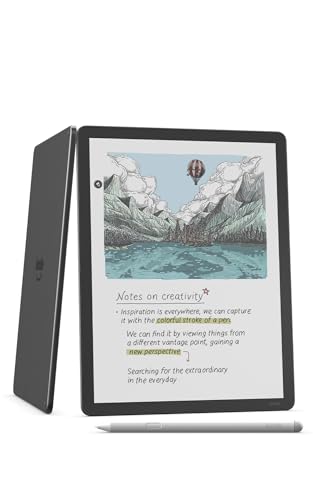
Same Ecosystem, Color Display
Amazon Kindle Scribe Colorsoft 64GB
Buyers who want color and don't mind the price premium for the same Windows connection method.
Our take Check price for Amazon Kindle Scribe Colorsoft 64GB (opens in a new tab)

Best for Direct USB/File Transfer
XPPen 3 in 1 Color Digital Notebook 10.95"
Budget-focused buyers who are comfortable with basic file transfer instead of a dedicated Windows app.
Our take Check price for XPPen 3 in 1 Color Digital Notebook 10.95" (opens in a new tab)
Our Picks
Best Windows Desktop App1 of 5
reMarkable 2 with Marker Plus on Amazon (opens in a new tab)
ReMarkable offers a dedicated Windows desktop app that syncs notes over WiFi when a reMarkable Connect subscription is active, which is a more direct Windows connection than most competitors' mobile-first or browser-only options.
Best for
- Windows users who want a proper desktop app rather than a browser workaround.
Why we like it
Genuine Windows desktop app, not just mobile or web. On price, it's actually priced above reMarkable Paper Pure with Marker, which is worth weighing if cost is your deciding factor between the two.
On the other side, Full sync features require a paid subscription.
Key dimensions & specs
- Marker Plus stylus included
- Dedicated Windows desktop app
- Full sync requires reMarkable Connect subscription
Pros
- Genuine Windows desktop app, not just mobile or web
Cons
- Full sync features require a paid subscription
Same Windows App, Newer Device2 of 5
reMarkable Paper Pure with Marker on Amazon (opens in a new tab)
Same Windows desktop app support as the reMarkable 2, in a distraction-free device without e-reader or app-store features, at a smaller review base since it's a newer entry.
Best for
- Buyers who want the reMarkable Windows workflow in the newest device.
Why we like it
One spot below reMarkable 2 with Marker Plus in this ranking, it's priced lower than reMarkable 2 with Marker Plus. The compromise here is straightforward: Much smaller review base than the reMarkable 2. What you gain in return: Same Windows app support as the more established reMarkable 2. Whether that trade is worth it depends on which side matters more for how you'll actually use it.
Worth knowing before you decide: Purpose-built for writing, no distractions. On the other side, Much smaller review base than the reMarkable 2. That's the main tradeoff to weigh against everything above.
Key dimensions & specs
- Marker stylus included
- Dedicated Windows desktop app
- Full sync requires reMarkable Connect subscription
Pros
- Same Windows app support as the more established reMarkable 2
- Purpose-built for writing, no distractions
Cons
- Much smaller review base than the reMarkable 2
Best via Amazon's Web/App Ecosystem3 of 5
Amazon Kindle Scribe (16GB) on Amazon (opens in a new tab)
Kindle Scribe connects to Windows through Amazon's send-to-Kindle and cloud content tools rather than a dedicated notebook desktop app, which works but is a less direct Windows workflow than reMarkable's native app.
Best for
- Buyers already embedded in Amazon's ecosystem who don't need a dedicated desktop app.
Why we like it
On the other side, No dedicated notebook desktop app for Windows specifically, unlike reMarkable.
Key dimensions & specs
- 16GB storage
- Send-to-Kindle and Amazon cloud tools accessible from Windows
- No dedicated Windows notebook desktop app
Pros
- Works within Amazon's broad, established content ecosystem
- Competitively priced
Cons
- No dedicated notebook desktop app for Windows specifically, unlike reMarkable
Same Ecosystem, Color Display4 of 5
Amazon Kindle Scribe Colorsoft 64GB on Amazon (opens in a new tab)
Same Amazon-ecosystem Windows connection as the base Kindle Scribe, with a color display and higher storage, at a significantly higher price.
Best for
- Buyers who want color and don't mind the price premium for the same Windows connection method.
Why we like it
The real tradeoff against that pick: No dedicated notebook desktop app for Windows.
On the other side, Highest price in this comparison.
Key dimensions & specs
- 64GB storage
- Color E Ink display
- Same Amazon cloud/send-to-Kindle Windows connection as the base model
Pros
- Color display and larger storage
Cons
- No dedicated notebook desktop app for Windows
- Highest price in this comparison
Best for Direct USB/File Transfer5 of 5
XPPen 3 in 1 Color Digital Notebook 10.95" on Amazon (opens in a new tab)
As a more open, Android-adjacent device, this is realistically the most straightforward option for basic USB file transfer to a Windows PC, at the lowest price in this comparison, though it lacks a purpose-built Windows notebook app.
Best for
- Budget-focused buyers who are comfortable with basic file transfer instead of a dedicated Windows app.
Key dimensions & specs
- 10.95 inch color display
- USB file transfer to Windows
Pros
- Lowest price in this comparison
- Straightforward file-transfer path to Windows
Cons
- No dedicated Windows desktop app
How We Chose These Digital Notebooks for Windows
Each pick was assessed across 4 criteria weighted for real-world use.
- Genuine Windows desktop app vs.
- We specifically checked whether each brand offers a real Windows desktop application, since that's meaningfully different from a browser portal or phone-only companion app.
- Retargeted from software to hardware
- Since this search mostly surfaces Windows note-taking software, we limited results to actual writing devices with hardware and a stylus.
- Subscription dependence for full sync
- We flagged where full sync to the Windows app requires a paid subscription versus basic functionality that works without one.
- Review volume as evidence of reliability
- We weighted established review history for overall device quality across the Windows-connection comparison.
What to Look for in a Digital Notebook for Windows
Key buying criteria so you get the right fit the first time.
Check whether AI or handwriting-conversion features are included or require a subscription
Digital notebook brands take different approaches to their software features: some bundle handwriting-to-text conversion, document summarization, and cloud sync into the purchase price, while others, most notably reMarkable's Connect plan, gate the more advanced versions of these same features behind an ongoing monthly subscription that continues costing money long after the initial purchase.
This is a real total-cost-of-ownership difference that a one-time hardware price comparison completely misses, since a cheaper device with a required subscription can cost more over two or three years than a pricier device with everything included upfront.
Check the specific listing and manufacturer's website for whether the features you actually want are included in the base purchase or require an ongoing plan, and factor that recurring cost into your real comparison.
Understand that "AI" and "handwriting conversion" mean different things across different devices
The marketing term "AI" gets applied to several different features across this product category: converting your handwriting into typed text, summarizing a long document or your own notes, organizing notes automatically by topic, or simply offering a chatbot-style writing assistant, and a device marketed heavily around "AI" doesn't necessarily include all, or even most, of these specific capabilities.
This matters because two devices can both claim AI features while actually doing completely different things, so a buyer specifically wanting handwriting-to-text conversion could end up with a device whose "AI" feature is actually a summarization tool that doesn't address their actual need at all.
Read the specific feature list rather than the marketing headline, and confirm the device does the exact task you need (handwriting conversion specifically, not just "AI" generally) before buying.
Confirm the stylus situation: included, sold separately, or requiring a specific model
Some digital notebooks include a compatible stylus in the box as part of the purchase price, while others sell the device and stylus as separate purchases, or require a specific proprietary stylus model that isn't interchangeable with a generic capacitive pen, and this distinction can add a meaningful hidden cost on top of the listed device price if you assumed a stylus was included.
Beyond just the cost, stylus quality itself varies in pressure sensitivity, tilt detection, and palm rejection quality, features that matter significantly more for sketching and detailed note-taking than for simple text entry.
Check the listing specifically for whether a stylus ships in the box, and if writing feel matters to you, look for mentions of pressure levels and palm rejection quality rather than assuming any included stylus performs the same as another.
Check the export and sync ecosystem, since notes trapped on one device have limited long-term value
A digital notebook's real usefulness depends heavily on getting your notes and documents off the device and into a format you can actually use elsewhere, whether that's cloud sync to a phone or computer, export to PDF or Word, or direct integration with a note-taking platform like OneNote or Google Drive, and devices differ meaningfully in which of these paths they actually support natively versus not at all.
This matters concretely for anyone using the device for professional or academic work where notes need to end up in a shared document, an email, or a specific software ecosystem, since a device with limited export options can leave your handwritten notes effectively stranded on the device itself.
Check the manufacturer's stated export formats and sync options against the specific software or workflow you actually need to feed notes into, rather than assuming any device syncs to everything.
Weigh review volume against star rating, especially for newer AI-branded entrants
Established digital notebook brands with years on the market carry review counts in the thousands, giving genuine statistical confidence in their ratings, while newer devices, especially ones marketing themselves heavily around AI features to ride current interest in the category, sometimes carry only a few dozen or a few hundred reviews, which is a meaningfully thinner sample to judge long-term reliability and whether the marketed features actually work as claimed.
This doesn't mean a newer, less-reviewed device is automatically worse, but it does mean the claims on its listing carry less independently verified weight than a device with years of real-world feedback behind it.
When comparing an established brand against a newer AI-branded entrant, check both the star rating and the review count together, and weigh a smaller but heavily AI-marketed device's claims more skeptically until more real-world feedback accumulates.
How to Choose a Digital Notebook for Windows
| What you need it for | Recommended pick in this comparison |
|---|---|
| Amazon Kindle Scribe Colorsoft 64GB |
| No firm budget ceiling, prioritizing storage or ecosystem | Amazon Kindle Scribe Colorsoft 64GB |
|---|
AI Features Included vs Subscription-Gated
- AI note tools come with the purchase price, no ongoing cost. In this comparison: check each listing's terms directly.
- Advanced AI features require an ongoing paid plan on top of the hardware price. In this comparison: reMarkable 2 with Marker Plus, reMarkable Paper Pure with Marker.
Check each specific listing for current subscription terms, since these change over time.
By Rating Confidence: Highest Rated vs Most Reviewed
| ReMarkable 2 with Marker Plus | |
| ReMarkable 2 with Marker Plus |
- Explicit confirmation of handwriting-to-text conversion (not just "AI" generally), and whether that specific feature is included or requires a subscription.
- ReMarkable 2 with Marker Plus fits this specifically: Genuine Windows desktop app, not just mobile or web.
- You want what Amazon Kindle Scribe Colorsoft 64GB offers: Color display and larger storage. That's a real functional upgrade over the budget picks here, not just a brand markup.
- 95" already covers the essentials: Lowest price in this comparison. The main thing you'd be paying extra for elsewhere in this list is features or storage you may not need.
Frequently Asked Questions
Which device has an actual Windows desktop app?
ReMarkable (both the 2 and Paper Pure) offers a genuine Windows desktop application. Kindle Scribe and XPPen rely on cloud tools or basic file transfer instead.
Do I need a subscription for the Windows app to work?
Basic use may work without one, but reMarkable's full sync feature set requires the paid Connect subscription.
Can Kindle Scribe connect to a Windows PC?
Yes, through Amazon's send-to-Kindle and cloud content tools, though not via a dedicated notebook desktop application.
What's the cheapest option with Windows connectivity?
98, which supports basic USB file transfer to Windows.
Is this guide about software instead of hardware?
No, we specifically retargeted this from Windows note-taking software to actual writing hardware with a real Windows connection method.
Bottom Line
Best overall: reMarkable 2 with Marker Plus — best windows desktop app pick in this roundup. See the full verdicts above for every pick, with pros, cons and who each one suits.
Browse all digital notebooks for windows on Amazon — Prime-eligible options with current pricing.