
Buying Guide
The Best Thunderbolt 5 Docks for 4K 120Hz and 240Hz, Compared
We looked at 4 thunderbolt 5 docks for 4K 120Hz and 240Hz side by side, with the trade-offs that separate them and who each one suits.
By Jamie Cole, Lead Product Researcher
9 min read4 products evaluated
We may earn a commission from purchases made through links in this guide. Learn more.
A Thunderbolt 5 dock's headline 4K@120Hz or 4K@240Hz spec usually applies only under a specific display count and host chip combination, so the same dock can drop to a lower refresh rate the moment a second or third monitor joins the setup.
We compared this lineup on exactly how each listing documents its refresh rate ceiling per display count, since one listing specifically states dual 4K@240Hz drops to triple 4K@144Hz once a third display is added, a real tradeoff worth understanding before buying.
Quick Picks
Our 4 recommendations at a glance. Tap a pick for the full verdict.

Best Overall
Lenovo ThinkPad Thunderbolt 5 Smart Dock 7500
Buyers who want the most granular documented refresh rate breakdown across four simultaneous displays
Our take Check price for Lenovo ThinkPad Thunderbolt 5 Smart Dock 7500 (opens in a new tab)

Best Value
CalDigit E5 Thunderbolt 5 Element 5 Hub
Buyers who want the lowest price with transparent platform-specific refresh rate documentation
Our take Check price for CalDigit E5 Thunderbolt 5 Element 5 Hub (opens in a new tab)
Best for MacBook Pro
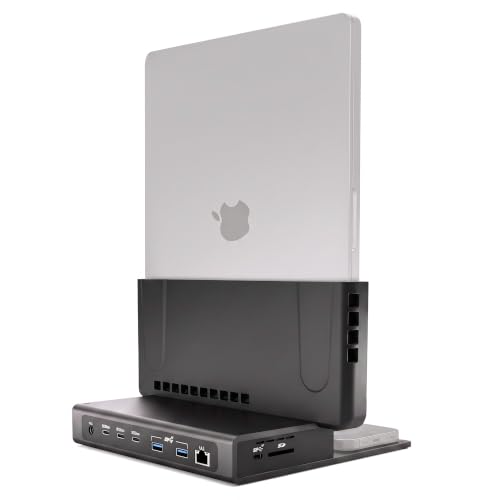
Brydge ProDock Trio TB5 MacBook Docking Station
MacBook Pro 16-inch owners who want a vertical, desk-saving docking design
Our take Check price for Brydge ProDock Trio TB5 MacBook Docking Station (opens in a new tab)

Best Modular Design
Dell SD25TB5 Pro Thunderbolt 5 Smart Dock
Buyers who want a future-upgradeable modular dock with the broadest OS compatibility
Our take Check price for Dell SD25TB5 Pro Thunderbolt 5 Smart Dock (opens in a new tab)
| Pick | Best for | Key spec | Price |
|---|---|---|---|
| Buyers who want the most granular documented refresh rate breakdown across four simultaneous displays | Up to 3x 8K@60Hz or 4 displays incl. 2x 4K@240Hz + 2x 4K@120Hz | Check price for Lenovo ThinkPad Thunderbolt 5 Smart Dock 7500 (opens in a new tab) |
| Buyers who want the lowest price with transparent platform-specific refresh rate documentation | 3x 4K@144Hz (Windows) or dual 4K@240Hz (Mac) | Check price for CalDigit E5 Thunderbolt 5 Element 5 Hub (opens in a new tab) |
| MacBook Pro 16-inch owners who want a vertical, desk-saving docking design | Triple 4K@144Hz or dual 8K@60Hz (chip-dependent) | Check price for Brydge ProDock Trio TB5 MacBook Docking Station (opens in a new tab) |
| Buyers who want a future-upgradeable modular dock with the broadest OS compatibility | 2x DP2.1, 1x HDMI 2.1, 2x Thunderbolt 5 ports | Check price for Dell SD25TB5 Pro Thunderbolt 5 Smart Dock (opens in a new tab) |
Our Picks
Best Overall1 of 4
Lenovo ThinkPad Thunderbolt 5 Smart Dock 7500 on Amazon (opens in a new tab)
This dock's listing specifically states it can drive up to three 8K@60Hz displays or four monitors in configurations including two 4K@240Hz and two 4K@120Hz simultaneously, a granular breakdown of exactly which refresh rate and display count combinations are supported.
Best for
- Buyers who want the most granular documented refresh rate breakdown across four simultaneous displays
Why we like it
1 charges a demanding laptop while running that display load, and 120Gbps data speeds come through its Thunderbolt 5 connection.
Compared to the CalDigit and Brydge picks below, this one's Intelligent Management via Lenovo's Accessories Fleet Manager, a cloud-based tool powered by AWS, lets IT managers remotely configure, update, and diagnose fleets of docks from anywhere, an enterprise-oriented feature the other picks in this comparison lack.
Best for buyers who want the most granular documented refresh rate breakdown across four simultaneous displays with enterprise-grade remote fleet management.
Key dimensions & specs
- Up to 3x 8K@60Hz or 4 displays incl. 2x 4K@240Hz + 2x 4K@120Hz
- 180W PD 3.1, 120Gbps Thunderbolt 5
- 2.5Gbps Ethernet, Lenovo Fleet Manager
Pros
- Most granular documented refresh rate breakdown per display count
- 180W charging covers demanding workstation laptops
- Cloud-based fleet management for IT-managed deployments
Cons
- Higher price than the CalDigit E5 pick below
- Enterprise fleet management features are irrelevant for a single home user
Best Value2 of 4
CalDigit E5 Thunderbolt 5 Element 5 Hub on Amazon (opens in a new tab)
This dock's listing specifically discloses that Windows Thunderbolt 5 hosts can drive three 4K@144Hz displays, while Mac hosts are limited to two 6K@60Hz or 8K@60Hz displays, or dual 4K@240Hz specifically on Macs that support these resolutions, a transparent platform-specific breakdown rather than a single blended spec.
Best for
- Buyers who want the lowest price with transparent platform-specific refresh rate documentation
Why we like it
Its Bandwidth Boost feature shifts up to 120Gb/s toward displays when ultra high-refresh monitors are connected.
Compared to the Lenovo pick above, this one's 90W sustained power delivery across all 9 connected devices simultaneously, backed by a 180W power supply and Offline Charging that works even when not connected to a host, is a differentiated feature for shared desk setups.
Best for buyers who want the lowest price in this comparison with transparent platform-specific refresh rate documentation.
Key dimensions & specs
- 3x 4K@144Hz (Windows) or dual 4K@240Hz (Mac)
- 80Gb/s base, up to 120Gb/s Bandwidth Boost
- 90W sustained PD across 9 ports, Offline Charging
Pros
- Lowest price in this comparison at $249.99
- Transparent platform-specific refresh rate documentation for Windows vs Mac
- Offline Charging works even without a connected host
Cons
- Triple display support is Windows-only, not available on macOS
- Base M1 to M3 Macs do not support dual displays at all
Best for MacBook Pro3 of 4
Brydge ProDock Trio TB5 MacBook Docking Station on Amazon (opens in a new tab)
This dock's listing specifically states triple 4K displays at 144Hz or dual 8K displays at 60Hz, with the explicit caveat that display count and refresh rate depend on your exact MacBook chip and Apple's own display limits, an honest disclosure rather than an overstated blanket claim.
Best for
- MacBook Pro 16-inch owners who want a vertical, desk-saving docking design
Why we like it
Its vertical aluminum stand holds a MacBook Pro upright in a space black finish, reducing desk footprint while keeping airflow open around the laptop.
Compared to the Lenovo and CalDigit picks above, this one is purpose-built specifically for MacBook Pro 16-inch models with M1 Max through M5 Max chips, shipping with a precision-fit sleeve, a vertical stand, and a Thunderbolt 5 cable in the box, a more complete out-of-box package than a standalone dock.
Best for MacBook Pro owners who want a vertical desk-saving design with an honest per-chip display disclosure.
Key dimensions & specs
- Triple 4K@144Hz or dual 8K@60Hz (chip-dependent)
- 140W PD, vertical aluminum stand design
- 11 ports, precision-fit MacBook sleeve included
Pros
- Vertical design saves real desk footprint versus a flat dock
- Honest disclosure that display specs depend on exact MacBook chip
- Ships complete with sleeve, stand, and Thunderbolt 5 cable included
Cons
- Purpose-built only for MacBook Pro 16-inch, not a general-purpose dock
- Reduced bandwidth and display support on Thunderbolt 4 Macs
Best Modular Design4 of 4
Dell SD25TB5 Pro Thunderbolt 5 Smart Dock on Amazon (opens in a new tab)
This dock's listing specifically highlights a modular dock design with swappable module capability, letting you upgrade the dock's capabilities over time rather than replacing the entire unit when your needs change, a distinct approach among the picks in this comparison.
Best for
- Buyers who want a future-upgradeable modular dock with the broadest OS compatibility
Why we like it
1, and 2x Thunderbolt 5.
Compared to the CalDigit pick above, this one's 180W power adapter and broader OS compatibility spanning macOS, Windows 10, Windows 11, and Ubuntu OS makes it a more platform-agnostic choice for a mixed-device household or office.
Best for buyers who want a future-upgradeable modular dock design with the broadest listed OS compatibility.
Key dimensions & specs
- 2x DP2.1, 1x HDMI 2.1, 2x Thunderbolt 5 ports
- 180W power adapter, modular swappable design
- macOS, Windows 10/11, Ubuntu OS compatible
Pros
- Modular swappable design allows future upgrades without full replacement
- Broadest listed OS compatibility including Ubuntu
- SuperBoost technology delivers fast 40GB/s data transfer
Cons
- Highest price in this comparison at $445.99
- Listing does not specify an exact 120Hz or 240Hz refresh rate ceiling
How We Chose These Thunderbolt 5 Docks for 4K 120Hz and 240Hz
Each pick was assessed across 5 criteria weighted for real-world use.
- Refresh Rate Documentation Per Display Count
- Compared how specifically each listing states its refresh rate ceiling as display count increases.
- Compared Windows versus macOS display and refresh rate differences on the same dock.
- Power Delivery Under Full Display Load
- Compared sustained charging wattage while driving multiple high-refresh displays simultaneously.
- Compared vertical, modular, and standard flat dock designs for desk footprint.
- Compared stated dynamic bandwidth shifting between data throughput and display needs.
What to Look for in a Thunderbolt 5 Dock for 4K 120Hz and 240Hz
Key buying criteria so you get the right fit the first time.
A Dock's Refresh Rate Ceiling Almost Always Depends on How Many Displays Are Active Simultaneously
The Lenovo pick specifically documents four different display configurations with different refresh rates depending on how many monitors are connected at once, from three 8K@60Hz down to a four-monitor mix including 4K@240Hz and 4K@120Hz, illustrating that a dock's single headline refresh rate figure is rarely the number you'll get once you add a second or third display. This matters significantly if you're planning a multi-monitor setup where every display needs to hit a specific refresh rate, and matters less if you only run one external display. Look for a listing that specifically breaks down refresh rate by exact display count, rather than quoting only its best-case single-display number, before assuming a dock will support your full multi-monitor setup at your target refresh rate.
Windows and macOS Frequently Get Different Display Capabilities From the Identical Dock Hardware
The CalDigit E5 pick specifically states Windows hosts can drive three 4K@144Hz displays while Mac hosts are capped at two 6K or 8K displays, or dual 4K@240Hz on supporting Macs, a real platform-level difference baked into the same physical dock rather than a minor footnote. This matters if you're choosing a dock for a specific operating system, since assuming Windows-quoted specs apply equally to macOS (or vice versa) can lead to a real letdown after purchase. Check whether a listing states its display specs separately for Windows and macOS, and read the platform-specific numbers that match your actual computer, not just the dock's single best-case headline claim.
Sustained Power Delivery Under Full Multi-Display Load Is a Different Spec Than a Dock's Peak Charging Wattage
The CalDigit E5 pick specifically states its 90W power delivery is sustained across all 9 connected devices simultaneously, backed by a 180W power supply, distinguishing genuine sustained delivery from a peak wattage figure that might only apply with fewer devices connected. This matters if you're running a laptop plus several other powered peripherals off the same dock and need reliable charging throughout, and matters less if you only connect a laptop and one or two low-power accessories. Look for language specifically confirming sustained power delivery across the dock's full rated device count, not just a single peak wattage number that may not hold under real multi-device load.
A Modular or Upgradeable Dock Design Can Extend a Dock's Useful Life as Display Standards Change
The Dell SD25TB5 Pro pick specifically advertises a modular dock design with swappable module capability, letting a buyer upgrade specific components of the dock over time rather than replacing the entire unit when a new display standard or port type emerges. This matters if you expect to keep a dock for many years through multiple monitor upgrades, and matters less if you plan to replace the whole setup within a couple of years anyway. Check whether a dock's listing specifically names swappable or upgradeable components, since this is a differentiating feature most competing docks in this price range don't offer at all.
A Purpose-Built Laptop-Specific Dock Trades General-Purpose Flexibility for a More Complete Out-of-Box Package
The Brydge ProDock Trio pick is specifically built only for MacBook Pro 16-inch models, shipping with a precision-fit sleeve, a vertical stand, and a Thunderbolt 5 cable included in the box, a more complete package than a standalone universal dock that ships with just the dock itself. This matters if you own the exact laptop model a dock is purpose-built for and want the extras included, and matters less if you might switch laptop brands or models in the future and need a dock that works across different devices. Weigh a purpose-built dock's included accessories and tailored fit against a universal dock's broader future compatibility before deciding which tradeoff fits your situation.
How to Choose a Thunderbolt 5 Dock for 4K 120Hz and 240Hz
By Display Count and Refresh Rate Need
| Four displays with mixed 4K@240Hz and 4K@120Hz | Lenovo ThinkPad Thunderbolt 5 Smart Dock 7500 |
|---|---|
| Triple 4K@144Hz on Windows or dual 4K@240Hz on Mac | CalDigit E5 Thunderbolt 5 Element 5 Hub |
| Triple 4K@144Hz specifically on MacBook Pro | Brydge ProDock Trio TB5 MacBook Docking Station |
| General 4K multi-display without a specific refresh spec | Dell SD25TB5 Pro Thunderbolt 5 Smart Dock |
Windows High-Refresh vs Mac High-Refresh
- Windows Thunderbolt 5 hosts on the Lenovo and CalDigit picks can reach triple 4K displays at 144Hz or higher, a configuration not available on macOS through the same docks.
- MacOS is generally limited to fewer simultaneous high-refresh displays than Windows on the same hardware, with the Brydge and CalDigit picks both explicitly capping Mac display count below their Windows-side maximums.
If you're on Windows and want the most simultaneous high-refresh displays, the Lenovo or CalDigit picks give you that headroom. If you're on a MacBook Pro specifically, the Brydge pick's honest per-chip disclosure helps you know exactly what to expect before buying.
| Maximum 180W charging for a demanding workstation laptop | Lenovo ThinkPad Smart Dock 7500 or Dell SD25TB5 Pro |
|---|---|
| 140W charging for a MacBook Pro | |
| Charging even when the dock isn't connected to a host | CalDigit E5 (Offline Charging feature) |
For IT-Managed Office Fleets Specifically
- Remote fleet management capability that lets IT administrators configure, update, and diagnose docks across an organization without physically visiting each desk.
- The Lenovo ThinkPad Smart Dock 7500 specifically includes Lenovo Accessories Fleet Manager, a cloud-based AWS-powered tool built for exactly this use case.
- 00 price is justified by its IT-management features.
- 99, the lowest price in this comparison.
Frequently Asked Questions
Will any Thunderbolt 5 dock give me 4K@120Hz on three monitors at once?
It depends on your operating system and host chip: the Lenovo and CalDigit picks in this comparison both document Windows-specific high-refresh triple-display support, while Mac display counts and refresh rates are generally more limited on the same hardware.
What's the most common mistake buyers make when shopping for a high-refresh Thunderbolt 5 dock?
Assuming a dock's single headline refresh rate figure applies no matter how many displays you connect, when most docks specifically document a lower refresh rate ceiling once a second or third display is added.
Is the Dell SD25TB5 Pro worth the higher price over the CalDigit E5?
If you specifically want a modular, upgradeable dock design and the broadest listed OS compatibility including Ubuntu, the Dell's higher price is justified, but if you mainly need strong Windows or Mac high-refresh display support at a lower cost, the CalDigit E5 is the better value.
Do I need a genuine Thunderbolt 5 laptop to get the high refresh rates advertised on these docks?
Yes, full 80Gb/s bandwidth and the highest advertised refresh rate and display count combinations specifically require a genuine Thunderbolt 5 host, with reduced bandwidth and display support on Thunderbolt 4 or earlier hosts.
How do I know if my exact MacBook Pro chip supports triple 4K@144Hz on the Brydge dock?
The Brydge listing specifically states full bandwidth and triple-display output require a Thunderbolt 5 MacBook with an M4 Pro, M4 Max, M5 Pro, or M5 Max chip or newer, so checking your exact chip generation against that list before buying is the reliable way to confirm support.
Can I use these docks for both a home office and IT-managed corporate deployment?
Any of these docks work fine in a home office, but if you specifically need remote fleet configuration and diagnostics across many desks, the Lenovo ThinkPad Smart Dock 7500's cloud-based fleet management feature is built specifically for that corporate IT use case.
Bottom Line
Best overall: Lenovo ThinkPad Thunderbolt 5 Smart Dock 7500 — best overall pick in this roundup. See the full verdicts above for every pick, with pros, cons and who each one suits.
Browse all thunderbolt 5 docks for 4k 120hz and 240hz on Amazon — Prime-eligible options with current pricing.