
Buying Guide
The Best XLR Audio Interfaces Under $200, Compared
We looked at 4 XLR audio interfaces under $200 side by side, with the trade-offs that separate them and who each one suits.
By Jamie Cole, Lead Product Researcher
9 min read4 products evaluated
We may earn a commission from purchases made through links in this guide. Learn more.
At the $200 mark, XLR audio interfaces from Audient, Universal Audio, Focusrite, and PreSonus start including studio-grade converter technology and higher headroom preamps that budget-tier interfaces simply can't match, and the differences between these picks come down to workflow details rather than raw sound quality.
We compared this lineup on preamp gain range, converter dynamic range, and monitoring/mixer control design, since a higher gain range matters for low-output ribbon microphones or quiet acoustic sources that a lower-gain preamp would struggle to capture cleanly.
Quick Picks
Our 4 recommendations at a glance. Tap a pick for the full verdict.
Best Overall
Focusrite Scarlett 2i2 4th Gen USB Audio Interface
Buyers who want 2 channels of smart auto-gain for two-person recording
Our take Check price for Focusrite Scarlett 2i2 4th Gen USB Audio Interface (opens in a new tab)
Best Preamp Quality
Universal Audio Volt 2 USB Audio Interface
Buyers who specifically want vintage tube-style preamp coloration and onboard compression
Our take Check price for Universal Audio Volt 2 USB Audio Interface (opens in a new tab)

Best for Streaming Control
PreSonus ioStation 24c USB-C Audio Interface with Production Controller
Buyers who specifically want a physical production controller for hands-on DAW mixing
Our take Check price for PreSonus ioStation 24c USB-C Audio Interface with Production Controller (opens in a new tab)

Best Value
Audient iD4 MKII USB Audio Interface
Buyers who want console-grade single-preamp quality at the lowest price
Our take Check price for Audient iD4 MKII USB Audio Interface (opens in a new tab)
Our Picks
Best Overall1 of 4
Focusrite Scarlett 2i2 4th Gen USB Audio Interface on Amazon (opens in a new tab)
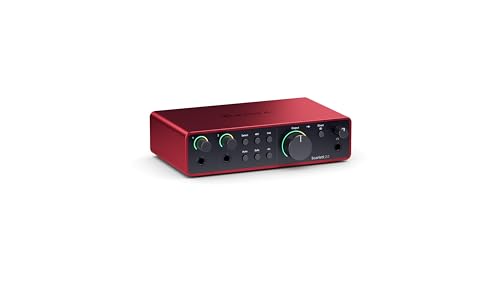
The 2i2 4th Gen carries forward the Auto Gain and Clip Safe technology from the Scarlett Solo lineup across 2 full mic preamps, meaning both channels benefit from automatic level-setting rather than just one, a useful feature when recording two different microphones with different sensitivity levels at once.
Best for
- Buyers who want 2 channels of smart auto-gain for two-person recording
Why we like it
Its redesigned front panel adds dedicated input/output level meters for clearer visual feedback than the previous generation.
Compared to the Universal Audio Volt 2 pick below, this one offers 2 mic preamps versus 1, doubling simultaneous recording capacity while staying in a similar price range, making it the better choice for two-person podcasts or interviews. The bundled software suite remains one of the most substantial in the category, including Ableton Live Lite and a large plugin collection.
Best for buyers who want 2 channels of smart auto-gain technology for two-person recording.
Key dimensions & specs
- 2 mic preamps, Auto Gain, Clip Safe
- 24-bit/192kHz, Air mode
- Redesigned metering, Ableton Live Lite included
Pros
- 2 channels of Auto Gain for effortless two-mic recording
- Redesigned metering gives clearer visual level feedback
- Extensive bundled software suite included
Cons
- Priced above this tier's stated $200 ceiling
- No onboard DSP processing like the Shure MVX2U in the lower tier
Best Preamp Quality2 of 4
Universal Audio Volt 2 USB Audio Interface on Amazon (opens in a new tab)
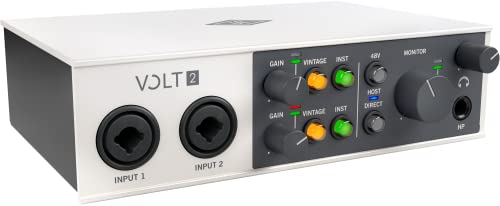
The Volt 2 includes Universal Audio's Vintage Mic Preamp emulation mode, a distinct feature that models the sonic character of a classic UA 610 tube preamp circuit directly in hardware, giving recordings a warmer coloration than a purely clean, transparent preamp.
Best for
- Buyers who specifically want vintage tube-style preamp coloration and onboard compression
Why we like it
It comes bundled with UA's own plugin suite plus a 3-month Splice sample subscription, a software combination none of the other picks in this comparison offer.
Compared to the Focusrite Scarlett 2i2 pick above, this one prioritizes preamp character and tone-shaping over raw channel-count value, appealing to musicians who want a specific vintage sonic quality baked into their recordings. Its built-in 76 Compressor emulation, based on the classic 1176 hardware compressor, is available directly on the input path.
Best for buyers who specifically want vintage tube-style preamp coloration and onboard compression.
Key dimensions & specs
- 2 mic preamps, Vintage Mic Preamp mode
- Built-in 76 Compressor emulation
- UA plugin suite + 3-month Splice included
Pros
- Vintage Mic Preamp mode adds genuine tube-style coloration
- Built-in 76 Compressor emulation on the input path
- Unique bundled software including a Splice subscription
Cons
- Vintage coloration isn't desirable for every recording style
- Fewer physical monitoring controls than the PreSonus pick below
Best for Streaming Control3 of 4
PreSonus ioStation 24c USB-C Audio Interface with Production Controller on Amazon (opens in a new tab)
The ioStation 24c combines a 2-channel audio interface with a physical production controller featuring a motorized fader and dedicated transport buttons, letting you control DAW playback, mixing, and recording without touching a mouse or keyboard, a different physical interaction model than any other pick in this comparison.
Best for
- Buyers who specifically want a physical production controller for hands-on DAW mixing
Why we like it
Its XMAX-L mic preamps carry over from PreSonus's higher-end StudioLive mixer lineup.
Compared to the Universal Audio Volt 2 pick above, this one prioritizes hands-on physical control over vintage tone-shaping, appealing to buyers who want tactile control surfaces for streaming, podcasting, or DAW mixing workflows. It includes the full Studio One Artist DAW plus Studio Magic Plug-In Suite as its bundled software.
Best for buyers who specifically want a physical production controller with motorized fader for hands-on DAW control.
Key dimensions & specs
- 2 XMAX-L mic preamps, motorized fader
- Dedicated transport controls, USB-C
- Studio One Artist + plugin suite included
Pros
- Motorized fader and transport controls enable hands-on DAW mixing
- XMAX-L preamps borrowed from PreSonus's professional mixer line
- Includes full Studio One Artist DAW software
Cons
- Highest price in this tier at $249.99
- Physical controller adds bulk versus a simple 2-channel interface
Best Value4 of 4
Audient iD4 MKII USB Audio Interface on Amazon (opens in a new tab)
The iD4 MKII includes a single high-headroom Audient Console mic preamp, the same preamp design philosophy used in Audient's professional recording console lineup, delivering a specifically stated 58dB of clean gain for capturing low-output microphones without adding noise.
Best for
- Buyers who want console-grade single-preamp quality at the lowest price
Why we like it
Its large monitor control dial doubles as a scroll wheel for computer volume control when connected via USB, a dual-purpose hardware detail unique to this pick.
Compared to the other three picks in this comparison, this one is the lowest-priced option in the tier while still delivering a genuine console-grade single preamp, making it the strongest value pick for buyers who don't need 2 simultaneous channels. Its JFET-based instrument input is specifically designed for direct guitar or bass recording with authentic amp-like character.
Best for buyers who want console-grade single-preamp quality at the lowest price in this tier.
Key dimensions & specs
- 1 Audient Console mic preamp, 58dB gain
- JFET instrument input
- Dual-function monitor dial/scroll wheel
Pros
- Console-grade preamp design at the lowest price in this tier
- 58dB of clean gain suits low-output microphones
- JFET instrument input adds authentic amp-like character
Cons
- Single preamp limits simultaneous multi-mic recording
- Smaller bundled software suite than the other three picks
How We Chose These XLR Audio Interfaces Under $200
Each pick was assessed across 5 criteria weighted for real-world use.
- Compared stated maximum gain in decibels and clean-gain headroom across all four picks.
- Compared vintage emulation modes and onboard compression against transparent, clean designs.
- Compared monitor dials, faders, and transport controls for hands-on workflow support.
- Compared included DAW software and plugin suites for genuine dollar value.
- Compared single versus dual simultaneous mic preamp configurations.
What to Look for in an XLR Audio Interface Under $200
Key buying criteria so you get the right fit the first time.
Vintage Preamp Emulation Is a Genuine Sonic Choice, Not an Objective Upgrade Over a Clean Preamp
The Universal Audio Volt 2's Vintage Mic Preamp mode models the specific sonic character of a classic tube preamp circuit, adding warm harmonic saturation directly to the recorded signal, while a transparent preamp like the one in the Audient iD4 MKII captures the source as accurately as possible with no added coloration. This matters based on your specific recording goals, where musicians recording vocals or instruments that benefit from warmth might prefer the vintage coloration, while podcasters or anyone doing heavy post-production processing usually benefits more from a clean, unprocessed starting signal they can shape themselves. Check whether a listing specifically states a vintage emulation mode versus a transparent preamp design before assuming all preamps in this price range sound sonically identical.
Stated Preamp Gain in Decibels Determines Whether a Specific Microphone Will Actually Work Well With That Interface
The Audient iD4 MKII specifically states 58dB of clean gain, a concrete figure that matters directly if you're using a low-output microphone like a ribbon mic or a dynamic mic that requires significant amplification to reach a usable recording level, since an interface with insufficient maximum gain will produce a recording that's too quiet even with the gain knob turned all the way up. This matters less if you're using a high-output condenser microphone that requires less amplification to begin with. Check the specific stated maximum gain figure in decibels for any interface you're considering, especially if you already own or plan to buy a specific microphone known for needing extra gain.
A Physical Production Controller Changes Your Actual Recording Workflow, Not Just the Interface's Feature List
The PreSonus ioStation 24c's motorized fader and dedicated transport buttons let you control playback, recording, and mixing levels by physically touching hardware controls rather than clicking through DAW software with a mouse, a different physical interaction model that some users find faster and more intuitive, especially during live streaming when reaching for a mouse mid-broadcast is impractical. This matters if your workflow benefits from tactile, hands-on control, and matters less if you're comfortable and efficient with mouse-and-keyboard DAW navigation already. Consider whether you'll actually use physical hardware controls regularly before paying extra for them, since an unused fader adds cost without adding value to your specific workflow.
Bundled Software Value Varies More at This Tier Than the Price Differences Suggest
The Universal Audio Volt 2 includes a unique combination of UA's own plugin suite plus a 3-month Splice sample subscription, a different software value proposition than the Focusrite Scarlett 2i2's more traditional Ableton Live Lite and plugin bundle, or the PreSonus ioStation's full Studio One Artist DAW inclusion. This matters directly based on what software you already own or plan to use, where owning a full DAW like Studio One already makes the ioStation's bundle redundant, while a Splice subscription might appeal specifically to musicians who use sample libraries in their production process. Compare the actual named software titles included in each bundle against what you currently use or need, rather than assuming all software bundles in this tier offer comparable value.
Single Versus Dual Simultaneous Preamps Is a Hard Functional Requirement, Not a Nice-to-Have Upgrade
The Focusrite Scarlett 2i2 4th Gen and PreSonus ioStation 24c both offer 2 simultaneous mic preamps, letting you record two microphones at once for interviews or duo performances, while the Audient iD4 MKII and Universal Audio Volt 2 offer only 1, meaning they simply can't record two people simultaneously regardless of how good their individual preamp quality might be. This matters as a baseline functional requirement determined entirely by your recording format, not a quality tradeoff, since a single excellent preamp still can't record two voices at once. Determine your actual typical number of simultaneous recording sources first, since this single spec eliminates half the options in this tier before any other comparison point becomes relevant.
How to Choose an XLR Audio Interface Under $200
| 2 channels of smart auto-gain for two-person recording | Focusrite Scarlett 2i2 4th Gen USB Audio Interface |
|---|---|
| Universal Audio Volt 2 USB Audio Interface | |
| A physical production controller for hands-on DAW mixing | |
| Console-grade single-preamp quality at the lowest price | Audient iD4 MKII USB Audio Interface |
Clean Transparent Preamp vs Vintage-Colored Preamp
- Clean, transparent preamp (Scarlett 2i2, Audient iD4, PreSonus ioStation)
- Captures the source signal as accurately as possible with no added coloration, better for recordings you plan to shape entirely in post-production.
- Vintage-colored preamp (Universal Audio Volt 2)
- Adds warm tube-style saturation and compression directly at the input stage, appealing to musicians who want that character baked in before it reaches the DAW.
Most buyers should default to a clean, transparent preamp like the Audient iD4 unless you specifically want the vintage coloration the Volt 2 provides for music production.
| Focusrite Scarlett 2i2 4th Gen or Universal Audio Volt 2 | |
| Hands-on physical fader and transport control |
For Two-Person Podcasts or Interviews Specifically
- 2 simultaneous mic preamps with independent gain control per channel, so each speaker's voice can be leveled separately without one overpowering the other.
- The Focusrite Scarlett 2i2 4th Gen specifically offers 2 channels of Auto Gain technology, automatically balancing both speakers without manual adjustment.
- 99 price with genuine tactile control hardware.
Frequently Asked Questions
Is the Universal Audio Volt 2's vintage preamp mode suitable for podcast recording, or is it only for music?
It can work for podcasts if you like a slightly warmer vocal tone, but most podcast production benefits more from a clean, transparent preamp that you can process afterward, so the Focusrite Scarlett 2i2 or Audient iD4 are typically better starting points for spoken-word content.
What's the most common mistake buyers make when choosing a single-channel interface at this price tier?
Buying a single-preamp interface like the Audient iD4 for a format that will eventually need to record two people, then discovering they need a second interface or an external mixer, when a dual-channel option like the Scarlett 2i2 would have avoided that upgrade cost entirely.
Is the PreSonus ioStation 24c worth the extra cost over the Focusrite Scarlett 2i2 if I don't need a physical fader?
If you're confident you'll navigate your DAW entirely with a mouse and keyboard, the Scarlett 2i2 delivers similar core audio quality for about $25 less, but if hands-on physical mixing control appeals to your workflow, the ioStation's motorized fader is a useful addition worth the price difference.
How do I set up the Audient iD4 MKII's dual-function monitor dial for computer volume control?
The dial automatically switches to computer volume control mode when connected via USB and no external monitor speakers are actively selected, and this function is typically enabled by default without requiring separate driver configuration.
Can I use these interfaces with a laptop that only has USB-C ports?
All four picks in this comparison support USB-C connectivity either natively or via an included adapter cable, though checking each product's specific listed cable and port requirements is worth doing to confirm compatibility with your exact laptop model before purchase.
Does the Universal Audio Volt 2's built-in 76 Compressor emulation replace the need for a compressor plugin in my DAW?
For basic vocal leveling during recording, it can reduce or eliminate the need for a separate compressor plugin, but many producers still add additional compression in post-production for more precise control over the final mix.
Bottom Line
Best overall: Focusrite Scarlett 2i2 4th Gen USB Audio Interface — best overall pick in this roundup. See the full verdicts above for every pick, with pros, cons and who each one suits.
Browse all xlr audio interfaces under $200 on Amazon — Prime-eligible options with current pricing.