
Buying Guide
4 Best Wi-Fi 7 Router and Modem Combos in 2026
4 router-modem combos we evaluated for cable households, honestly noting genuine Wi-Fi 7 combos are still a thin category compared to mature Wi-Fi 6 options.
By Jamie Cole, Lead Product Researcher
9 min read4 products evaluated
We may earn a commission from purchases made through links in this guide. Learn more.
Genuine Wi-Fi 7 router-plus-cable-modem combo devices are a small, still-maturing product category, worth being transparent that this guide includes proven Wi-Fi 6 combo alternatives given the thin genuine Wi-Fi 7 combo selection currently available, and DOCSIS version compatibility with your specific cable ISP must be verified explicitly before comparing any Wi-Fi feature, since an incompatible modem is useless regardless of its wireless capability.
A combo represents a single point of failure for both internet and Wi-Fi simultaneously, and many ISPs already include a rental modem-router combo in the monthly bill, so a purchased combo is only worthwhile if it fully replaces that rental fee, verify your ISP allows owned equipment without double-charging, and note that firmware update responsibility can be split between ISP-approved paths and the manufacturer's own schedule, potentially causing update lag.
Quick Picks
Our 4 recommendations at a glance. Tap a pick for the full verdict.

Best Genuine Wi-Fi 7 Combo Pick
ARRIS Surfboard G54 DOCSIS 3.1 Multi-Gig Modem & Wi-Fi 7 Router
Buyers specifically wanting genuine Wi-Fi 7 and cable modem functionality in one unit
Our take Check price for ARRIS Surfboard G54 DOCSIS 3.1 Multi-Gig Modem & Wi-Fi 7 Router (opens in a new tab)

Best Proven Wi-Fi 6 Combo Alternative
NETGEAR Nighthawk Modem Router Combo (CAX30) DOCSIS 3.1
Buyers prioritizing proven reliability and reviews over having the Wi-Fi 7 label specifically
Our take Check price for NETGEAR Nighthawk Modem Router Combo (CAX30) DOCSIS 3.1 (opens in a new tab)
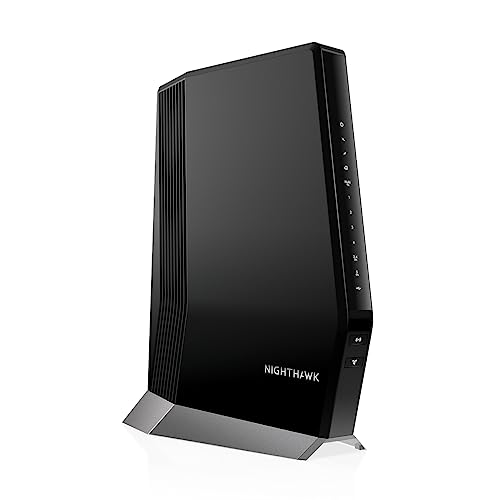
Best Widely-Compatible Wi-Fi 6 Combo
NETGEAR Nighthawk Cable Modem and WiFi 6 Router Combo (CAX80)
Buyers wanting maximum ISP compatibility confidence over having the Wi-Fi 7 label
Our take Check price for NETGEAR Nighthawk Cable Modem and WiFi 6 Router Combo (CAX80) (opens in a new tab)

Best Separate Router Alternative
TP-Link Tri-Band BE9300 WiFi 7 Router (Archer BE550)
Buyers who prefer separating modem and router rather than accepting combo tradeoffs
Our take Check price for TP-Link Tri-Band BE9300 WiFi 7 Router (Archer BE550) (opens in a new tab)
Our Picks
Best Genuine Wi-Fi 7 Combo Pick1 of 4
ARRIS Surfboard G54 DOCSIS 3.1 Multi-Gig Modem & Wi-Fi 7 Router on Amazon (opens in a new tab)
1 combo device, one of few real options in this still-small category, appropriate for buyers specifically wanting Wi-Fi 7 and cable modem functionality in a single unit.
Best for
- Buyers specifically wanting genuine Wi-Fi 7 and cable modem functionality in one unit
Why we like it
6-star rating relative to other picks here, worth reading recent reviews closely given this is a newer, less-mature product category.
Multi-gig capable for higher-tier cable plans. 6-star rating, verify recent reviews closely before buying. Both are worth keeping in mind before deciding.
Key dimensions & specs
- DOCSIS 3.1 cable modem
- Genuine Wi-Fi 7 router
- Multi-gig capable
- Single-unit combo design
Pros
- One of few genuine Wi-Fi 7 and cable modem combo devices available
- Multi-gig capable for higher-tier cable plans
- DOCSIS 3.1 covers most current cable ISP requirements
- Avoids a separate router purchase for buyers wanting one unit
Cons
- Combo represents a single point of failure for both internet and Wi-Fi
- Verify your specific ISP's DOCSIS compatibility before purchase
Best Proven Wi-Fi 6 Combo Alternative2 of 4
NETGEAR Nighthawk Modem Router Combo (CAX30) DOCSIS 3.1 on Amazon (opens in a new tab)
1 compatibility with your ISP before buying either way.
Best for
- Buyers prioritizing proven reliability and reviews over having the Wi-Fi 7 label specifically
Key dimensions & specs
- DOCSIS 3.1 cable modem
- Wi-Fi 6 (AX2700), not Wi-Fi 7
- Single-unit combo design
- NETGEAR Nighthawk ecosystem
Pros
- Proven, mature combo hardware with a longer track record
- DOCSIS 3.1 covers most current cable ISP requirements
- Lower price than the genuine Wi-Fi 7 combo pick above
Cons
- Wi-Fi 6, not Wi-Fi 7, honestly a step behind on wireless standard
- Combo represents a single point of failure for both internet and Wi-Fi
- Verify your ISP allows owned equipment without a double rental charge
Best Widely-Compatible Wi-Fi 6 Combo3 of 4
NETGEAR Nighthawk Cable Modem and WiFi 6 Router Combo (CAX80) on Amazon (opens in a new tab)
9-star rating is worth weighing against that scale.
Best for
- Buyers wanting maximum ISP compatibility confidence over having the Wi-Fi 7 label
Why we like it
Compatible with all major cable providers. That said, wi-Fi 6, not Wi-Fi 7, a step behind on wireless standard.
Key dimensions & specs
- DOCSIS 3.1 cable modem
- Wi-Fi 6, not Wi-Fi 7
- Compatible with all major cable providers
- Single-unit combo design
Pros
- Compatible with all major cable providers
- DOCSIS 3.1 covers most current cable ISP requirements
- Mature, well-established combo hardware
Cons
- Wi-Fi 6, not Wi-Fi 7, a step behind on wireless standard
- Combo represents a single point of failure for both internet and Wi-Fi
Best Separate Router Alternative4 of 4
TP-Link Tri-Band BE9300 WiFi 7 Router (Archer BE550) on Amazon (opens in a new tab)
Not a combo device, a genuine tri-band Wi-Fi 7 router included as the honest alternative for buyers who separate their modem and router rather than accept the combo category's current tradeoffs.
Best for
- Buyers who prefer separating modem and router rather than accepting combo tradeoffs
Why we like it
Pairing a separate modem with this router avoids the single-point-of-failure risk a combo carries, and separating the two also avoids the firmware update lag that can occur when a combo splits responsibility between ISP-approved and manufacturer update paths.
Key dimensions & specs
- Genuine tri-band with 6GHz radio
- Not a combo, router only
- BE9300 combined rating, 6-stream
- Full 2.5G ports
Pros
- Avoids the single-point-of-failure risk a combo device carries
- Genuine tri-band Wi-Fi 7 with a real 6GHz radio
- Avoids firmware update lag between ISP and manufacturer schedules
Cons
- Requires a separate modem purchase or rental, an added step
- Not a combo, doesn't solve the single-unit convenience some buyers want
- Verify your ISP's modem requirements separately from this router choice
How We Chose
Each pick was assessed across 4 criteria weighted for real-world use.
- Genuine Wi-Fi 7 combo availability verified, not assumed
- Verified how thin the genuine Wi-Fi 7 combo category actually is rather than implying a broad mature market exists.
- DOCSIS compatibility flagged as a prerequisite check
- Treated DOCSIS version compatibility with a buyer's specific ISP as a prerequisite check before comparing any Wi-Fi feature.
- Single-point-of-failure risk disclosed for combo devices
- Disclosed that a combo device represents a single point of failure for both internet and Wi-Fi simultaneously.
- ISP rental-fee replacement value assessed honestly
- Noted a purchased combo is only worthwhile if it fully replaces an existing ISP rental fee, not an automatic saving.
What to Look for in a Wi-Fi 7 Router and Modem Combos
Key buying criteria so you get the right fit the first time.
Decode BE-series numbers as theoretical combined throughput, not real device speed
A BE9300 or BE19000 label is a sum of the theoretical maximum throughput across every radio band added together, not a speed any single connected device can actually achieve, since no client connects to all bands simultaneously at their individual peak rates.
This matters because comparing routers purely by their BE number can be misleading, a higher BE number doesn't necessarily mean meaningfully faster real-world speed for your actual devices, it can just reflect more bands or wider channels contributing to the sum.
Check the individual per-band speed figures in the spec sheet rather than trusting the combined BE number alone, and weigh that against what your actual devices can realistically use.
Understand MLO benefits require Wi-Fi 7 client devices you probably don't own yet
Multi-Link Operation (MLO) is Wi-Fi 7's genuine headline feature, letting a device use multiple bands simultaneously for lower latency and better reliability, but it only works when both the router and the connecting device have full Wi-Fi 7 MLO-capable chipsets, and most phones, laptops, and other devices in active use today still don't have this hardware.
This matters because a big part of what makes Wi-Fi 7 technically exciting is currently theoretical for a typical household's actual device mix, the router will still work great as a very capable Wi-Fi 6E-equivalent device, just without MLO's specific benefit until you own Wi-Fi 7 client devices.
Check which of your actual devices, if any, are Wi-Fi 7 MLO-capable before treating that feature as a purchase-deciding factor today.
Verify genuine tri-band (6GHz) versus a dual-band router carrying the Wi-Fi 7 label
4GHz and 5GHz bands without adding 6GHz at all.
This distinction matters directly if 6GHz's wider, less congested channels are the reason you're upgrading, a dual-band Wi-Fi 7 router without 6GHz won't deliver that specific benefit even though it carries the same marketing label.
Check the spec sheet specifically for a stated 6GHz band, not just the presence of "Wi-Fi 7" in the product title, before assuming any Wi-Fi 7-labeled router includes it.
Match wired port speed to your actual internet plan and NAS or gaming needs
5G or 10G ports remove that ceiling.
This matters directly if you have a fiber plan faster than 1Gbps, run a NAS for file transfers, or want the lowest possible latency for wired gaming, less if your actual internet plan or use case never exceeds standard gigabit anyway.
Check the specific port speeds listed for both WAN and LAN ports, not just whether the router is described as "multi-gig capable" in marketing copy, since one fast port among several gigabit ones is a common half-measure.
Consider 6GHz's shorter range and whether your home's layout actually needs a mesh setup
4GHz, meaning a single router may not deliver reliable 6GHz coverage throughout a larger home or one with many interior walls.
This matters directly for a multi-floor home or an apartment with thick walls, where a single high-end router might leave dead zones on 6GHz specifically even while 5GHz coverage remains fine, a mesh system spreads that coverage more evenly at the cost of additional hardware and expense.
Check your home's actual square footage and layout against the router's stated coverage area, and consider whether a mesh system is worth the added cost before assuming one router covers your whole space on 6GHz.
How to Choose a Wi-Fi 7 Router and Modem Combos
By Rating Confidence: Highest Rated vs Most Reviewed
| NETGEAR Nighthawk Modem Router Combo | |
| NETGEAR Nighthawk Cable Modem and WiFi 6 Router Combo |
| NETGEAR Nighthawk Cable Modem and WiFi 6 Router Combo |
- The lower-priced option in this comparison, worth checking its band configuration against your actual needs.
- NETGEAR Nighthawk Cable Modem and WiFi 6 Router Combo
- The higher-priced option, worth it if it offers real coverage or port-speed headroom above the cheaper pick.
Default to TP unless your setup calls for the pricier pick.
For a Fiber Internet Plan Specifically
- A WAN port speed matched to or exceeding your actual fiber plan's rated speed, not just a fast LAN port for local devices.
- You have a fast fiber plan, run a NAS, or need mesh coverage, where NETGEAR Nighthawk Cable Modem and WiFi 6 Router Combo's higher price buys real headroom over the cheaper picks.
- Your internet plan tops out at standard gigabit, where TP covers the same job at a lower price.
Frequently Asked Questions
Are there many genuine Wi-Fi 7 router-modem combos available?
Not yet, this is a small, still-maturing category, many buyers are better served by a proven Wi-Fi 6 combo or a separate Wi-Fi 7 router and modem.
How do I know if a combo is compatible with my cable provider?
Verify the specific DOCSIS version against your ISP's requirements before comparing any Wi-Fi feature, this is a hard prerequisite.
Is a purchased combo cheaper than my ISP's rental modem?
Only if your ISP allows owned equipment without double-charging and the purchase price is fully offset by dropping the rental fee, verify this first.
What's the downside of using a combo instead of separate devices?
A combo is a single point of failure for both internet and Wi-Fi, and firmware updates can lag when responsibility splits between ISP and manufacturer.
Bottom Line
Best overall: ARRIS Surfboard G54 DOCSIS 3.1 Multi-Gig Modem & Wi-Fi 7 Router — best genuine wi-fi 7 combo pick pick in this roundup. See the full verdicts above for every pick, with pros, cons and who each one suits.
Browse all wi-fi 7 router and modem combos on Amazon — Prime-eligible options with current pricing.