
Buying Guide
The Best USB-C PoE Splitters for Everyday Desk Work
We looked at 4 USB-C PoE splitters side by side, with the trade-offs that separate them and who each one suits.
By Jamie Cole, Lead Product Researcher
9 min read4 products evaluated
We may earn a commission from purchases made through links in this guide. Learn more.
A USB-C PoE splitter converts standard PoE into 5V power delivered through a USB-C connector, a useful alternative to a Raspberry Pi 4's PoE HAT or a wall charger for any USB-C powered device, but the actual amperage delivered ranges enough between listings to matter for power-hungry setups.
Quick Picks
Our 4 recommendations at a glance. Tap a pick for the full verdict.

Best for Power-Hungry Devices
UCTRONICS USB-C PoE Splitter Gigabit, 5V/4A
Buyers running a power-hungry Raspberry Pi 4 setup that exceeds the official PoE HAT's limit
Our take Check price for UCTRONICS USB-C PoE Splitter Gigabit, 5V/4A (opens in a new tab)

Best Value High-Amperage
Gigabit PoE Splitter USB C 5V 3.5A
Buyers who want high amperage close to the top pick's output at a significantly lower price
Our take Check price for Gigabit PoE Splitter USB C 5V 3.5A (opens in a new tab)
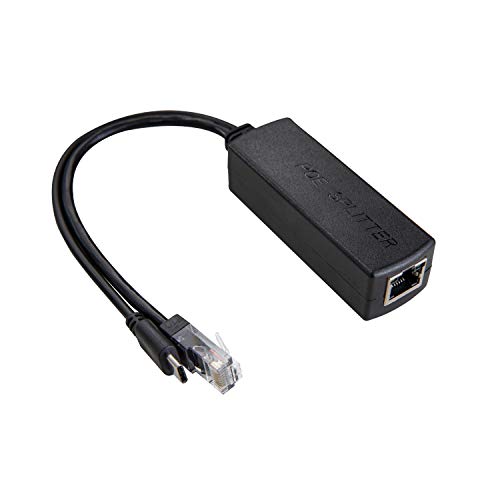
Best for Standard 802.3af Sources
UCTRONICS PoE Splitter USB-C 5V
buyers with standard 802.3af PoE infrastructure who don't need more than 2.4A
Our take Check price for UCTRONICS PoE Splitter USB-C 5V (opens in a new tab)

Best Budget
Gigabit Type C PoE Splitter 5V 2.4A (TYPEC0502G)
buyers who want the lowest price for a standard 2.4A Gigabit USB-C splitter
Our take Check price for Gigabit Type C PoE Splitter 5V 2.4A (TYPEC0502G) (opens in a new tab)
Our Picks
Best for Power-Hungry Devices1 of 4
UCTRONICS USB-C PoE Splitter Gigabit, 5V/4A on Amazon (opens in a new tab)
5A maximum, positioning it as an enhanced alternative for power-hungry Raspberry Pi 4 applications running multiple demanding tasks simultaneously.
Best for
- Buyers running a power-hungry Raspberry Pi 4 setup that exceeds the official PoE HAT's limit
Why we like it
3at PoE switch or injector for the larger power budget needed to reach the full 4A.
Compared to the other picks in this comparison, this one's specific framing around running multiple Pi units without individual wall chargers cluttering a power strip addresses a common multi-device pain point.
Key dimensions & specs
- 5V/4A output, exceeds official PoE HAT's 2.5A
- Requires 802.3at PoE+ for full output
- Gigabit Ethernet, no QC/PD fast charging support
Pros
- Highest amperage in this comparison at 4A
- Specifically exceeds the official Raspberry Pi PoE HAT's power ceiling
- Reduces power strip clutter for multi-Pi deployments
Cons
- Highest price in this comparison at $24.99
- Requires an 802.3at PoE+ source to reach the full 4A rating
Best Value High-Amperage2 of 4
Gigabit PoE Splitter USB C 5V 3.5A on Amazon (opens in a new tab)
5A output, described as 16% more current than older 3A versions, engineered for power-hungry non-PD devices like Raspberry Pi 4, Pi 5, and Jetson Nano.
Best for
- Buyers who want high amperage close to the top pick's output at a significantly lower price
Why we like it
5KV isolation with short-circuit, overvoltage, and surge protection is built for 24/7 continuous industrial-grade operation.
Best for buyers who want high amperage close to the top pick's output at a significantly lower price.
Key dimensions & specs
- 5V/3.5A output (802.3at required for full rating)
- 2.5KV isolation, short-circuit, surge protection
- Gigabit 10/100/1000Mbps auto-negotiation
Pros
- Near-top amperage at roughly half the price of the UCTRONICS 4A pick
- 24/7 industrial-grade protection for continuous operation
- Supports both Raspberry Pi and Jetson Nano power needs
Cons
- Limited to 2.4A on a standard 802.3af switch, not the full 3.5A
- No QC/PD fast charging protocol support
Best for Standard 802.3af Sources3 of 4
UCTRONICS PoE Splitter USB-C 5V on Amazon (opens in a new tab)
3af compliance, explicitly directing power-hungry applications to a different model (B07V35DH5F) instead, an honest disclosure of its power ceiling rather than overstating capability.
Best for
- buyers with standard 802.3af PoE infrastructure who don't need more than 2.4A
Why we like it
Its documented range extends up to 300 feet from the power source, longer than the standard 100m PoE limit.
Key dimensions & specs
- 5V/2.4A output on standard 802.3af
- Up to 300ft range from power source
- No PD/QC fast charging support
Pros
- Works fully on standard 802.3af PoE without needing PoE+
- Honestly directs power-hungry use cases to a higher-amperage alternative
- Documented 300ft range exceeds the standard 100m limit
Cons
- Lower 2.4A ceiling than the higher-amperage picks in this comparison
- Not suitable for power-hungry multi-task Raspberry Pi 4 applications
Best Budget4 of 4
Gigabit Type C PoE Splitter 5V 2.4A (TYPEC0502G) on Amazon (opens in a new tab)
4A), while maintaining full Gigabit 1000Mbps speed at the lowest price in this comparison.
Best for
- buyers who want the lowest price for a standard 2.4A Gigabit USB-C splitter
Why we like it
Its multiple protection features include isolation circuit, short-circuit, and overvoltage protection.
4A pick above, this one delivers the same amperage ceiling for a lower price while still supporting Gigabit speed, a straightforward budget choice for standard USB-C 5V devices like iPads, Dropcam, and Raspberry Pi.
Key dimensions & specs
- 5V/2.4A, 12W max, Gigabit 1000Mbps
- Auto-detect appropriate power output
- Isolation, short-circuit, overvoltage protection
Pros
- Lowest price in this comparison at $11.69
- Maintains Gigabit speed despite the low price
- Multiple protection features safeguard connected equipment
Cons
- 2.4A ceiling matches but doesn't exceed the UCTRONICS standard pick
- No stated extended range beyond the standard 100m limit
How We Chose These USB-C PoE Splitters
Each pick was assessed across 5 criteria weighted for real-world use.
- 3at PoE+ is required to reach the full rating.
- Compared full Gigabit versus standard 100Mbps data transmission.
- Compared isolation voltage and surge protection specifications.
- Compared stated maximum distance from the PoE power source.
What to Look for in a USB-C PoE Splitter
Key buying criteria so you get the right fit the first time.
3at PoE+ Source, Not Just Any PoE Switch
3at PoE+ switch or injector, a real distinction that determines whether you actually get the splitter's headline amperage figure. 3af infrastructure, since you won't receive the advertised performance without upgrading your PoE source. 3at PoE+ specifically, and verify your actual PoE switch or injector's standard, before assuming you'll receive the full advertised output.
USB-C PoE Splitters Typically Don't Support USB Power Delivery or Quick Charge Fast-Charging Protocols
Multiple picks in this comparison explicitly state they do not support PD or QC fast charging protocols, meaning a device expecting to negotiate a higher voltage through USB-C Power Delivery won't receive that negotiation from these splitters, which output a fixed 5V regardless of the connected device's fast-charging capability. This matters if your specific device relies on PD negotiation to reach its full charging speed or a higher voltage, and matters less for devices like a Raspberry Pi that simply need stable 5V power without any negotiation protocol. Verify your specific device only requires fixed 5V power, not PD or QC negotiation, before relying on a USB-C PoE splitter as its power source.
A USB-C PoE Splitter Can Exceed the Official Raspberry Pi PoE HAT's Power Ceiling for Demanding Applications
This matters if you've experienced power-related instability with the official PoE HAT under heavy load, and matters less if your Pi runs lighter workloads comfortably within the HAT's standard capability. Consider a higher-amperage third-party splitter specifically if you've encountered power limitations with the official PoE HAT under your actual workload.
Documented Range Beyond the Standard 100m PoE Limit Can Matter for Devices Positioned Farther From the Source
4A pick specifically documents a range up to 300ft, meaningfully longer than the standard 100m (328ft) PoE limit most splitters reference, giving real flexibility for a device positioned farther from the PoE source than typical. This matters if your specific installation requires reaching a device near or beyond the standard 100m cable limit, and matters less if your device sits comfortably within that standard range. Check a splitter's specifically documented maximum range if your installation distance approaches or exceeds the standard 100m PoE limit.
Industrial-Grade Isolation and Surge Protection Specifications Matter for 24/7 Continuous Operation
5KV isolation with short-circuit, overvoltage, and surge protection built for 24/7 continuous operation, a more detailed electrical protection specification than a generic 'protected' claim without a stated isolation voltage. This matters if your USB-C powered device runs continuously without interruption, like a Raspberry Pi server or a permanently mounted camera, where electrical protection reliability matters more over sustained operation, and matters less for an occasionally used device. Check for specifically named isolation voltage and surge protection ratings if your device will run continuously in a 24/7 deployment.
How to Choose a USB-C PoE Splitter
| Maximum amperage exceeding the official Pi PoE HAT | UCTRONICS USB-C PoE Splitter Gigabit, 5V/4A |
|---|---|
| High amperage at a lower price | |
| UCTRONICS PoE Splitter USB-C 5V | |
- 3at PoE+ source to unlock their full amperage, delivering more power for demanding Raspberry Pi 4/5 or Jetson Nano applications.
- 3af PoE infrastructure without needing an upgrade to PoE+.
3at PoE+ switch and run power-hungry devices, the higher-amperage picks are worth it. 4A picks deliver their full rated performance without any upgrade.
| 3at PoE+ (higher power budget) | |
|---|---|
| 4A pick works safely on both standards |
For a Multi-Raspberry Pi Deployment Specifically
- A USB-C splitter with amperage that meets or exceeds your Pi model's actual power draw under full load, especially if running attached peripherals like drives or HATs that increase total power consumption.
- The UCTRONICS 4A pick specifically markets itself around eliminating wall-charger clutter for multiple simultaneously running Pi units.
- 99 price is justified by that higher ceiling.
- 69, the lowest price in this comparison.
Frequently Asked Questions
Will I get the full advertised amperage from any USB-C PoE splitter on my existing PoE switch?
3af switch, so checking your PoE infrastructure's exact standard is important.
What's the most common mistake buyers make when choosing a USB-C PoE splitter?
5A pick delivers nearly as much power at roughly half the cost for most demanding use cases.
Can I use a USB-C PoE splitter to fast-charge my phone?
No, these splitters specifically don't support PD or QC fast charging protocols, delivering only fixed 5V power, so they're suited for devices like a Raspberry Pi that need stable 5V rather than phones expecting fast-charge negotiation.
Do I need the highest-amperage splitter for a basic Raspberry Pi 4 setup?
4A splitter, and the higher-amperage picks are specifically worth it only if you're running demanding applications or multiple attached peripherals that increase power draw.
3at PoE+ before choosing a USB-C splitter.
Bottom Line
Best overall: UCTRONICS USB-C PoE Splitter Gigabit, 5V/4A — best for power-hungry devices pick in this roundup. See the full verdicts above for every pick, with pros, cons and who each one suits.
Browse all usb-c poe splitters on Amazon — Prime-eligible options with current pricing.