
Buying Guide
The Best Travel Routers with VPN: Our Picks
We looked at 4 travel routers with VPN side by side, with the trade-offs that separate them and who each one suits.
By Jamie Cole, Lead Product Researcher
9 min read4 products evaluated
We may earn a commission from purchases made through links in this guide. Learn more.
A travel router with a pre-installed VPN client lets you secure every device on your network through one configuration, rather than installing and running VPN software separately on your laptop, phone, and tablet.
We compared this lineup on real stated VPN throughput, since OpenVPN speeds range from as low as 28 Mbps up to 300 Mbps across these similarly equipped picks, a difference that affects video call quality and streaming while connected through the VPN.
Quick Picks
Our 4 recommendations at a glance. Tap a pick for the full verdict.

Best Overall
GL.iNet GL-MT3000 Beryl AX
Buyers who want the fastest VPN throughput for video calls or streaming while connected securely
Our take Check price for GL.iNet GL-MT3000 Beryl AX (opens in a new tab)
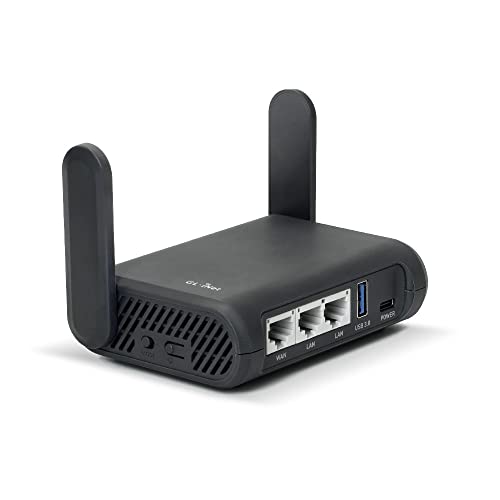
Best VPN Policy Control
GL.iNet GL-A1300 Pocket VPN Travel Router (Slate Plus)
Buyers who specifically want a VPN kill switch and granular per-site VPN routing control
Our take Check price for GL.iNet GL-A1300 Pocket VPN Travel Router (Slate Plus) (opens in a new tab)
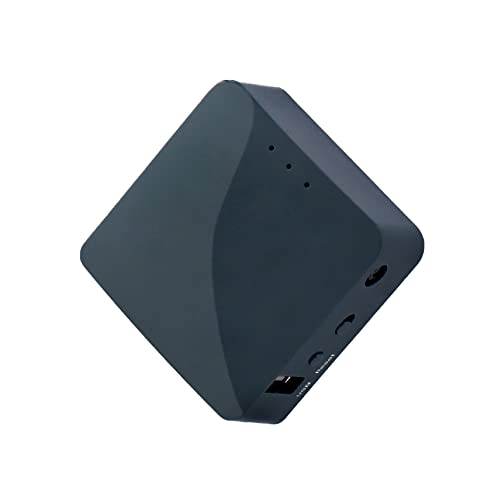
Best Ultra-Compact
GL.iNet GL-AR300M16 Mini Travel Wi-Fi Router
Minimalist travelers who prioritize the smallest size and lightest weight over maximum VPN speed
Our take Check price for GL.iNet GL-AR300M16 Mini Travel Wi-Fi Router (opens in a new tab)
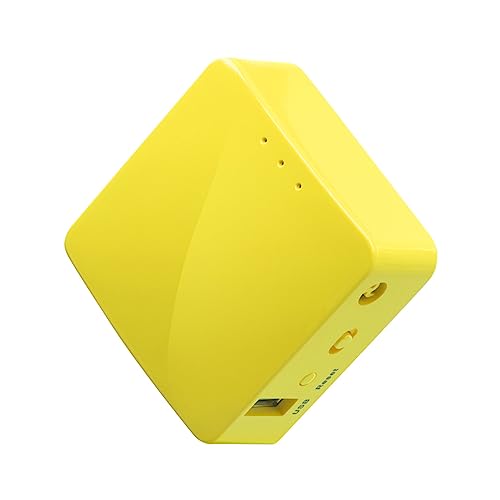
Best Budget
GL.iNet GL-MT300N-V2 (Mango)
Budget-conscious buyers who want basic OpenVPN protection in the smallest, cheapest package
Our take Check price for GL.iNet GL-MT300N-V2 (Mango) (opens in a new tab)
| Pick | Best for | Key spec | Price |
|---|---|---|---|
| Buyers who want the fastest VPN throughput for video calls or streaming while connected securely | OpenVPN up to 150Mbps, WireGuard up to 300Mbps | Check price for GL.iNet GL-MT3000 Beryl AX (opens in a new tab) |
| Buyers who specifically want a VPN kill switch and granular per-site VPN routing control | OpenVPN up to 28Mbps, WireGuard up to 170Mbps | Check price for GL.iNet GL-A1300 Pocket VPN Travel Router (Slate Plus) (opens in a new tab) |
| Minimalist travelers who prioritize the smallest size and lightest weight over maximum VPN speed | OpenVPN/WireGuard client and server pre-installed | Check price for GL.iNet GL-AR300M16 Mini Travel Wi-Fi Router (opens in a new tab) |
| Budget-conscious buyers who want basic OpenVPN protection in the smallest, cheapest package | OpenVPN client pre-installed, 2.4GHz only | Check price for GL.iNet GL-MT300N-V2 (Mango) (opens in a new tab) |
Our Picks
Best Overall1 of 4
GL.iNet GL-MT3000 Beryl AX on Amazon (opens in a new tab)
This router's listing specifically states max VPN speeds of 150 Mbps over OpenVPN and 300 Mbps over WireGuard, meaningfully faster than the entry-level GL-A1300's 28 Mbps OpenVPN ceiling.
Best for
- Buyers who want the fastest VPN throughput for video calls or streaming while connected securely
Why we like it
5G WAN port mean the VPN throughput itself, not the router's wireless or wired capacity, becomes the real limiting factor for most home internet connections.
Compared to the mini pocket routers below, this one's significantly higher stated VPN throughput makes it the better choice if you plan to route heavy video call or streaming traffic through the VPN rather than just basic browsing.
Best for buyers who want the fastest VPN throughput in this comparison for video calls or streaming while connected securely.
Key dimensions & specs
- OpenVPN up to 150Mbps, WireGuard up to 300Mbps
- Wi-Fi 6, 2.5G WAN, OpenWrt 21.02
- VPN client and server simultaneously
Pros
- Highest stated VPN throughput in this comparison
- Can run VPN client and server at the same time
- 2.5G WAN port for fast wired hotel connections
Cons
- Highest price in this comparison
- Larger and heavier than the ultra-compact mini routers below
Best VPN Policy Control2 of 4
GL.iNet GL-A1300 Pocket VPN Travel Router (Slate Plus) on Amazon (opens in a new tab)
This router's listing specifically states a VPN internet kill switch that blocks all internet access if the VPN connection drops, alongside VPN routing policies that let you route specific websites through the VPN while other traffic bypasses it entirely.
Best for
- Buyers who specifically want a VPN kill switch and granular per-site VPN routing control
Why we like it
Its stated WireGuard speed of 170 Mbps outpaces its own 28 Mbps OpenVPN ceiling significantly.
Compared to the Beryl AX above, this one costs $29 less while adding the kill switch and granular VPN policy routing features that the Beryl AX's listing doesn't specifically call out.
Best for buyers who specifically want a VPN kill switch and granular per-site VPN routing control.
Key dimensions & specs
- OpenVPN up to 28Mbps, WireGuard up to 170Mbps
- VPN kill switch, per-site VPN routing policies
- OpenWrt 21.02, NAS via USB drive
Pros
- VPN kill switch prevents unprotected traffic if VPN drops
- Granular VPN routing policies for specific sites
- Lower price than the Beryl AX
Cons
- Notably lower OpenVPN speed ceiling at 28Mbps
- Older AC Wi-Fi standard, not Wi-Fi 6
Best Ultra-Compact3 of 4
GL.iNet GL-AR300M16 Mini Travel Wi-Fi Router on Amazon (opens in a new tab)
This router's listing specifically states a weight of just 39 grams, dramatically lighter and smaller than the full-featured picks above, while still including OpenVPN and WireGuard client and server pre-installed compatible with 30+ providers.
Best for
- Minimalist travelers who prioritize the smallest size and lightest weight over maximum VPN speed
Why we like it
Its power flexibility, running from a laptop USB port, power bank, or standard 5V/2A DC adapter, suits minimalist travelers.
Compared to the two pricier picks above, this one trades higher VPN throughput and advanced features for pocket-sized portability at roughly a third of the Beryl AX's price.
Best for minimalist travelers who prioritize the smallest possible size and lightest weight over maximum VPN speed.
Key dimensions & specs
- OpenVPN/WireGuard client and server pre-installed
- 39g weight, dual Ethernet ports
- USB, power bank, or 5V/2A DC powered
Pros
- Dramatically lighter and smaller than the full-featured picks
- Includes VPN server capability, not just client
- Flexible power options including USB and power banks
Cons
- No stated specific VPN throughput numbers unlike the pricier picks
- 2-year warranty is standard, not extended
Best Budget4 of 4
GL.iNet GL-MT300N-V2 (Mango) on Amazon (opens in a new tab)
This router's listing specifically states OpenVPN client pre-installed and compatible with 30+ VPN service providers at the lowest price in this comparison, matching the AR300M16's 39g weight and pocket-friendly design.
Best for
- Budget-conscious buyers who want basic OpenVPN protection in the smallest, cheapest package
Why we like it
Its intuitive mobile app and web admin panel are specifically called out as making setup accessible in just a few steps.
4GHz only rather than dual-band.
Best for budget-conscious buyers who want basic OpenVPN protection in the smallest, cheapest package in this comparison.
Key dimensions & specs
- OpenVPN client pre-installed, 2.4GHz only
- 39g weight, dual Ethernet ports
- Easy mobile app and web admin panel setup
Pros
- Lowest price in this comparison
- Same ultra-lightweight 39g design as the pricier mini router
- Easy setup via mobile app or web panel
Cons
- 2.4GHz only, no 5GHz band unlike the other picks
- OpenVPN client only, no WireGuard or server capability stated
How We Chose These Travel Routers with VPN
Each pick was assessed across 5 criteria weighted for real-world use.
- Compared stated OpenVPN and WireGuard maximum speeds across listings.
- Compared kill switch, per-site routing policies, and client-versus-server capability.
- Confirmed each listing states compatibility with 30+ VPN service providers.
- Compared physical size and weight for carrying a VPN-enabled router while traveling.
- Compared OpenWrt-based configuration depth against simpler app-based setup.
What to Look for in a Travel Router with VPN
Key buying criteria so you get the right fit the first time.
Stated VPN Throughput Numbers Vary Dramatically Between Similarly Priced Travel Routers
The routers in this comparison range from a stated 28 Mbps OpenVPN ceiling up to 150-300 Mbps, meaning two travel routers with VPN support can perform very differently once you're actually routing traffic through an encrypted tunnel, since VPN encryption itself consumes processing power that a weaker router chip struggles to keep up with at higher speeds. This matters significantly if you plan to video call, stream, or transfer large files while connected through the VPN, and matters much less if you're primarily just browsing and checking email. Check a router's specifically stated OpenVPN and WireGuard maximum speeds, not just whether it supports VPN at all, before assuming any VPN-capable travel router performs similarly under real load.
A VPN Kill Switch Prevents a Real, Common Failure Mode Where Your Traffic Silently Reverts to Unprotected
Without a kill switch, if your VPN connection drops unexpectedly, whether from a temporary network hiccup or overloaded VPN server, your traffic can silently continue flowing over the unprotected underlying connection without any obvious warning, potentially exposing sensitive data on that hotel or public network. This matters significantly for business travelers handling sensitive data who want a guarantee that no traffic ever escapes VPN protection, and matters less for casual travelers doing basic browsing where an occasional brief unprotected moment carries lower real risk. Check specifically whether a travel router's listing mentions a VPN kill switch feature if guaranteed protection matters more to you than convenience.
VPN Client and Server Capability Together Enables a Different Use Case Than Client-Only Support
A router that only supports VPN client mode lets you connect to your existing VPN provider's servers, while a router that also supports VPN server mode lets you turn the tables and remotely access your home network's own resources, like files or a home security camera, from anywhere while traveling. This matters if you specifically want to reach back into your home network while away, and matters less if your only goal is protecting your traffic through a commercial VPN provider while traveling. Check whether a listing specifically states both client and server capability if remote access back to your home network is part of your use case.
Per-Site VPN Routing Policies Let You Balance Security and Speed Rather Than an All-or-Nothing Approach
A router offering granular VPN routing policies lets you route specific websites or services through the VPN tunnel while other traffic bypasses it and uses the regular, typically faster, unencrypted connection, rather than forcing every single byte of traffic through the VPN regardless of whether that specific site needs the protection. This matters if you want to reserve VPN bandwidth for sensitive activities like banking while letting bandwidth-heavy but lower-risk activities like streaming run at full unencrypted speed, and matters less if you prefer the simplicity of an all-traffic VPN approach. Consider a router with stated per-site VPN policy support if you want this kind of speed-versus-security balance.
A VPN Router's Physical Size and Weight Matter More the More Frequently and Lightly You Travel
The lightest routers in this comparison weigh just 39 grams, dramatically less than the full-featured picks, and for a frequent flyer already managing carry-on weight and space limits, this difference matters, while a less frequent traveler or someone driving to their destination may not weigh this factor as heavily. This matters more if you're optimizing a minimalist travel setup or flying frequently with strict luggage constraints, and matters less for occasional trips where a slightly larger router is easily accommodated. Weigh your actual travel frequency and luggage constraints against how much a router's size and weight should influence your choice relative to its VPN performance.
How to Choose a Travel Router with VPN
| VPN kill switch and per-site routing | INet GL-A1300 Pocket VPN (Slate Plus) |
|---|---|
| Smallest size with VPN server capability | |
High VPN Throughput vs Ultra-Compact Size
- High throughput (Beryl AX, GL-A1300)
- Worth the larger size and higher price when you plan to route bandwidth-heavy activities like video calls or streaming through the VPN regularly.
- Better for minimalist travelers who want basic VPN protection for browsing and email without needing to route heavy traffic through it.
Match your choice to your actual VPN usage pattern; a 28 Mbps OpenVPN ceiling is plenty for browsing but noticeably limiting for a video call.
By VPN Feature Depth Needed
| VPN kill switch to prevent unprotected traffic | |
|---|---|
| VPN server capability, not just client | INet GL-MT3000 Beryl AX or GL-AR300M16 |
For Frequent Business Travel With Sensitive Data Specifically
- A VPN kill switch that blocks all internet traffic if the VPN connection unexpectedly drops, preventing sensitive work data from ever transmitting over an unprotected hotel or airport network.
- The GL-A1300 Pocket VPN specifically states a VPN internet kill switch feature not called out on the other three picks.
- You need fast VPN throughput for video calls or want granular per-site routing control, where the Beryl AX or GL-A1300 near $70-100 deliver those specific capabilities.
- 99 covers that need in the smallest package.
Frequently Asked Questions
Do I need to pay for a separate VPN subscription to use these travel routers' VPN features?
Yes, these routers come with VPN client software pre-installed, but you still need an active subscription with a compatible VPN service provider to actually use the VPN connection.
What's the difference between OpenVPN and WireGuard on a travel router?
WireGuard is a newer VPN protocol that typically delivers faster speeds and lower overhead than OpenVPN, though OpenVPN remains widely supported and compatible with more VPN providers in some cases.
Is a VPN kill switch necessary for casual travel use?
It's most valuable for business travelers handling sensitive data who want a guarantee against unprotected traffic; casual browsing carries lower risk if a brief connection drop occasionally exposes unencrypted traffic.
Can a travel router with VPN also access my home network remotely?
Only if it specifically supports VPN server mode in addition to client mode, letting you connect back into your home network's VPN server to access files or devices while traveling.
Why do VPN speeds vary so much between similarly priced travel routers?
VPN encryption requires real processing power, and routers with weaker or older processor chips struggle to maintain high throughput once encryption overhead is added, even if their raw Wi-Fi speed rating looks similar on paper.
Is a 28 Mbps OpenVPN speed too slow for travel use?
It's sufficient for basic browsing and email, but noticeably limiting for video calls or streaming through the VPN tunnel, so match your router's stated speed to your actual planned VPN usage.
Bottom Line
Best overall: GL.iNet GL-MT3000 Beryl AX — best overall pick in this roundup. See the full verdicts above for every pick, with pros, cons and who each one suits.
Browse all travel routers with vpn on Amazon — Prime-eligible options with current pricing.