
Buying Guide
The Best Wood Room Dividers for Everyday Desk Work
We looked at 8 wood room dividers side by side, with the trade-offs that separate them and who each one suits.
By Jamie Cole, Lead Product Researcher
9 min read8 products evaluated
We may earn a commission from purchases made through links in this guide. Learn more.
Wood room dividers trade the light weight of a fabric folding screen for real structural presence, more privacy, better durability, and a look that reads as furniture rather than a temporary partition. That trade-off shows up in the details: wood species, panel weight, whether it's finished on one side or both, and how much light filters through.
Below are 8 wood room dividers we compared on wood type, opacity, and how well each design actually functions as a lasting piece of furniture rather than a screen that happens to be made of wood, ranging from a $34 rattan-and-wood weave to a $189 hand-carved mango wood panel reversible on both sides.
Quick Picks
Our 8 recommendations at a glance. Tap a pick for the full verdict.
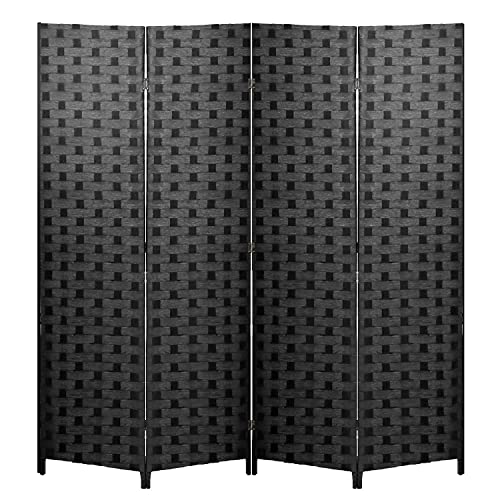
Most Reviewed
FDW 4-Panel Wood Mesh Room Divider
Buyers who want the most proven, best-reviewed wood divider on the market
Our take Check price for FDW 4-Panel Wood Mesh Room Divider (opens in a new tab)

Best Shoji Style
Roundhill Furniture Oriental Shoji 4-Panel Divider
Rooms that still need natural light to pass through the divider
Our take Check price for Roundhill Furniture Oriental Shoji 4-Panel Divider (opens in a new tab)

Most Upscale Design
Roundhill Furniture Aurra 4-Panel Divider
Buyers who want a decorative, upscale-looking divider as a design statement
Our take Check price for Roundhill Furniture Aurra 4-Panel Divider (opens in a new tab)
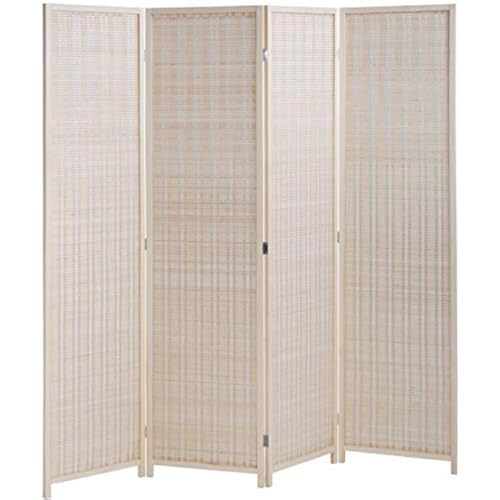
Most Opaque
FDW 4-Panel Bamboo + Pine Room Divider
Buyers who want the most complete visual privacy of any wood or bamboo pick here
Our take Check price for FDW 4-Panel Bamboo + Pine Room Divider (opens in a new tab)

Only Reversible Hand-Carved Pick
COTTON CRAFT Rajasthan 4-Panel Hand-Carved Divider
Buyers who want a reversible, furniture-grade centerpiece divider
Our take Check price for COTTON CRAFT Rajasthan 4-Panel Hand-Carved Divider (opens in a new tab)

Best Budget Pick
RHF 4-Panel Rattan + Wood Room Divider
Buyers who want a boho-style wood divider at the lowest price in this list
Our take Check price for RHF 4-Panel Rattan + Wood Room Divider (opens in a new tab)

Lightest Wood Species
HOMCOM 4-Panel Paulownia Wood Room Divider
Buyers who want built-in shelf storage on a lightweight, easy-to-move wood divider
Our take Check price for HOMCOM 4-Panel Paulownia Wood Room Divider (opens in a new tab)

Widest Shoji Pick
JOSTYLE 6-Panel Shoji Wood Screen
Large rooms that want the shoji look spread across the widest possible span
Our take Check price for JOSTYLE 6-Panel Shoji Wood Screen (opens in a new tab)
Our Picks
Most Reviewed1 of 8
FDW 4-Panel Wood Mesh Room Divider on Amazon (opens in a new tab)
Instead of solid slats or flat panels, each section is woven from eco-friendly wood in a distinctive lattice pattern that filters light while still marking a clear visual boundary.
Best for
- Buyers who want the most proven, best-reviewed wood divider on the market
Why we like it
4 lbs it's noticeably lighter than most wood dividers in this list, easy for one person to fold and reposition. Metal hinges join the panels for a fold that holds its shape without loosening over time.
Key dimensions & specs
- 70.5"W x 71"H, 4 panels
- Eco wood + metal hinges
- Hand-woven mesh design
- 15.4 lbs, lightweight
- Foldable, no assembly
Pros
- Distinctive hand-woven mesh look
- Eco-friendly wood, lightweight and foldable
- Easiest to reposition of the wood picks
Cons
- Mesh weave lets more light through than solid-panel picks
- Lighter build feels less substantial than solid wood
- Less privacy than the bamboo or shoji picks
Best Shoji Style2 of 8
Roundhill Furniture Oriental Shoji 4-Panel Divider on Amazon (opens in a new tab)
This Roundhill screen brings authentic Japanese shoji styling to a cherry wood frame, with rice paper panels that let natural light filter softly through rather than blocking it entirely.
Best for
- Rooms that still need natural light to pass through the divider
Why we like it
That translucency makes it a good fit for a room that still needs daylight to reach both sides, unlike the fully opaque bamboo or carved picks in this list.
Two-way hinges let it fold in either direction, and it ships ready to use with no assembly required.
Key dimensions & specs
- 72"W x 71"H, 4 panels
- Cherry wood frame + rice paper
- Translucent panels
- Two-way hinges
- No assembly, 15 lbs
Pros
- Most authentic Japanese shoji look
- Translucent panels let natural light filter through
- No assembly required
- Lightest wood shoji pick in this list at 15 lbs
Cons
- Rice paper panels offer less privacy than solid wood or fabric
- Rice paper is more delicate than bamboo or carved wood
- Not fully opaque, unsuitable if you need complete visual blocking
Most Upscale Design3 of 8
Roundhill Furniture Aurra 4-Panel Divider on Amazon (opens in a new tab)
Aurra swaps traditional slats for an intricate mosaic pattern across a black-and-gold frame, the most upscale-looking design among the modern wood picks in this list.
Best for
- Buyers who want a decorative, upscale-looking divider as a design statement
Why we like it
Engineered wood keeps the panels lighter than solid hardwood while the non-woven fabric backing adds opacity behind the decorative cutout pattern. 3 inches tall it's sized for a standard room split, and the hinge action moves smoothly from a flat straight line to a full zigzag fold. 6 stars it has one of the strongest review profiles in this list.
Key dimensions & specs
- 69.4"W x 70.3"H, 4 panels
- Engineered wood + non-woven fabric
- Intricate mosaic design
- No assembly
- Smooth hinge, flat to zigzag fold
Pros
- Most upscale mosaic design among the modern wood picks
- No assembly required
- Smooth hinge action from flat to zigzag
Cons
- Priciest 4-panel pick in this list at $129.99
- Mosaic cutouts let some light and sightline through
- Engineered wood, not solid hardwood
Most Opaque4 of 8
FDW 4-Panel Bamboo + Pine Room Divider on Amazon (opens in a new tab)
This FDW pick pairs bamboo and pine in the densest slat spacing of any bamboo divider in this list, which means it blocks light and sightlines more completely than the mesh or shoji-style picks above.
Best for
- Buyers who want the most complete visual privacy of any wood or bamboo pick here
Why we like it
If your priority is full visual privacy rather than a decorative pattern, the tight slat gaps here do that job better than any other pick.
7 inches wide by 72 inches tall, and anti-slip mats on the base of every panel help keep it from sliding on smooth flooring, a detail most wood dividers in this list skip.
Key dimensions & specs
- 17.7"W/panel x 72"H, 4 panels
- Bamboo + pine wood
- Densest bamboo slats in this list
- Anti-slip mats on each panel
- No assembly
Pros
- Densest bamboo slats in this list
- Blocks light most effectively of the bamboo/wood picks
- Anti-slip mats on every panel
- No assembly required
Cons
- Narrower per-panel width than most other picks
- Bamboo slats can show gaps at extreme viewing angles
- Mid-range price for a 4-panel divider
Only Reversible Hand-Carved Pick5 of 8
COTTON CRAFT Rajasthan 4-Panel Hand-Carved Divider on Amazon (opens in a new tab)
The Rajasthan divider is hand-carved on both sides, the only pick in this list that looks equally finished from either direction, so there's no wrong side to face into a room.
Best for
- Buyers who want a reversible, furniture-grade centerpiece divider
Why we like it
Mango wood over an MDF core gives it real heft, and at 80 inches wide it's also the widest hand-carved pick here. Twelve folding hinges let the panels move freely, and at 50 lbs it's the sturdiest, most substantial piece in this entire list, a genuine furniture-grade divider rather than a lightweight screen. No assembly is required despite the detailed carving. Widest hand-carved pick at 80".
Key dimensions & specs
- 80"W x 72"H, 4 panels
- Mango wood + MDF
- Hand-carved on both sides
- 12 folding hinges
- 50 lbs (sturdiest in this list), no assembly
Pros
- Only pick in this list hand-carved on both sides and reversible
- Widest hand-carved pick at 80"
- Sturdiest pick in this list at 50 lbs
- No assembly despite the detailed carving
Cons
- Most expensive pick in this list at $189.99
- Heaviest pick, harder for one person to reposition
- Detailed carving needs more careful dusting than flat panels
Best Budget Pick6 of 8
RHF 4-Panel Rattan + Wood Room Divider on Amazon (opens in a new tab)
Each panel is handmade by professional carpenters in a 5-medallion diamond weave pattern, giving it the most boho, rustic look of any pick here.
Best for
- Buyers who want a boho-style wood divider at the lowest price in this list
Why we like it
At 63 inches wide by 72 inches tall it's on the narrower side, and two-way hinges let it fold in either direction. No assembly is required, making it an easy first wood divider to try without a big investment.
Key dimensions & specs
- 63"W x 72"H, 4 panels
- Rattan + wood frame
- Handmade, 5-medallion diamond weave
- Two-way hinges
- No assembly
Pros
- Handmade diamond-weave pattern
- Most boho/rustic look in this list
- Cheapest pick in this entire list at $34.28
- No assembly required
Cons
- Rattan weave is less durable than solid wood over years of use
- Narrower 63" width than most other picks
- Diamond weave lets more light and sightline through than solid slats
Lightest Wood Species7 of 8
HOMCOM 4-Panel Paulownia Wood Room Divider on Amazon (opens in a new tab)
HOMCOM builds this divider from paulownia, the lightest wood species used by any pick in this list, so it's easier to lift, fold, and move than a comparable divider in oak, mango, or pine.
Best for
- Buyers who want built-in shelf storage on a lightweight, easy-to-move wood divider
Why we like it
Three removable shelves are built into the panels, a rare feature among wood dividers that lets you display or stash small items right at the boundary line.
The louvered slat design allows some airflow while still creating a strong visual break, and elevated feet lift the base slightly off the floor to resist moisture damage. At 63 inches wide and 67 inches tall it's on the shorter, more compact end of this list.
Comes with 3 removable display shelves.
Key dimensions & specs
- 63"L x 67"H, 4 panels
- Paulownia wood + 3 removable shelves
- Louvered slat design
- Elevated feet resist moisture
- Lightest wood in this list
Pros
- Lightest wood species in this list
- Comes with 3 removable display shelves
- Louvered design for ventilation
- Elevated feet protect against moisture
Cons
- Shorter 67" height than most other picks
- Louvered gaps let more light through than solid panels
- Paulownia is a softer wood, less dent-resistant than hardwood
Widest Shoji Pick8 of 8
JOSTYLE 6-Panel Shoji Wood Screen on Amazon (opens in a new tab)
JOSTYLE stretches the shoji format across 6 panels and 104 inches wide, the widest shoji-style pick in this list by a wide margin, covering more of a large room than any other translucent option here.
Best for
- Large rooms that want the shoji look spread across the widest possible span
Why we like it
Pine wood frames hold non-woven fabric panels rather than traditional rice paper, trading a little authenticity for extra durability.
Stainless steel 180-degree hinges are the most durable hinge type in this list, built to hold up to repeated folding without loosening. 9 inches tall it delivers standard privacy height across the widest span of any shoji-style divider here, and no assembly is required.
Key dimensions & specs
- 104"W x 70.9"H, 6 panels
- Pine wood + non-woven fabric
- Widest wood shoji pick in this list
- Stainless steel 180° hinges
- No assembly
Pros
- Widest wood shoji pick in this list at 104"
- Most durable stainless steel hinges
- Covers the largest area of any shoji-style pick
- No assembly required
Cons
- Non-woven fabric panels trade some authenticity for durability
- Fewer reviews than most other picks in this list
- 6-panel width needs more floor space to store when folded
How We Chose These Wood Room Dividers
Each pick was assessed across 5 criteria weighted for real-world use.
- Compared how fully each wood species and panel style, mesh, bamboo slat, shoji paper, or solid carved panel, actually blocks a sightline versus just implying a boundary.
- Weighed panel weight against how easily one person can fold, lift, and reposition each pick, since wood dividers range from a featherweight 15 lbs mesh screen up to a 50 lb hand-carved panel.
- Checked hinge material, stainless steel versus standard metal, and frame construction, since a wood divider that gets folded and moved regularly needs hinges that won't loosen over time.
- Finish quality on both sides
- Noted which picks are finished identically on both faces versus designed to be viewed primarily from one side, a detail that matters more on wood dividers than on fabric screens.
- Weighed wood quality, width, and included features like shelves against price, this list spans a rattan weave up to a hand-carved reversible panel.
What to Look for in a Wood Room Divider
Key buying criteria so you get the right fit the first time.
Check freestanding stability against your actual floor type, not just an empty room demo
A freestanding divider relies entirely on its own base footprint and panel angle for stability, with no wall support, and how well it actually stays upright varies depending on floor type, a divider that stands solidly on carpet can behave differently on hardwood or tile, and panels catching a draft from an HVAC vent can wobble more than expected.
This matters because a divider that looks stable in a still product photo can still tip or shift with regular foot traffic brushing past it.
Check reviews specifically for real-world stability mentions on floor types similar to yours, and check the base footprint width relative to the divider's height, since a taller divider needs a wider base to stay stable.
Confirm genuine sound dampening if acoustic privacy is the actual goal, not just visual blocking
A room divider marketed as "acoustic" should use a real sound-dampening material, typically a felt or fabric-wrapped panel core, that measurably reduces noise transmission, distinct from a simple solid panel or bookcase that only blocks the sightline without doing anything meaningful for sound.
This distinction matters directly if noise reduction for calls or focused work is your actual goal, since a purely visual divider does very little to dampen adjacent conversation or ambient noise regardless of how solid it looks.
Check the listing specifically for a stated acoustic material, not just the word "acoustic" in the title with no supporting material description.
Match panel height to your ceiling and the actual privacy level you need
Panel height determines both visual privacy and how much of the room's overall openness the divider preserves, a shorter divider maintains more light and airflow but offers less real privacy, while a taller divider that extends closer to the ceiling gives stronger separation at the cost of feeling like a more permanent wall.
This matters more in a room with a high ceiling, where a standard-height divider can look and feel undersized, and less in a room with a standard 8-foot ceiling where most divider heights work proportionally.
Check the listed divider height against your room's actual ceiling height and how much visual openness you want to preserve, not just the divider's general size category.
Weigh assembly and mounting requirements against whether you're renting or own the space
Room dividers span a wide range of setup requirements, from a no-drill freestanding panel that requires zero installation to a wall-mounted or track-based divider requiring drilling and potentially professional installation, and which one is appropriate depends heavily on whether you're in a rented space where drilling isn't an option, or a space you own where a more permanent installation is fine.
This matters directly for a renter, discovering after purchase that a divider requires wall-mounting hardware is a real and avoidable problem in a space where drilling isn't allowed.
Check the listing specifically for the mounting method, freestanding, no-drill, or requiring wall anchors, before ordering, especially in a rented space.
Consider mobility needs if the divider will move between rooms or configurations regularly
A divider on wheels or casters can be repositioned easily between rooms or reconfigured for different layouts throughout the week, useful for anyone who needs flexible zoning rather than a permanent room split, but wheels also mean the divider is inherently less stable than a fixed-base design and can shift underfoot if bumped.
This matters more if you need to move the divider often, like separating a home office from a living space only during work hours, less if it'll stay in one position long-term.
Check whether casters are lockable to prevent unwanted movement once positioned, and weigh mobility against the reduced stability it typically brings.
How to Choose a Wood Room Divider
By Rating Confidence: Highest Rated vs Most Reviewed
| Roundhill Furniture Oriental Shoji 4 | |
- Doubles as shelving while dividing the room, useful in a smaller space. In this comparison: HOMCOM 4.
- Simpler, focused purely on visual or acoustic separation. In this comparison: FDW 4, Roundhill Furniture Oriental Shoji 4, Roundhill Furniture Aurra 4, FDW 4, COTTON CRAFT Rajasthan 4, RHF 4, JOSTYLE 6.
Default to panel-only unless built-in storage solves a real space problem for you.
Check each pick's listed panel height against your room's ceiling and the actual privacy level you need before buying.
For a Rented Space Specifically
- A genuine freestanding or no-drill design that requires zero wall modification, not a divider that turns out to need wall anchors.
- You need real acoustic dampening or a taller, more stable divider, where COTTON CRAFT Rajasthan 4's material and construction give real headroom over the cheaper picks.
- You just need light visual separation without noise or stability concerns, where RHF 4 covers the same job at a lower price.
Frequently Asked Questions
Is a wood room divider better than a fabric one?
Wood generally offers better durability and structural integrity for daily wear and tear, while fabric is lighter, easier to fold and move, and does a better job absorbing sound. If your priority is a lasting piece of furniture that holds its shape, wood wins, if you need something you'll fold away often or want acoustic benefits, fabric is usually the better fit.
Do wood room dividers need regular maintenance?
Yes, generally more than fabric. Wood dividers typically need periodic dusting and occasional polishing or refinishing to keep their look, while fabric panels can usually be spot-cleaned or machine washed. It's a small amount of upkeep, but worth planning for if you want a low-maintenance option.
Which wood divider in this list blocks the most light and sightline?
The FDW Bamboo + Pine pick has the densest slat spacing of any bamboo divider here, and the COTTON CRAFT Rajasthan's solid hand-carved panels are fully opaque. Both block far more sightline than the translucent Roundhill shoji picks, which are designed to filter light rather than block it entirely.
Are wood room dividers heavy to move around?
It depends on the wood species and construction. Paulownia and eco wood mesh designs, like the HOMCOM and FDW picks here, are noticeably lighter at 15-20 lbs, while a hand-carved mango wood panel like the COTTON CRAFT Rajasthan weighs 50 lbs and is meant to stay in one spot rather than be repositioned often.
What's the difference between a shoji screen and a regular wood divider?
A shoji screen uses a wood frame with translucent rice paper or fabric panels that let light filter through softly rather than blocking it outright, an authentic Japanese design element. A regular wood divider, like a bamboo slat or solid carved panel, is built for full opacity and privacy rather than light diffusion.
Bottom Line
Best overall: FDW 4-Panel Wood Mesh Room Divider — most reviewed pick in this roundup. See the full verdicts above for every pick, with pros, cons and who each one suits.
Browse all wood room dividers on Amazon — Prime-eligible options with current pricing.