
Buying Guide
The Best Room Divider Screens for a Better Desk Setup
We looked at 8 room divider screens side by side, with the trade-offs that separate them and who each one suits.
By Jamie Cole, Lead Product Researcher
9 min read8 products evaluated
We may earn a commission from purchases made through links in this guide. Learn more.
A room divider screen trades storage capacity for something a bookcase can't offer: true portability, a lighter footprint, and a look that ranges from traditional Japanese shoji to modern frosted acrylic. Because screens fold flat and often weigh under 20 lbs, they're the easier pick for renters or anyone who needs to reconfigure a room often.
Below are 8 room divider screens we compared on panel material, how much light and sound they actually block, and folding hinge quality, ranging from a $34 handmade rattan weave to a $140 frosted acrylic panel that outlasts glass without the weight.
Quick Picks
Our 8 recommendations at a glance. Tap a pick for the full verdict.

Best-Selling
Roundhill Furniture Black Japanese 4-Panel Screen
Buyers who want the most proven, most distinctive printed shoji screen
Our take Check price for Roundhill Furniture Black Japanese 4-Panel Screen (opens in a new tab)

Most Refined Design
Roundhill Furniture Giyano 4-Panel Screen
Buyers who want a modern, refined mosaic look over a traditional shoji pattern
Our take Check price for Roundhill Furniture Giyano 4-Panel Screen (opens in a new tab)

Most Authentic Shoji
Roundhill Furniture Oriental Shoji 4-Panel Screen
Buyers who want an authentic traditional shoji look with natural light diffusion
Our take Check price for Roundhill Furniture Oriental Shoji 4-Panel Screen (opens in a new tab)
Best-Selling Wood Mesh
FDW Wood Mesh Hand-Woven 4-Panel Screen
Buyers who want a distinctive hand-woven look and don't need full opacity
Our take Check price for FDW Wood Mesh Hand-Woven 4-Panel Screen (opens in a new tab)

Best Budget Pick
RHF 4-Panel Rattan Screen
Budget-conscious buyers who want a handmade boho look
Our take Check price for RHF 4-Panel Rattan Screen (opens in a new tab)

Most Durable Hinges
JOSTYLE Japanese Shoji 4-Panel Screen
Buyers who want the hinges to be the most durable part of the screen
Our take Check price for JOSTYLE Japanese Shoji 4-Panel Screen (opens in a new tab)

Widest Pick
VEVOR 6-Panel Japanese Wood Screen
Wide rooms needing a 6-panel screen to fully span the space
Our take Check price for VEVOR 6-Panel Japanese Wood Screen (opens in a new tab)

Only Acrylic Pick
Svimi 4-Panel Acrylic Frosted Screen
Buyers who want a modern, more durable alternative to glass or paper panels
Our take Check price for Svimi 4-Panel Acrylic Frosted Screen (opens in a new tab)
Our Picks
Best-Selling1 of 8
Roundhill Furniture Black Japanese 4-Panel Screen on Amazon (opens in a new tab)
Its printed plum-blossom pattern in red and black over a translucent rice paper panel gives it the most distinctive look here, closer to wall art than a plain divider.
Best for
- Buyers who want the most proven, most distinctive printed shoji screen
Why we like it
Hardwood framing keeps it sturdy despite being the lightest pick in this list at just 11 lbs, and it needs no assembly, so it goes from box to standing divider in minutes.
Most distinctive printed shoji pattern.
Key dimensions & specs
- 71"W x 71"H (4 panels)
- Hardwood + rice paper
- Printed plum-blossom pattern, translucent
- 11 lbs (lightest pick in this list)
- No assembly required
Pros
- Most distinctive printed shoji pattern
- Lightest screen in this list at 11 lbs
- Hardwood frame despite the low weight
Cons
- Rice paper panels are translucent, not fully private
- Printed pattern may not suit a minimalist room
- Paper panels need gentle handling around kids or pets
Most Refined Design2 of 8
Roundhill Furniture Giyano 4-Panel Screen on Amazon (opens in a new tab)
The Giyano trades the traditional shoji look for an intricate white mosaic chip-themed frame, the most refined and modern design among the group.
Best for
- Buyers who want a modern, refined mosaic look over a traditional shoji pattern
Why we like it
Pine and MDF construction is wrapped in non-woven fabric panels rather than rice paper, giving it a slightly different texture and feel.
At 70"H x 70"W it's sized to match most standard shoji screens, and like the rest of the Roundhill lineup it needs no assembly out of the box.
Key dimensions & specs
- 70"H x 70"W (4 panels)
- Pine + MDF + non-woven fabric
- Intricate mosaic chip-themed frame
- No assembly required
Pros
- Most refined mosaic design in this list
- Fabric panels feel different from typical rice paper
- No assembly required
Cons
- Pricier than most other picks in this list
- White finish shows dust and marks more visibly
- Fabric panels are less traditional than shoji rice paper
Most Authentic Shoji3 of 8
Roundhill Furniture Oriental Shoji 4-Panel Screen on Amazon (opens in a new tab)
This cherry-finish screen is the most authentic traditional shoji design in this list, built from real cherry wood with translucent rice paper panels that let natural light filter through rather than blocking it entirely.
Best for
- Buyers who want an authentic traditional shoji look with natural light diffusion
Why we like it
Two-way hinges let the panels fold in either direction for flexible placement.
At 15 lbs it's the lightest wood-framed shoji pick here, and it arrives fully assembled. Traditional rice paper shoji does need gentler care than synthetic panels; expect to touch up or replace the paper every couple of years in sun-exposed spots.
Translucent panels let natural light through.
Key dimensions & specs
- 72"W x 71"H (4 panels)
- Cherry wood + rice paper
- Translucent panels, two-way hinges
- 15 lbs (lightest wood shoji in this list)
- No assembly required
Pros
- Most authentic traditional shoji look
- Translucent panels let natural light through
- Two-way hinges for flexible folding
- Lightest wood-framed pick at 15 lbs
Cons
- Rice paper offers light diffusion, not real privacy
- Traditional paper needs gentle cleaning, no water or alcohol
- May need paper touch-ups every 18-24 months in sunny rooms
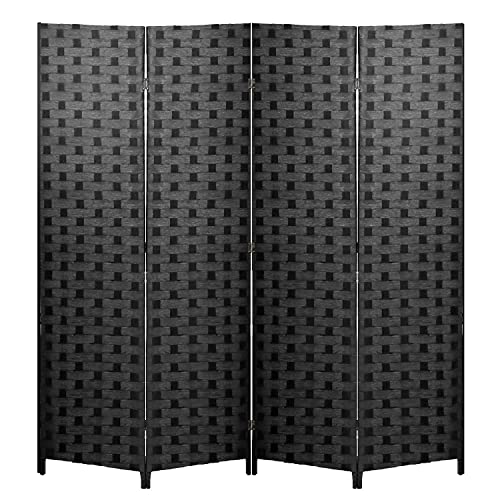
Best-Selling Wood Mesh4 of 8
FDW Wood Mesh Hand-Woven 4-Panel Screen on Amazon (opens in a new tab)
The FDW wood mesh screen has more reviews than any other pick in this list at over 7,600, driven by its distinctive hand-woven lattice look that stands apart from both shoji paper and rattan weave designs.
Best for
- Buyers who want a distinctive hand-woven look and don't need full opacity
Why we like it
Eco wood construction paired with metal hinges keeps it foldable and lightweight.
The open mesh pattern trades privacy for airflow and light, more of a visual softener between spaces than a true opaque barrier, which is worth knowing before you buy.
Key dimensions & specs
- 71"H x 70.5"W (4 panels)
- Eco wood + metal hinges
- Hand-woven mesh design
- Eco-friendly, foldable, lightweight
Pros
- Distinctive hand-woven mesh look
- Eco-friendly wood construction
- Lightweight and easy to fold
Cons
- Open mesh pattern offers less visual privacy than solid panels
- Lower star rating than the top shoji picks
- Not ideal if full sound or sight blocking is the goal
Best Budget Pick5 of 8
RHF 4-Panel Rattan Screen on Amazon (opens in a new tab)
, the RHF rattan screen is the cheapest pick in this list without sacrificing craftsmanship, its handmade 5-medallion diamond weave gives it a distinctly boho look that the modern acrylic and shoji picks don't offer.
Best for
- Budget-conscious buyers who want a handmade boho look
Why we like it
Two-way hinges make it flexible to position around furniture or corners. Rattan and wood construction keeps it lightweight, and like most picks here it arrives needing no assembly, straight out of the box and ready to unfold.
Key dimensions & specs
- 63"W x 72"H (4 panels)
- Rattan + wood
- Handmade 5-medallion diamond weave
- Two-way hinges
- No assembly required
Pros
- Cheapest pick in this list at $34.28
- Handmade diamond-weave pattern
- Most boho aesthetic in this list
- Two-way hinges for flexible positioning
Cons
- Open weave offers less privacy than solid panels
- Rattan is less durable long-term than hardwood or acrylic
- Narrower 63" width than most other picks
Most Durable Hinges6 of 8
JOSTYLE Japanese Shoji 4-Panel Screen on Amazon (opens in a new tab)
JOSTYLE uses stainless steel 180-degree hinges instead of the standard metal hinges found on most screens in this list, a detail that matters since repeated folding is usually where screen hinges wear out first.
Best for
- Buyers who want the hinges to be the most durable part of the screen
Why we like it
Handmade pine framing keeps the natural wood look intact without paint or heavy stain.
Non-woven fabric panels are odor-free out of the box, and like the rest of the shoji-style picks here, it arrives fully assembled and ready to unfold.
Key dimensions & specs
- 70.9"H x 69"W (4 panels)
- Pine wood + non-woven fabric
- Stainless steel 180° hinges
- Handmade pine, no odor
- No assembly required
Pros
- Most durable stainless steel hinges in this list
- Handmade pine construction
- No off-gassing odor out of the box
- No assembly required
Cons
- Fabric panels don't diffuse light like traditional rice paper
- Mid-range price without the review volume to back it up yet
Widest Pick7 of 8
VEVOR 6-Panel Japanese Wood Screen on Amazon (opens in a new tab)
3 inches wide, the widest screen in this list, built for rooms where a standard 4-panel screen wouldn't stretch far enough to fully divide the space.
Best for
- Wide rooms needing a 6-panel screen to fully span the space
Why we like it
Durable tung wood framing holds up better against humidity than typical pine.
360-degree bidirectional hinges are the most flexible in this list, letting panels fold either direction freely, and waterproof fabric panels add some resilience the paper-based shoji screens don't have.
Most flexible 360° bidirectional hinges. 9" height than most other picks.
Key dimensions & specs
- 95.3"W x 66.9"H (6 panels)
- Tung wood + MDF + non-woven fabric
- 360° bidirectional hinges
- Waterproof fabric panels
- No assembly required
Pros
- Widest pick in this list at 95.3"
- Most flexible 360° bidirectional hinges
- Durable tung wood, holds up well against humidity
- Waterproof fabric panels
Cons
- Shorter 66.9" height than most other picks
- Bulkier to fold and store given the extra panels
- Smaller review sample than the top-selling picks
Only Acrylic Pick8 of 8
Svimi 4-Panel Acrylic Frosted Screen on Amazon (opens in a new tab)
Svimi is the only frosted acrylic pick in this list, a different material category from every wood, rattan, and fabric screen above it.
Best for
- Buyers who want a modern, more durable alternative to glass or paper panels
Why we like it
Premium acrylic panels are rated roughly 3 times more durable than glass and shatter-resistant, a real advantage over the paper and fabric panels that dominate the rest of this list.
The frosted finish diffuses light beautifully while staying stain-resistant, and its black metal frame gives it the most modern, minimalist look here, closer to a design piece than a traditional screen.
Key dimensions & specs
- 67"H x 63"W (4 panels)
- Premium acrylic + metal frame
- Shatter-resistant, ~3x more durable than glass
- Diffuses light, stain-resistant
Pros
- Only frosted acrylic pick in this list
- More durable and shatter-resistant than glass
- Most modern, minimalist design
- Stain-resistant surface
Cons
- Most expensive pick in this list
- Shorter 67" height than most wood picks
How We Chose These Room Divider Screens
Each pick was assessed across 5 criteria weighted for real-world use.
- Compared rice paper, non-woven fabric, rattan weave, wood mesh, and frosted acrylic against how well each holds up to sunlight, moisture, and repeated folding over time.
- Weighed how much each panel type actually blocks sight versus simply diffusing light, translucent shoji paper and open mesh weaves score very differently from solid acrylic or dense fabric.
- Hinge quality and fold flexibility
- Checked hinge material and rotation range, since repeated folding is typically where a screen wears out first, and stainless steel or 360° hinges hold up better than basic metal pins.
- Compared total weight and panel count, since a lighter screen is easier for one person to fold, move, or reposition without help.
- Weighed panel material, hinge quality, and size against price, the RHF rattan screen and Svimi acrylic screen sit at opposite ends of that budget-to-material trade-off.
What to Look for in a Room Divider Screen
Key buying criteria so you get the right fit the first time.
Check freestanding stability against your actual floor type, not just an empty room demo
A freestanding divider relies entirely on its own base footprint and panel angle for stability, with no wall support, and how well it actually stays upright varies depending on floor type, a divider that stands solidly on carpet can behave differently on hardwood or tile, and panels catching a draft from an HVAC vent can wobble more than expected.
This matters because a divider that looks stable in a still product photo can still tip or shift with regular foot traffic brushing past it.
Check reviews specifically for real-world stability mentions on floor types similar to yours, and check the base footprint width relative to the divider's height, since a taller divider needs a wider base to stay stable.
Confirm genuine sound dampening if acoustic privacy is the actual goal, not just visual blocking
A room divider marketed as "acoustic" should use a real sound-dampening material, typically a felt or fabric-wrapped panel core, that measurably reduces noise transmission, distinct from a simple solid panel or bookcase that only blocks the sightline without doing anything meaningful for sound.
This distinction matters directly if noise reduction for calls or focused work is your actual goal, since a purely visual divider does very little to dampen adjacent conversation or ambient noise regardless of how solid it looks.
Check the listing specifically for a stated acoustic material, not just the word "acoustic" in the title with no supporting material description.
Match panel height to your ceiling and the actual privacy level you need
Panel height determines both visual privacy and how much of the room's overall openness the divider preserves, a shorter divider maintains more light and airflow but offers less real privacy, while a taller divider that extends closer to the ceiling gives stronger separation at the cost of feeling like a more permanent wall.
This matters more in a room with a high ceiling, where a standard-height divider can look and feel undersized, and less in a room with a standard 8-foot ceiling where most divider heights work proportionally.
Check the listed divider height against your room's actual ceiling height and how much visual openness you want to preserve, not just the divider's general size category.
Weigh assembly and mounting requirements against whether you're renting or own the space
Room dividers span a wide range of setup requirements, from a no-drill freestanding panel that requires zero installation to a wall-mounted or track-based divider requiring drilling and potentially professional installation, and which one is appropriate depends heavily on whether you're in a rented space where drilling isn't an option, or a space you own where a more permanent installation is fine.
This matters directly for a renter, discovering after purchase that a divider requires wall-mounting hardware is a real and avoidable problem in a space where drilling isn't allowed.
Check the listing specifically for the mounting method, freestanding, no-drill, or requiring wall anchors, before ordering, especially in a rented space.
Consider mobility needs if the divider will move between rooms or configurations regularly
A divider on wheels or casters can be repositioned easily between rooms or reconfigured for different layouts throughout the week, useful for anyone who needs flexible zoning rather than a permanent room split, but wheels also mean the divider is inherently less stable than a fixed-base design and can shift underfoot if bumped.
This matters more if you need to move the divider often, like separating a home office from a living space only during work hours, less if it'll stay in one position long-term.
Check whether casters are lockable to prevent unwanted movement once positioned, and weigh mobility against the reduced stability it typically brings.
How to Choose a Room Divider Screen
By Rating Confidence: Highest Rated vs Most Reviewed
| Roundhill Furniture Black Japanese 4 | |
- The lower-priced option in this comparison, worth checking its base footprint and stability against your floor type.
- The higher-priced option, worth it if it offers real stability or material headroom above the cheaper pick.
Default to RHF 4 unless your specific needs call for the pricier pick.
Check each pick's listed panel height against your room's ceiling and the actual privacy level you need before buying.
For a Rented Space Specifically
- A genuine freestanding or no-drill design that requires zero wall modification, not a divider that turns out to need wall anchors.
- You need real acoustic dampening or a taller, more stable divider, where Svimi 4's material and construction give real headroom over the cheaper picks.
- You just need light visual separation without noise or stability concerns, where RHF 4 covers the same job at a lower price.
Frequently Asked Questions
Do room divider screens block sound?
Every material in this list, rice paper, fabric, rattan, wood mesh, or acrylic, creates a visual break in a room but doesn't stop sound the way a solid wall or bookcase would. If noise separation is the priority, pair a screen with soft furnishings like rugs or curtains rather than relying on the panels alone.
How should I position a folding screen so it doesn't tip over?
Stand it in a zigzag or gentle curve rather than a flat straight line, this widens its effective base and makes it far harder to knock over, especially in homes with kids or pets. Placing it against a wall or in a corner is even more stable since one side is naturally braced.
How do I maintain a traditional shoji paper screen?
Dust it monthly with a soft brush and spot-clean with a dry microfiber cloth only, never water, alcohol, or abrasive cleaners. In sun-exposed rooms, expect to replace the rice paper roughly every 18-24 months as it yellows or tears. If that maintenance sounds like too much, a synthetic fabric or acrylic screen needs far less upkeep, though synthetic panels can turn brittle or cloudy after 3-5 years of sustained UV exposure.
Is an acrylic screen better than a traditional wood and paper screen?
It depends on your priorities. The Svimi acrylic screen is roughly 3 times more durable than glass, shatter-resistant, and needs no periodic paper replacement, making it the lowest-maintenance pick in this list. But it costs more and lacks the warm, traditional look of the Roundhill shoji screens, which remain the more authentic choice if aesthetics matter more than upkeep.
Which room divider screen is best for a wide room?
3 inches wide, the widest in this list, making it the best fit for open-concept rooms where a standard 4-panel screen wouldn't stretch far enough. Most other picks here use 4 panels and top out around 63-72 inches wide.
Bottom Line
Best overall: Roundhill Furniture Black Japanese 4-Panel Screen — best-selling pick in this roundup. See the full verdicts above for every pick, with pros, cons and who each one suits.
Browse all room divider screens on Amazon — Prime-eligible options with current pricing.