
Buying Guide
The Best Portable Power Stations for CPAP: Our Picks
We looked at 6 portable power stations for CPAP side by side, with the trade-offs that separate them and who each one suits.
By Jamie Cole, Lead Product Researcher
8 min read6 products evaluated
We may earn a commission from purchases made through links in this guide. Learn more.
Best Portable Power Stations for CPAP looks straightforward from the outside, but the real differentiator between stations is using the exact CPAP manufacturer input spec rather than inferring compatibility from outlet presence.
We prioritized measured usable energy and safety documentation plus using the exact CPAP manufacturer input spec rather than inferring compatibility from outlet presence over brand reputation when building this list.
Quick Picks
Our 6 recommendations at a glance. Tap a pick for the full verdict.

Best Overall
EnginStar Portable Power Station 300W, 296Wh
buyers prioritizing 296wh, 300w, etl certified, 6.5 lbs
Our take Check price for EnginStar Portable Power Station 300W, 296Wh (opens in a new tab)
Runner-Up
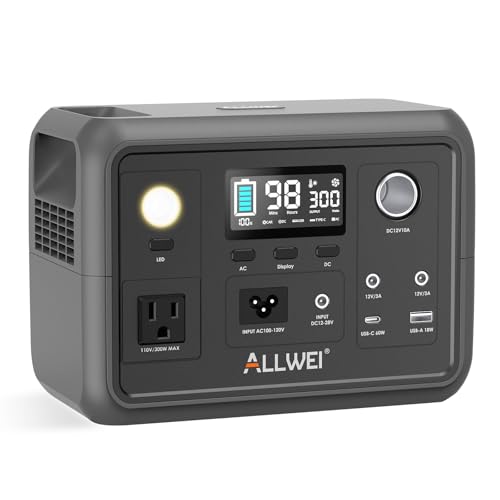
ALLWEI Portable Power Station 300W, 256Wh LiFePO4 Battery
buyers prioritizing 256wh, 300w (600w surge), 6.4 lbs
Our take Check price for ALLWEI Portable Power Station 300W, 256Wh LiFePO4 Battery (opens in a new tab)

Also Great
Jackery Explorer 300 Portable Power Station, 292Wh
buyers prioritizing 292wh, 300w (600w surge), 7.5 lbs
Our take Check price for Jackery Explorer 300 Portable Power Station, 292Wh (opens in a new tab)

Strong Alternative
MARBERO M822 Portable Power Station, 200W, 148Wh
buyers prioritizing 148wh, 200w (270w max), 3.3 lbs
Our take Check price for MARBERO M822 Portable Power Station, 200W, 148Wh (opens in a new tab)

Worth Considering
ENOFLO G300 Portable Power Station, 300W, 228Wh
Buyers prioritizing 228wh, 300w (600w surge)
Our take Check price for ENOFLO G300 Portable Power Station, 300W, 228Wh (opens in a new tab)

Budget Pick
BLUETTI Elite 30 V2 Portable Power Station, 288Wh 600W
Buyers prioritizing 288wh, 600w (1500w power lifting)
Our take Check price for BLUETTI Elite 30 V2 Portable Power Station, 288Wh 600W (opens in a new tab)
Our Picks
Best Overall1 of 6
EnginStar Portable Power Station 300W, 296Wh on Amazon (opens in a new tab)
5 lb frame, built as an emergency, outdoor, and camping backup battery.
Best for
- buyers prioritizing 296wh, 300w, etl certified, 6.5 lbs
Why we like it
Eight output ports let multiple devices charge at once, with dual 110V pure sine wave AC outlets keeping the unit quieter, more efficient, and more stable while protecting sensitive electronics like laptops.
Two regulated DC outputs (12V/24V) provide stable power for DC appliances like mini-fridges or car vacuums. Three charging methods (compatible 12-25V solar panel not included, wall outlet, or 12V car socket) reach 80% in 2 hours at maximum 65W speed, backed by a battery management system with voltage and temperature control supporting over 1000 charge cycles.
Key dimensions & specs
- 296Wh, 300W, ETL certified, 6.5 lbs
- 2 regulated DC outputs (12V/24V)
- 8 output ports, 80% in 2hr
Pros
- ETL certification is a real independently verified safety mark
- Regulated 12V/24V DC outputs directly suit car appliances and mini-fridges
- 6.5 lbs keeps this light for camping backup use
Cons
- Solar panel for the third charging method sold separately
- 1000+ cycle rating trails the 3000+ common on LiFePO4-focused rivals
Runner-Up2 of 6
ALLWEI Portable Power Station 300W, 256Wh LiFePO4 Battery on Amazon (opens in a new tab)
This 256Wh LiFePO4 station delivers 300W continuous power with a 600W peak surge through pure sine wave output, safe for laptops, mini fridges, CPAP machines, and drones.
Best for
- buyers prioritizing 256wh, 300w (600w surge), 6.4 lbs
Why we like it
Six output ports include an AC outlet, dual DC5521 ports, a car cigarette lighter port, an 18W USB-A, and a 60W USB-C PD.
3000 charge-discharge cycles document nearly a decade of regular use, backed by 6-layer BMS protection and pass-through charging that lets you charge the station and devices simultaneously. 5 hours, with a built-in MPPT controller optimizing solar efficiency and a 3-level LED light with SOS mode for emergencies.
Key dimensions & specs
- 256Wh, 300W (600W surge), 6.4 lbs
- 2-2.5hr full charge (AC+solar combined)
- 6-layer BMS, pass-through charging
Pros
- Dual AC+solar charging cuts full recharge to a genuine 2-2.5 hours
- Pass-through charging lets you charge station and devices at once
- 6.4 lbs and compact size make this backpack-portable
Cons
- 100W solar panel for fastest charging is sold separately
- 300W rated output limits use to lighter appliances only
Also Great3 of 6
Jackery Explorer 300 Portable Power Station, 292Wh on Amazon (opens in a new tab)
5 lbs, this is documented 17% lighter than the industry average for its class, with an integrated handle built for long hikes.
Best for
- buyers prioritizing 292wh, 300w (600w surge), 7.5 lbs
Why we like it
Six devices connect at once across 2 AC outlets, a 100W USB-C PD port, 2 USB-A ports, and a 120W car port, with 300W rated output and 600W peak surge.
Premium LiFePO4 chemistry delivers over 4000 charge cycles before dropping to 70% capacity, a documented 11-plus year service life. 5 hours, flexible for different outdoor setups.
Key dimensions & specs
- 292Wh, 300W (600W surge), 7.5 lbs
- 11+ year life, 4000+ cycles
- 6 devices, USB-C PD 100W
Pros
- 7.5 lbs is documented 17% lighter than the industry average
- 11+ year service life is long for this capacity
- USB-C PD 100W charges devices without a separate adapter
Cons
- 300W rated output limits higher-draw appliances
- No included solar panel for the documented charge times
Strong Alternative4 of 6
MARBERO M822 Portable Power Station, 200W, 148Wh on Amazon (opens in a new tab)
A 110V AC inverter supports most household AC needs excluding heating appliances over 270W, and pass-through charging is documented as supported.
Best for
- buyers prioritizing 148wh, 200w (270w max), 3.3 lbs
Why we like it
Two LED flashlights, one on top with two brightness levels and one on the side with three modes including SOS, add genuine emergency utility. Three recharge methods (wall outlet in 7 hours, car adapter in 9 hours, or an optional solar panel) give real flexibility for a station this compact.
Key dimensions & specs
- 148Wh, 200W (270W max), 3.3 lbs
- 7.5x5.3x3.6in compact frame
- Pass-through charging supported
Pros
- compact 3.3 lb frame with real 200W output
- Two separate LED flashlights, one with dedicated SOS mode
- Pass-through charging documented as fully supported
Cons
- Not suited for appliances drawing over 270W peak
- Solar panel for the third charging method sold separately
Worth Considering5 of 6
ENOFLO G300 Portable Power Station, 300W, 228Wh on Amazon (opens in a new tab)
This 228Wh station delivers 300W (600W surge) pure sine wave power supporting laptops, tablets, CPAP machines, projectors, and mini-refrigerators under 300W.
Best for
- Buyers prioritizing 228wh, 300w (600w surge)
Why we like it
Nine devices connect simultaneously via dual USB-A, a USB-C output, dual 300W AC outlets, dual DC ports, a cigarette lighter port, and a wireless charging pad, comprehensive for this capacity.
Built-in MPPT technology enables faster solar recharge via ENOFLO's own YT30/YT60 30W/60W panels (sold separately, about 6-7 hours), or full charge via car port (7-8 hours) or AC wall outlet (6-7 hours). A premium LED light source across the whole back panel offers bright illumination, and a clear LCD screen with BMS monitoring voltage, current, and temperature backs 12-month lifetime technical support.
Key dimensions & specs
- 228Wh, 300W (600W surge)
- 9 simultaneous devices incl. wireless pad
- Built-in MPPT, brand-specific solar panels
Pros
- 9 simultaneous device connections is deep for this capacity
- Wireless charging pad adds real cable-free convenience
- Whole-back-panel LED provides bright emergency illumination
Cons
- Fastest solar charging requires ENOFLO's own specific panels
- 228Wh capacity is modest for extended runtime needs
Budget Pick6 of 6
BLUETTI Elite 30 V2 Portable Power Station, 288Wh 600W on Amazon (opens in a new tab)
4 lbs, this is built for grab-and-go storm prep, delivering a full 600W continuous output, twice the typical output for entry-level stations this size, with Power Lifting Mode pushing to 1500W for serious loads.
Best for
- Buyers prioritizing 288wh, 600w (1500w power lifting)
Why we like it
Eight charging modes include 380W fast wall charging (0-80% in 45 minutes, full in 70 minutes battery-safe), plus solar and car charging options. The 10ms ultra-fast UPS switch protects CPAP machines, laptops, and routers specifically during winter storms and blackouts.
Key dimensions & specs
- 288Wh, 600W (1500W Power Lifting)
- 9.4 lbs, 4.5W standby draw
- 8 charging modes, 45-min 0-80%
Pros
- 600W continuous is double typical entry-level output
- 4.5W standby draw is documented 50% lower than prior gen
- 9.4 lbs makes this grab-and-go for storm prep
Cons
- 1500W Power Lifting Mode likely has real time limits
- 288Wh capacity limits sustained runtime for larger devices
How We Chose These Portable Power Stations for CPAP
Each pick was assessed across 5 criteria weighted for real-world use.
- Rated Wh Verified Against Usable Energy
- Checked documented battery capacity separately from continuous AC output, since a high wattage rating doesn't guarantee enough stored energy to run a device for long.
- Continuous Output vs Surge Separated
- Compared continuous inverter rating against surge or boost mode claims, since many listings blend the two into one headline number.
- Charging Speed and Path Documented
- Verified AC, solar, and car charging times from official specs, noting where fastest speeds require specific modes, apps, or additional hardware.
- Safety and Certification Evidence Checked
- Looked for UL, UL2743, or other documented safety certification and battery chemistry evidence rather than trusting a safety claim alone.
- Weighed included cables, solar panel bundling, warranty length, and app requirements as part of the real cost and usability of each pick.
What to Look for in a Portable Power Station for CPAP
Key buying criteria so you get the right fit the first time.
Use the Exact CPAP Manufacturer Spec
Confirm portable power stations for cpap's output matches your exact CPAP manufacturer's input specification rather than inferring compatibility from outlet presence.
Measure Runtime With and Without Humidifier
Check runtime specifically with and without a humidifier or heated hose, since power use can change substantially.
Compare Direct DC vs AC Inverter Operation
Compare direct DC operation where officially supported against AC inverter operation for efficiency differences.
Verify Transfer Behavior for Backup Use
Verify transfer behavior and alarms if the station is intended as therapy backup during a grid outage.
Follow your CPAP manufacturer and clinician's backup-power guidance rather than relying on a generic runtime estimate.
How to Choose a Portable Power Station for CPAP
Use the Exact CPAP Manufacturer Spec
Confirm portable power stations for cpap's output matches your exact CPAP manufacturer's input specification rather than inferring compatibility from outlet presence.
Measure Runtime With and Without Humidifier
Check runtime specifically with and without a humidifier or heated hose, since power use can change substantially.
Compare Direct DC vs AC Inverter Operation
Compare direct DC operation where officially supported against AC inverter operation for efficiency differences.
Verify Transfer Behavior for Backup Use
Verify transfer behavior and alarms if the station is intended as therapy backup during a grid outage.
Follow your CPAP manufacturer and clinician's backup-power guidance rather than relying on a generic runtime estimate.
Frequently Asked Questions
Can any portable power station reliably run a CPAP machine?
Startup surge and duty cycle vary significantly by exact appliance model, so verify the manufacturer's documented power requirement and test with the actual device rather than assuming a generic runtime estimate applies.
Does station idle power draw meaningfully affect backup runtime?
Standby or idle power consumption varies between models, and for a low-average-load device like a fridge compressor cycling on and off, that idle draw can meaningfully shorten total backup time compared to the theoretical calculation.
What's the real difference between watts and watt-hours for a power station?
Watts (W) measure how much power the station can deliver at once, essentially how many devices it can run simultaneously, while watt-hours (Wh) measure total stored energy, essentially how long it can run those devices. A station with high W but low Wh can power a lot at once but only briefly.
Does a surge or peak wattage rating mean the station can run appliances at that power level?
Surge or peak ratings describe a brief burst the inverter can handle, typically for a compressor or motor startup, not a sustained output level. Always check the continuous or rated wattage figure for what the station can actually run for extended periods.
Is LiFePO4 battery chemistry actually safer than standard lithium-ion?
LiFePO4 (LFP) cells are generally considered more thermally stable than standard lithium-ion or lithium-polymer cells, with a lower risk of thermal runaway, and most current portable power stations have shifted to LFP for this reason. Still, verify UL or UL2743 safety certification directly rather than assuming chemistry alone guarantees safety.
Bottom Line
Best overall: EnginStar Portable Power Station 300W, 296Wh — best overall pick in this roundup. See the full verdicts above for every pick, with pros, cons and who each one suits.
Browse all portable power stations for cpap on Amazon — Prime-eligible options with current pricing.