
Buying Guide
The Best Network Switches for Home Use: Our Picks
We looked at 7 network switches for home use side by side, with the trade-offs that separate them and who each one suits.
By Jamie Cole, Lead Product Researcher
10 min read7 products evaluated
We may earn a commission from purchases made through links in this guide. Learn more.
A home network rarely needs VLANs, Layer 3 routing, or a rack, it needs a quiet, reliable box that adds ports without becoming another thing to maintain. Fanless operation and genuine plug-and-play setup matter more here than for a small business deployment.
We prioritized unmanaged and easy-managed switches with proven build quality and silent operation, since a home network switch usually lives somewhere visible or audible, like a media console or home office desk.
Quick Picks
Our 7 recommendations at a glance. Tap a pick for the full verdict.
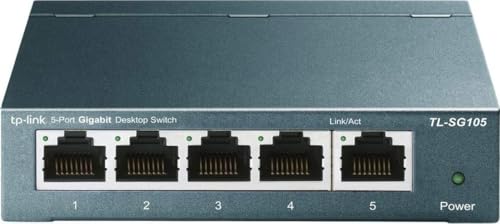
Best Budget 5-Port
TP-Link TL-SG105 5-Port Gigabit Unmanaged Switch
Buyers prioritizing 5 gigabit ports, qos + igmp snooping
Our take Check price for TP-Link TL-SG105 5-Port Gigabit Unmanaged Switch (opens in a new tab)

Best 8-Port
NETGEAR GS308 8-Port Gigabit Unmanaged Switch
Buyers prioritizing 8 gigabit ports, fanless metal housing
Our take Check price for NETGEAR GS308 8-Port Gigabit Unmanaged Switch (opens in a new tab)

Best with Streaming QoS
D-Link DGS-108 8-Port Gigabit Switch
Buyers prioritizing 8 gigabit ports, qos + igmp snooping
Our take Check price for D-Link DGS-108 8-Port Gigabit Switch (opens in a new tab)

Runner-Up 5-Port
NETGEAR GS305 5-Port Gigabit Unmanaged Switch
Buyers prioritizing 5 gigabit ports, fanless
Our take Check price for NETGEAR GS305 5-Port Gigabit Unmanaged Switch (opens in a new tab)

Most Compact
TP-Link LS1005G Litewave 5-Port Gigabit Switch
Buyers prioritizing 5 ports (1 uplink + 4 output)
Our take Check price for TP-Link LS1005G Litewave 5-Port Gigabit Switch (opens in a new tab)

Best Multi-Gig Upgrade
TP-Link TL-SG108S-M2 8-Port 2.5G Unmanaged Switch
buyers prioritizing 8x 2.5g ports, 40gbps capacity
Our take Check price for TP-Link TL-SG108S-M2 8-Port 2.5G Unmanaged Switch (opens in a new tab)

Best Compact Multi-Gig
TP-Link TL-SG105S-M2 5-Port 2.5G Unmanaged Switch
buyers prioritizing 5x 2.5g ports, 25gbps capacity
Our take Check price for TP-Link TL-SG105S-M2 5-Port 2.5G Unmanaged Switch (opens in a new tab)
Our Picks
Best Budget 5-Port1 of 7
TP-Link TL-SG105 5-Port Gigabit Unmanaged Switch on Amazon (opens in a new tab)
1p/DSCP QoS and IGMP Snooping baked in even though the switch itself is otherwise unmanaged, useful for prioritizing video or voice traffic without a management interface.
Best for
- Buyers prioritizing 5 gigabit ports, qos + igmp snooping
Why we like it
It ships with a 3-year warranty and free technical support, and its metal casing supports both desktop and wall-mount placement. 3X flow control keeps data transfer reliable even on a saturated small network.
Key dimensions & specs
- 5 Gigabit ports, QoS + IGMP snooping
- 3-year warranty
- Metal desktop/wall-mount case
Pros
- QoS traffic prioritization unusual for unmanaged tier
- 3-year warranty plus free support
- Energy-efficient design lowers running cost
Cons
- Only 5 ports limits room to grow
- No web interface despite QoS features
Best 8-Port2 of 7
NETGEAR GS308 8-Port Gigabit Unmanaged Switch on Amazon (opens in a new tab)
The GS308 packs 8 auto-negotiating Gigabit ports into a fanless metal case that supports desktop or wall mounting.
Best for
- Buyers prioritizing 8 gigabit ports, fanless metal housing
Why we like it
Auto-MDI/MDIX detection means any standard Cat5e or Cat6 cable works without crossover cables.
3az Energy Efficient Ethernet cuts idle-port power draw without touching throughput. There is no web interface at all here, this is a true plug-and-play unmanaged switch with zero configuration options.
Key dimensions & specs
- 8 Gigabit ports, fanless metal housing
- 802.3az energy-efficient Ethernet
- Desktop or wall-mount
Pros
- zero-configuration setup
- Silent fanless operation
- Compact metal housing resists heat buildup
Cons
- No VLAN, QoS, or any management features
- US/CA regional model only
Best with Streaming QoS3 of 7
D-Link DGS-108 8-Port Gigabit Switch on Amazon (opens in a new tab)
1p QoS traffic classes, IGMP Snooping for clean 4K/8K multicast streaming, and jumbo frame support up to 9KB for large NAS transfers.
Best for
- Buyers prioritizing 8 gigabit ports, qos + igmp snooping
Why we like it
Built-in surge and ESD protection rated to ±4kV guards against everyday power spikes, and D-Link backs it with Limited Lifetime Protection, meaning they'll repair or replace it for as long as you own it.
Key dimensions & specs
- 8 Gigabit ports, QoS + IGMP snooping
- 9KB jumbo frame support
- ±4kV surge protection, lifetime warranty
Pros
- Lifetime warranty rare at this price point
- Jumbo frame support aids large NAS transfers
- Surge protection adds real durability
Cons
- No web management despite QoS features
- Plastic components less rugged than full-metal rivals
Runner-Up 5-Port4 of 7
NETGEAR GS305 5-Port Gigabit Unmanaged Switch on Amazon (opens in a new tab)
3az energy efficiency as the rest of the GS line, just scaled down to the smallest practical port count.
Best for
- Buyers prioritizing 5 gigabit ports, fanless
Why we like it
It's true zero-configuration hardware with no software or web interface, aimed at buyers who just need to split one Ethernet drop into several without any setup step at all.
Key dimensions & specs
- 5 Gigabit ports, fanless
- 802.3az energy-efficient
- Desktop or wall mount
Pros
- Smallest, cheapest true Gigabit unmanaged option
- Zero setup required
- Compact metal housing
Cons
- Only 5 ports, no headroom to grow
- US/CA regional model only
Most Compact5 of 7
TP-Link LS1005G Litewave 5-Port Gigabit Switch on Amazon (opens in a new tab)
8-ounce switch built purely to split one Ethernet drop into four output ports plus an uplink, with none of the QoS extras of the SG-series.
Best for
- Buyers prioritizing 5 ports (1 uplink + 4 output)
Why we like it
It's the cheapest way into TP-Link's Gigabit lineup and small enough to tuck completely out of sight behind a desk or monitor, trading features for size and price.
Key dimensions & specs
- 5 ports (1 uplink + 4 output)
- 2.8 x 3.5 x 0.9in, 2.8oz
- Fanless, budget tier
Pros
- Smallest, lightest option in the lineup
- low-cost entry point
- Still full Gigabit despite the size
Cons
- No QoS or IGMP snooping unlike TP-Link's SG-series
- Tiny size means fewer physical ports to expand into
Best Multi-Gig Upgrade6 of 7
TP-Link TL-SG108S-M2 8-Port 2.5G Unmanaged Switch on Amazon (opens in a new tab)
5G speeds so it drops right into a mixed-speed network without configuration.
Best for
- buyers prioritizing 8x 2.5g ports, 40gbps capacity
Why we like it
5G upgrade works over existing Cat5e cabling, no need to rewire to Cat6 first, which meaningfully lowers the real cost of a multi-gig upgrade for LAN parties, home offices, or small studios.
Key dimensions & specs
- 8x 2.5G ports, 40Gbps capacity
- Works over existing Cat5e
- Fanless, unmanaged
Pros
- No Cat6 rewiring required for 2.5G speeds
- Fanless despite the multi-gig jump
- Auto-negotiates cleanly with Gigabit gear
Cons
- Unmanaged, no VLAN or QoS controls
- 2.5G ceiling, not a path to 5G/10G
Best Compact Multi-Gig7 of 7
TP-Link TL-SG105S-M2 5-Port 2.5G Unmanaged Switch on Amazon (opens in a new tab)
5G switch mirrors the TL-SG108S-M2's Cat5e-compatible multi-gig upgrade path in a smaller form factor, delivering 25Gbps of switching capacity across 5 ports.
Best for
- buyers prioritizing 5x 2.5g ports, 25gbps capacity
Key dimensions & specs
- 5x 2.5G ports, 25Gbps capacity
- Works over existing Cat5e
- Compact metal case
Pros
- Smaller footprint than the 8-port 2.5G sibling
- No cable rewiring needed for 2.5G
- Fanless silent operation
Cons
- Only 5 ports for a multi-gig upgrade
- Unmanaged, no QoS/VLAN
How We Chose These Network Switches for Home Use
Each pick was assessed across 5 criteria weighted for real-world use.
- Port Count & Speed Tier
- Verified the actual port count, Gigabit vs multi-gig speed rating, and whether every port runs at the advertised speed or only some do, since several switches mix full-speed and lower-speed ports.
- Checked the total PoE wattage budget against realistic device counts, not just the per-port maximum, since a switch's total power pool is what actually limits how many cameras or access points it can run.
- Classified each switch as unmanaged, smart/easy-managed, or fully managed Layer 2/3, since this determines what troubleshooting and segmentation options are available after installation, not just at setup.
- Weighed fanless vs active cooling, metal vs plastic housing, and desktop/wall/rack mounting options against the switch's likely install environment.
- Favored listings that clearly state cabling requirements, host port requirements, and speed caveats over ones that only advertise the theoretical maximum.
What to Look for in a Network Switch for Home Use
Key buying criteria so you get the right fit the first time.
Port count is a headroom decision, not a current-need one
Buy for what you'll plug in over the next 2-3 years, not just today. An 8-port switch that's already full the day it arrives means buying a second switch and daisy-chaining, which adds a hop of latency and another point of failure.
PoE budget is a shared pool, not per-port
A switch rated for 8 PoE+ ports at 120W total does not mean every port gets 30W simultaneously. Add up the real draw of every camera, AP, and phone you'll connect, and make sure the total budget clears it with room to spare.
Managed vs unmanaged changes what you can diagnose later
An unmanaged switch is zero-configuration but gives you no visibility when something goes wrong. A smart-managed switch adds VLANs, port mirroring, and traffic monitoring for a modest price increase, worth it the first time you need to isolate a misbehaving device.
Fanless does not always mean silent under load
Most desktop switches are fanless and silent, but high-port-count PoE switches sometimes add active cooling once the power budget climbs past 200-300W. Check for a fan explicitly if a quiet office or bedroom install matters.
Multi-gig speed needs matching cable and network gear
5G or 10G switch only delivers those speeds if your cabling is Cat5e or better (Cat6a for 10G) and the devices on both ends actually support that speed. Mixing a multi-gig switch into an all-Gigabit network gets you nothing extra.
Renewed enterprise gear needs a licensing check first
Cisco Meraki, Juniper, and some Aruba/HPE switches on Amazon are frequently sold as renewed hardware without an active license or support contract. Confirm what functions before assuming a discounted enterprise switch works like a new one out of the box.
How to Choose a Network Switch for Home Use
- A silent fanless switch like NETGEAR GS308 keeps things quiet next to a TV and streaming devices.
- TP-Link TL-SG105's small footprint and QoS keep video calls prioritized over background traffic.
- 5G ports future-proof for multi-gig NAS or gaming gear.
Frequently Asked Questions
Where should I place a home network switch?
Near your router or a central point where multiple devices need wired connections, like a media console, office desk, or a networking closet. Avoid enclosed cabinets without ventilation even for fanless switches, since heat still needs somewhere to go.
Will a switch improve my WiFi?
A switch only helps devices connected to it by cable. It can indirectly help WiFi performance if it frees up your router to focus on wireless traffic instead of also switching wired devices.
Bottom Line
Best overall: TP-Link TL-SG105 5-Port Gigabit Unmanaged Switch — best budget 5-port pick in this roundup. See the full verdicts above for every pick, with pros, cons and who each one suits.
Browse all network switches for home use on Amazon — Prime-eligible options with current pricing.