
Buying Guide
The Best Long Lasting Portable Power Stations for Everyday Desk Work
We looked at 8 long lasting portable power stations side by side, with the trade-offs that separate them and who each one suits.
By Jamie Cole, Lead Product Researcher
11 min read8 products evaluated
We may earn a commission from purchases made through links in this guide. Learn more.
Ranking long lasting portable power stations fairly means putting requiring documented cycle-life conditions instead of assuming all LiFePO4 packs age the same ahead of anything the listing photos suggest.
We leaned on measured usable energy and safety documentation plus requiring documented cycle-life conditions instead of assuming all LiFePO4 packs age the same to separate capable stations from well-marketed ones.
Quick Picks
Our 8 recommendations at a glance. Tap a pick for the full verdict.
Best Overall
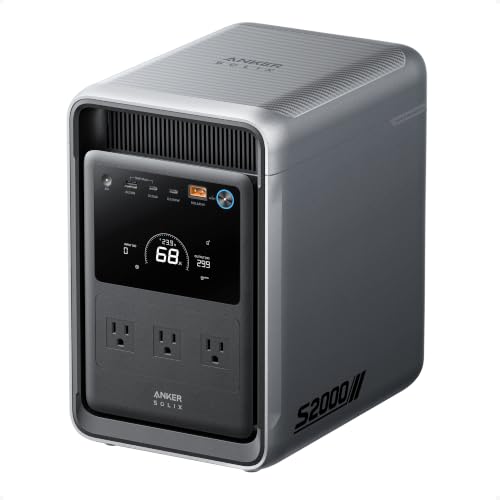
Anker SOLIX S2000 Portable Power Station, 2010Wh, 3000W Peak
buyers prioritizing 2010wh, 3000w peak, 35.7 lbs
Our take Check price for Anker SOLIX S2000 Portable Power Station, 2010Wh, 3000W Peak (opens in a new tab)
Runner-Up
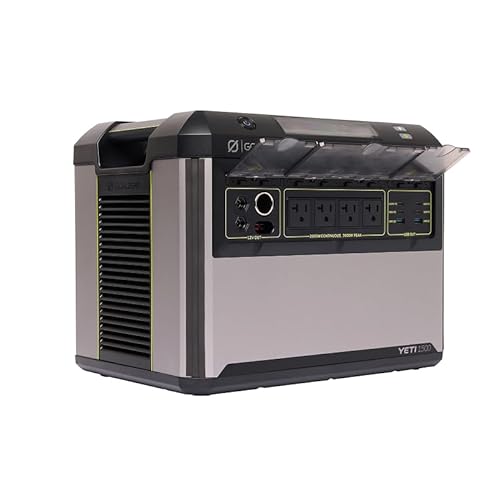
Goal Zero Yeti 1500 Portable Power Station (6th Gen), 1505Wh
Buyers prioritizing 1505wh, 2000w (3600w surge)
Our take Check price for Goal Zero Yeti 1500 Portable Power Station (6th Gen), 1505Wh (opens in a new tab)

Also Great
BLUETTI Elite 100 V2 Portable Power Station, 1024Wh 1800W
Buyers prioritizing 1024wh, 1800w (2700w power lifting)
Our take Check price for BLUETTI Elite 100 V2 Portable Power Station, 1024Wh 1800W (opens in a new tab)

Strong Alternative
Jackery Explorer 1000 v2 Portable Power Station, 1070Wh, 1500W
Buyers prioritizing 1070wh, 1500w ac, 3000w surge
Our take Check price for Jackery Explorer 1000 v2 Portable Power Station, 1070Wh, 1500W (opens in a new tab)

Worth Considering
Goal Zero Yeti 700 Portable Power Station, 677Wh
Buyers prioritizing 677wh, 600w (1000w surge)
Our take Check price for Goal Zero Yeti 700 Portable Power Station, 677Wh (opens in a new tab)
Solid Option
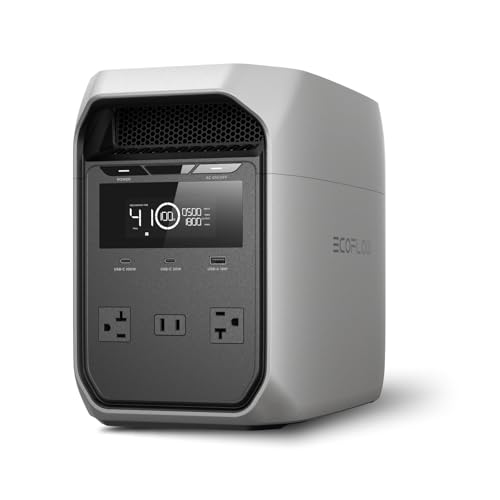
EcoFlow DELTA 3 Classic Portable Power Station, 1024Wh 1800W
Buyers prioritizing 1024wh, 1800w (3600w x-boost surge)
Our take Check price for EcoFlow DELTA 3 Classic Portable Power Station, 1024Wh 1800W (opens in a new tab)

Another Pick
VTOMAN FlashSpeed 1500 Solar Generator, 1548Wh LiFePO4, 3000W Peak
Buyers prioritizing 1548wh (expandable to 3096wh), 3000w peak
Our take Check price for VTOMAN FlashSpeed 1500 Solar Generator, 1548Wh LiFePO4, 3000W Peak (opens in a new tab)

Budget Pick
AFERIY P210 Solar Generator, 2048Wh Portable Power Station, 2400W
buyers prioritizing 2048wh, 2400w (4800w surge), 48.5 lbs
Our take Check price for AFERIY P210 Solar Generator, 2048Wh Portable Power Station, 2400W (opens in a new tab)
Our Picks
Best Overall1 of 8
Anker SOLIX S2000 Portable Power Station, 2010Wh, 3000W Peak on Amazon (opens in a new tab)
A documented 6W idle power draw combined with 10% higher efficiency delivers a real 35-hour fridge backup, 20% longer than other 2kWh systems per Anker's own comparison.
Best for
- buyers prioritizing 2010wh, 3000w peak, 35.7 lbs
Why we like it
The 314Ah LFP cells are rated for 10,000 charge cycles, a genuine 15-year lifespan claim.
7 lbs, this is documented 30% smaller and 25% lighter than the industry average for 2kWh stations. Six recharge methods include up to 400W solar input, and 8 outlets split front and rear specifically to separate everyday devices from always-on appliances for a cleaner setup.
Key dimensions & specs
- 2010Wh, 3000W peak, 35.7 lbs
- 6W idle draw, 10,000-cycle LFP
- 35-hour documented fridge backup
Pros
- 10,000-cycle LFP battery is a long-rated lifespan
- 35.7 lbs is documented 25% lighter than industry average
- Front/rear outlet split keeps always-on devices separate
Cons
- No 12V DC port included on this model
- 1500W continuous trails some rivals' 2000W+ output
Runner-Up2 of 8
Goal Zero Yeti 1500 Portable Power Station (6th Gen), 1505Wh on Amazon (opens in a new tab)
A 2000-watt inverter with 3600-watt surge delivers genuine home-outlet-equivalent power anywhere, running multiple power-hungry devices without issue.
Best for
- Buyers prioritizing 1505wh, 2000w (3600w surge)
Why we like it
Ultra-fast recharging is documented 10x faster than previous Yeti models, hitting 0-80% from the wall in under an hour.
Rugged aluminum casing, rubber bumpers, and an IPX4 weatherproof rating with port shields make this prepared for off-grid and rough-road use, backed by vibration testing. A 4000-cycle battery translates to 10+ years of daily use, and connectivity spans 4 AC outlets, 6 USB outlets including a 140W USB-C port, an HPP output for custom installs, and 2 6mm outlets for Goal Zero accessories.
Key dimensions & specs
- 1505Wh, 2000W (3600W surge)
- 10x faster recharge than prior models
- IPX4 weatherproof, aluminum casing
Pros
- 10x faster recharging than previous Yeti generations is genuine progress
- IPX4 rating plus aluminum casing is rugged construction
- 140W USB-C port charges laptops at real speed
Cons
- Premium Goal Zero pricing over comparable-capacity competitors
- Aluminum casing adds real weight versus plastic-bodied rivals
Also Great3 of 8
BLUETTI Elite 100 V2 Portable Power Station, 1024Wh 1800W on Amazon (opens in a new tab)
1800W rated output (2700W with Power Lifting) covers 90% of everyday appliances across 11 ports, and 1200W TurboBoost AC charging or up to 1000W solar input delivers a documented 70-minute full recharge, the fastest solar charge rate BLUETTI states for this capacity class.
Best for
- Buyers prioritizing 1024wh, 1800w (2700w power lifting)
Why we like it
Silent mode runs at just 30dB, 50% quieter than typical 1kWh stations, suited to overnight camping or indoor use. At only 25 lbs in a compact 17L design with a hidden one-handed handle, it's built for effortless portability, and the LiFePO4 cells offer over 4000 cycles to 80% for a documented 10-year lifespan.
Key dimensions & specs
- 1024Wh, 1800W (2700W Power Lifting)
- 70-min fast charge, 30dB silent mode
- 25 lbs, 17L compact design
Pros
- 30dB silent mode is 50% quieter than typical 1kWh stations
- 70-minute fast charge is quick for this capacity
- 25 lbs and 17L is compact for the power delivered
Cons
- Fastest charging requires the 1200W TurboBoost mode
- Silent mode likely trades off maximum charge speed
Strong Alternative4 of 8
Jackery Explorer 1000 v2 Portable Power Station, 1070Wh, 1500W on Amazon (opens in a new tab)
8 lbs with a foldable handle it stays liftable for camping trips.
Best for
- Buyers prioritizing 1070wh, 1500w ac, 3000w surge
Why we like it
The LFP battery retains over 70% capacity after 4000 cycles, a documented decade-plus lifespan. Three pure sine wave AC ports, two USB-C, one USB-A, and a DC car port cover most devices at once, and the app's 30dB quiet overnight mode is a genuine option for light sleepers.
Key dimensions & specs
- 1070Wh, 1500W AC, 3000W surge
- 1hr fast charge via app
- 23.8 lbs, foldable handle
Pros
- 1-hour emergency charging is a genuine app-enabled feature
- 70% capacity retained after 4000 cycles is documented
- 23.8 lbs keeps this easy to carry
Cons
- Only compatible with Jackery's own solar panels
- 1-hour charging needs the app enabled every time
Worth Considering5 of 8
Goal Zero Yeti 700 Portable Power Station, 677Wh on Amazon (opens in a new tab)
Documented enough to run power tools, portable fridges, and pellet grills, this delivers 600W AC power with 1000W surge capability from a 677Wh capacity.
Best for
- Buyers prioritizing 677wh, 600w (1000w surge)
Why we like it
Upgraded LiFePO4 battery technology backs 4000+ rated cycles for over 10 years of daily use.
High-speed charging mode gets a forgotten-to-charge Yeti ready in about 2 hours, convenient before a last-minute trip. This compact station passes both particulate testing and UL2743 requirements with an IPX4 water-resistance rating handling extreme temperatures, and a dedicated solar charging port turns it into a genuine off-grid renewable energy source.
Key dimensions & specs
- 677Wh, 600W (1000W surge)
- UL2743 certified, IPX4 rated
- 4000+ cycles, 10+ year lifespan
Pros
- UL2743 certification is a real, independently verified safety standard
- High-speed mode gets a dead unit ready in about 2 hours
- IPX4 rating handles extreme temperatures for genuine outdoor use
Cons
- 600W output is modest for higher-demand appliances
- Premium Goal Zero pricing over comparable-capacity rivals
Solid Option6 of 8
EcoFlow DELTA 3 Classic Portable Power Station, 1024Wh 1800W on Amazon (opens in a new tab)
X-Boost technology pushes rated 1800W output to a documented 3600W surge, expandable to 2600W continuous with X-Boost for heavier loads like refrigerators and microwaves.
Best for
- Buyers prioritizing 1024wh, 1800w (3600w x-boost surge)
Why we like it
X-Stream AC charging hits 0-80% in a genuine 45 minutes.
Under-10ms UPS switchover protects PCs and medical devices from data loss during outages, and LiFePO4 cells rated for 10+ years pair with EV-grade CTC design for durability. 5 hours, and the EcoFlow app adds Storm Alert and Self-Powered Mode for proactive outage prep.
Key dimensions & specs
- 1024Wh, 1800W (3600W X-Boost surge)
- 45-min 0-80% X-Stream charge
- <10ms UPS switchover
Pros
- X-Boost expands rated output to a genuine 2600W continuous
- 45-minute 0-80% charge is fast via X-Stream
- Storm Alert mode proactively preps for incoming outages
Cons
- Not compatible with DELTA 2 or Delta 3 Smart Extra Batteries
- Solar panel for the 2.5-hour charge is sold separately
Another Pick7 of 8
VTOMAN FlashSpeed 1500 Solar Generator, 1548Wh LiFePO4, 3000W Peak on Amazon (opens in a new tab)
A large 1500W AC input port delivers a full 0-100% recharge within 1 hour, and combining 400W solar plus 200W DC input drops that to just 45 minutes.
Best for
- Buyers prioritizing 1548wh (expandable to 3096wh), 3000w peak
Why we like it
SuperSafe LIFEBMS protection covers up to 10 kinds of safety monitoring, from over-charge to short-circuit protection, backed by a 3000+ cycle LiFePO4 battery.
V-Beyond Technology boosts the AC inverter's capability, letting the station output a constant 1500W even when powering appliances rated above that, rather than shutting off, useful for water heaters or ovens in a pinch. Twelve output ports support pass-through charging throughout, and the capacity expands to 3096Wh with an optional extra battery, with a flat-top stackable design keeping cables organized in a built-in storage box.
Key dimensions & specs
- 1548Wh (expandable to 3096Wh), 3000W peak
- 45-min fastest full charge
- 1500W constant-power even over-rated loads
Pros
- Constant 1500W output continues even for appliances rated above that
- 45-minute fastest charge combines solar, DC, and AC simultaneously
- Stackable flat-top design with built-in cable storage box
Cons
- Solar input only works with VTOMAN's specific compatible panels
- 45-minute charge requires three input types combined at once
Budget Pick8 of 8
AFERIY P210 Solar Generator, 2048Wh Portable Power Station, 2400W on Amazon (opens in a new tab)
A 2400W inverter (4800W surge) exclusively uses pure sine wave for both input and output, delivering power identical to standard wall outlet quality for genuine sensitive-electronics safety.
Best for
- buyers prioritizing 2048wh, 2400w (4800w surge), 48.5 lbs
Why we like it
A server-level under-10ms UPS response instantaneously activates battery backup during outages.
Sixteen ports support up to 16 simultaneous devices, including six 20Ah AC outlets, dual USB, four USB-C (20W and 100W), dual DC5521, a car port, and an XT60 port. Silent operation stays under 30dB at full load and just 16dB at normal load, quiet enough not to disturb sleep, and the AFERIY app manages energy consumption remotely. 5 lbs, 20% lighter than typical for this capacity.
Key dimensions & specs
- 2048Wh, 2400W (4800W surge), 48.5 lbs
- 16dB at normal load, 30dB at full
- 7-year extended warranty
Pros
- 7-year warranty is two years longer than standard coverage
- 16dB normal-load noise is quiet for overnight use
- 48.5 lbs is documented 20% lighter than typical for this capacity
Cons
- MPPT and car charging modules require separate compatible adapters
- 16 ports adds real setup complexity for casual users
How We Chose These Long Lasting Portable Power Stations
Each pick was assessed across 5 criteria weighted for real-world use.
- Rated Wh Verified Against Usable Energy
- Checked documented battery capacity separately from continuous AC output, since a high wattage rating doesn't guarantee enough stored energy to run a device for long.
- Continuous Output vs Surge Separated
- Compared continuous inverter rating against surge or boost mode claims, since many listings blend the two into one headline number.
- Charging Speed and Path Documented
- Verified AC, solar, and car charging times from official specs, noting where fastest speeds require specific modes, apps, or additional hardware.
- Safety and Certification Evidence Checked
- Looked for UL, UL2743, or other documented safety certification and battery chemistry evidence rather than trusting a safety claim alone.
- Weighed included cables, solar panel bundling, warranty length, and app requirements as part of the real cost and usability of each pick.
What to Look for in a Long Lasting Portable Power Station
Key buying criteria so you get the right fit the first time.
Confirm long lasting portable power stations's exact battery chemistry rather than inferring LiFePO4 from product generation or marketing language alone.
Verify the cycle-life claim together with its remaining-capacity threshold and documented test conditions.
Compare Storage and Temperature Guidance
Compare calendar-storage guidance and operating/charging temperature ranges across finalists.
Check warranty length and whether battery or expansion modules are actually serviceable if they fail.
Measure Standby and Inverter Losses
Measure inverter and standby losses directly, since longevity alone doesn't guarantee real runtime efficiency.
How to Choose a Long Lasting Portable Power Station
Confirm long lasting portable power stations's exact battery chemistry rather than inferring LiFePO4 from product generation or marketing language alone.
Verify the cycle-life claim together with its remaining-capacity threshold and documented test conditions.
Compare Storage and Temperature Guidance
Compare calendar-storage guidance and operating/charging temperature ranges across finalists.
Check warranty length and whether battery or expansion modules are actually serviceable if they fail.
Measure Standby and Inverter Losses
Measure inverter and standby losses directly, since longevity alone doesn't guarantee real runtime efficiency.
Frequently Asked Questions
Do all LiFePO4-labeled long lasting portable power stations products test cycle-life the same way?
Cycle-life claims can use different depth-of-discharge percentages and temperature assumptions, so a documented '4000 cycles' figure isn't always directly comparable between brands without checking the test conditions.
Does LiFePO4 chemistry mean the battery never needs replacement?
LiFePO4 cells are documented to last significantly longer than standard lithium-ion, but they still degrade gradually over thousands of cycles and eventually drop below a usable capacity threshold.
What's the real difference between watts and watt-hours for a power station?
Watts (W) measure how much power the station can deliver at once, essentially how many devices it can run simultaneously, while watt-hours (Wh) measure total stored energy, essentially how long it can run those devices. A station with high W but low Wh can power a lot at once but only briefly.
Does a surge or peak wattage rating mean the station can run appliances at that power level?
Surge or peak ratings describe a brief burst the inverter can handle, typically for a compressor or motor startup, not a sustained output level. Always check the continuous or rated wattage figure for what the station can actually run for extended periods.
Is LiFePO4 battery chemistry actually safer than standard lithium-ion?
LiFePO4 (LFP) cells are generally considered more thermally stable than standard lithium-ion or lithium-polymer cells, with a lower risk of thermal runaway, and most current portable power stations have shifted to LFP for this reason. Still, verify UL or UL2743 safety certification directly rather than assuming chemistry alone guarantees safety.
Bottom Line
Best overall: Anker SOLIX S2000 Portable Power Station, 2010Wh, 3000W Peak — best overall pick in this roundup. See the full verdicts above for every pick, with pros, cons and who each one suits.
Browse all long lasting portable power stations on Amazon — Prime-eligible options with current pricing.