
Buying Guide
The Best Layer 3 Network Switches for Everyday Desk Work
We looked at 2 layer 3 network switches side by side, with the trade-offs that separate them and who each one suits.
By Jamie Cole, Lead Product Researcher
6 min read2 products evaluated
We may earn a commission from purchases made through links in this guide. Learn more.
Layer 3 switches route traffic between VLANs themselves rather than sending it back out to a router, reducing latency and router load on networks running multiple segmented VLANs, a genuine step up from Layer 2 switching for larger or more complex networks.
We're upfront that the accessible Layer 3 options directly on Amazon are more limited than Layer 2 managed switches; enterprise brands like HPE Aruba, Juniper, and Cisco offer deeper Layer 3 feature sets primarily through renewed listings or direct enterprise channels.
Quick Picks
Our 2 recommendations at a glance. Tap a pick for the full verdict.
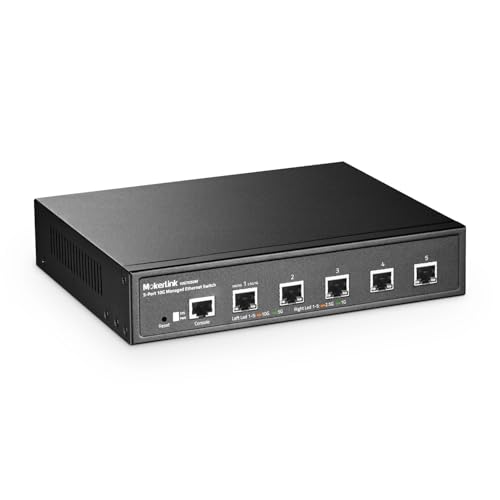
Best 5-Port 10G L3
MokerLink 5-Port 10G L3 Managed Switch
Buyers prioritizing 5x 10g auto-adaptive ports, l3 managed
Our take Check price for MokerLink 5-Port 10G L3 Managed Switch (opens in a new tab)

Best OSPF/BGP Routing
8-Port 10Gb SFP+ Layer 3 Managed Switch
Buyers prioritizing 8x 10g sfp+, l3 managed via web ui
Our take Check price for 8-Port 10Gb SFP+ Layer 3 Managed Switch (opens in a new tab)
| Pick | Best for | Key spec | Price |
|---|---|---|---|
| Buyers prioritizing 5x 10g auto-adaptive ports, l3 managed | 5x 10G auto-adaptive ports, L3 managed | Check price for MokerLink 5-Port 10G L3 Managed Switch (opens in a new tab) |
| Buyers prioritizing 8x 10g sfp+, l3 managed via web ui | 8x 10G SFP+, L3 managed via web UI | Check price for 8-Port 10Gb SFP+ Layer 3 Managed Switch (opens in a new tab) |
Our Picks
Best 5-Port 10G L31 of 2
MokerLink 5-Port 10G L3 Managed Switch on Amazon (opens in a new tab)
5G/1000M/100M, supporting IPv4/IPv6 routing, ARP, and loopback interfaces alongside Layer 2 features like VLAN, ACL, and QoS.
Best for
- Buyers prioritizing 5x 10g auto-adaptive ports, l3 managed
Why we like it
1X authentication, DoS anti-attack, dynamic ARP inspection, and DHCP Snooping, an enterprise-grade feature set packed into a desktop or wall-mountable industrial-grade fan-cooled metal case.
Key dimensions & specs
- 5x 10G auto-adaptive ports, L3 managed
- IPv4/IPv6 routing, ARP, loopback
- AAA/802.1X, DHCP Snooping security
Pros
- Real Layer 3 IPv4/IPv6 routing in a 5-port unit
- Enterprise security features rare at this port count
- Telnet/SSH/SNMP management options
Cons
- CLI/web management adds real learning curve
- Smaller brand than TP-Link/NETGEAR/Ubiquiti
Best OSPF/BGP Routing2 of 2
8-Port 10Gb SFP+ Layer 3 Managed Switch on Amazon (opens in a new tab)
This 8-port SFP+ switch offers Layer 3 web management supporting VLAN, QoS, LACP, ACL, OSPF, RIP, and BGP through an intuitive interface that doesn't require CLI knowledge, targeting IT admins and prosumers who want real routing without command-line complexity.
Best for
- Buyers prioritizing 8x 10g sfp+, l3 managed via web ui
Why we like it
5G modules for backward compatibility, letting you reuse existing SFP optics while gradually upgrading a network to full 10G, with a console port included for deeper troubleshooting when the web UI isn't enough.
Key dimensions & specs
- 8x 10G SFP+, L3 managed via web UI
- OSPF/RIP/BGP routing
- Backward compatible with 1G/2.5G SFP modules
Pros
- OSPF/BGP routing accessible without CLI expertise
- Reuses existing SFP optics during upgrades
- Console port for advanced troubleshooting
Cons
- SFP+ requires separate transceivers
- 160Gbps capacity active-fan cooled, not silent
How We Chose These Layer 3 Network Switches
Each pick was assessed across 5 criteria weighted for real-world use.
- Port Count & Speed Tier
- Verified the actual port count, Gigabit vs multi-gig speed rating, and whether every port runs at the advertised speed or only some do, since several switches mix full-speed and lower-speed ports.
- Checked the total PoE wattage budget against realistic device counts, not just the per-port maximum, since a switch's total power pool is what actually limits how many cameras or access points it can run.
- Classified each switch as unmanaged, smart/easy-managed, or fully managed Layer 2/3, since this determines what troubleshooting and segmentation options are available after installation, not just at setup.
- Weighed fanless vs active cooling, metal vs plastic housing, and desktop/wall/rack mounting options against the switch's likely install environment.
- Favored listings that clearly state cabling requirements, host port requirements, and speed caveats over ones that only advertise the theoretical maximum.
What to Look for in a Layer 3 Network Switch
Key buying criteria so you get the right fit the first time.
Port count is a headroom decision, not a current-need one
Buy for what you'll plug in over the next 2-3 years, not just today. An 8-port switch that's already full the day it arrives means buying a second switch and daisy-chaining, which adds a hop of latency and another point of failure.
PoE budget is a shared pool, not per-port
A switch rated for 8 PoE+ ports at 120W total does not mean every port gets 30W simultaneously. Add up the real draw of every camera, AP, and phone you'll connect, and make sure the total budget clears it with room to spare.
Managed vs unmanaged changes what you can diagnose later
An unmanaged switch is zero-configuration but gives you no visibility when something goes wrong. A smart-managed switch adds VLANs, port mirroring, and traffic monitoring for a modest price increase, worth it the first time you need to isolate a misbehaving device.
Fanless does not always mean silent under load
Most desktop switches are fanless and silent, but high-port-count PoE switches sometimes add active cooling once the power budget climbs past 200-300W. Check for a fan explicitly if a quiet office or bedroom install matters.
Multi-gig speed needs matching cable and network gear
5G or 10G switch only delivers those speeds if your cabling is Cat5e or better (Cat6a for 10G) and the devices on both ends actually support that speed. Mixing a multi-gig switch into an all-Gigabit network gets you nothing extra.
Renewed enterprise gear needs a licensing check first
Cisco Meraki, Juniper, and some Aruba/HPE switches on Amazon are frequently sold as renewed hardware without an active license or support contract. Confirm what functions before assuming a discounted enterprise switch works like a new one out of the box.
How to Choose a Layer 3 Network Switch
Do You Actually Need Layer 3?
Layer 3 switching matters when you're running multiple VLANs that need to communicate with each other frequently, and want that routing handled locally rather than round-tripping through your main router or firewall.
For most homelabs and small businesses, a Layer 2 smart-managed switch with your router handling inter-VLAN routing is sufficient. Consider Layer 3 specifically when router-based inter-VLAN routing becomes a measurable bottleneck.
Frequently Asked Questions
What routing protocols do budget Layer 3 switches support?
The two accessible options here support static routing at minimum, with the HYN@NET-style 8-port model adding OSPF and BGP for buyers who need dynamic routing protocols typically found only in enterprise gear.
Bottom Line
Best overall: MokerLink 5-Port 10G L3 Managed Switch — best 5-port 10g l3 pick in this roundup. See the full verdicts above for every pick, with pros, cons and who each one suits.
Browse all layer 3 network switches on Amazon — Prime-eligible options with current pricing.