
Buying Guide
The Best Laptop Cooling Pads with USB Hubs, Compared
We looked at 6 laptop cooling pads with USB hubs side by side, with the trade-offs that separate them and who each one suits.
By Jamie Cole, Lead Product Researcher
8 min read6 products evaluated
We may earn a commission from purchases made through links in this guide. Learn more.
A cooling pad with a built-in USB hub combines airflow and port expansion through the same upstream connection to your laptop. The hub only adds real value when its port count, speed, and power sharing with the fan are clearly understood, not just assumed from the word hub in the title.
This guide compares six pads whose real feature lists confirm a genuine multi-port hub beyond the pad's own power cable, checking port count and whether the hub shares a power budget with the cooling fans.
Quick Picks
Our 6 recommendations at a glance. Tap a pick for the full verdict.

Best Overall Pick
Kootek Laptop Cooling Pad Cooler Stand with 5 Quiet Fans, Dual USB Hub
Buyers wanting a well-reviewed, feature-rich pad with a confirmed built-in USB hub.
Our take Check price for Kootek Laptop Cooling Pad Cooler Stand with 5 Quiet Fans, Dual USB Hub (opens in a new tab)
Best for Gaming Setups
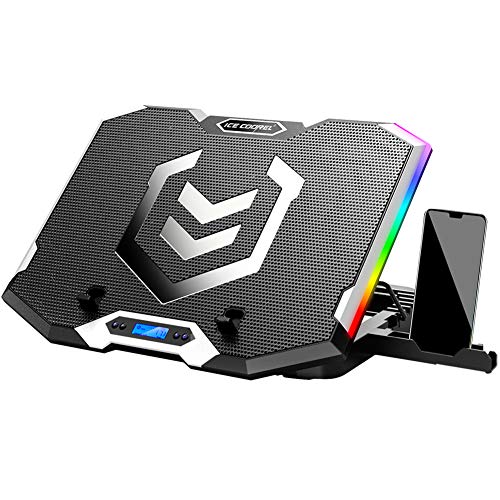
ICE COOREL Gaming Laptop Cooling Pad, 2 USB Ports, Phone Stand
Buyers who want a USB hub alongside a gaming-styled cooling pad.
Our take Check price for ICE COOREL Gaming Laptop Cooling Pad, 2 USB Ports, Phone Stand (opens in a new tab)
Best Dedicated Hub Design
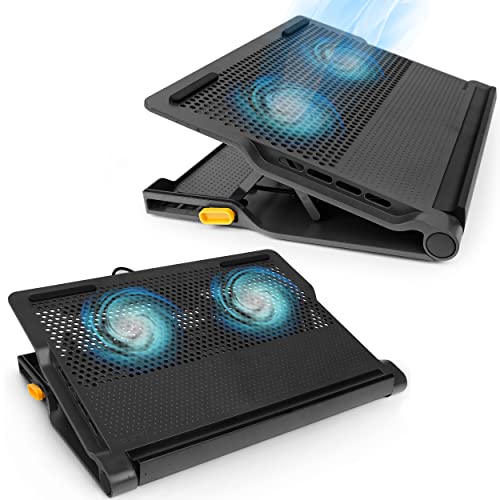
Targus Laptop Cooling Pad with Dual Fans + 4-Port USB Hub
Buyers who want the maximum number of hub ports and are willing to pay for a dedicated workstation design.
Our take Check price for Targus Laptop Cooling Pad with Dual Fans + 4-Port USB Hub (opens in a new tab)
Best for Fast Data Transfer
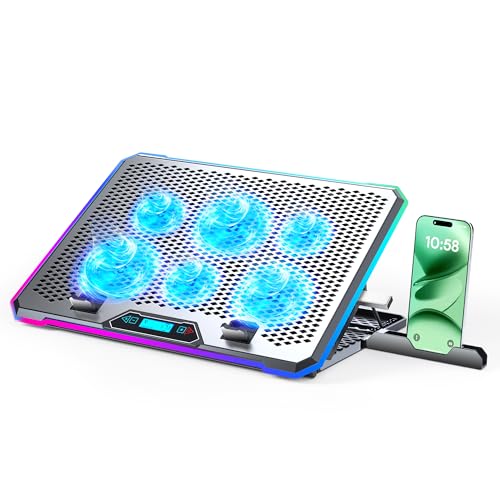
KYOLLY Aluminum RGB Gaming Laptop Cooler, 4 USB Ports 3.0 and 2.0 Hub
0 ports for external drives.
Our take Check price for KYOLLY Aluminum RGB Gaming Laptop Cooler, 4 USB Ports 3.0 and 2.0 Hub (opens in a new tab)

Best High-Performance Pick
IETS GT500 Powerful Turbo-Fan Laptop Cooling Pad, 3-Port USB Hub
Buyers who want a hub that's engineered to work independently of the cooling fan's power system.
Our take Check price for IETS GT500 Powerful Turbo-Fan Laptop Cooling Pad, 3-Port USB Hub (opens in a new tab)
Best USB-C and USB-A Mix
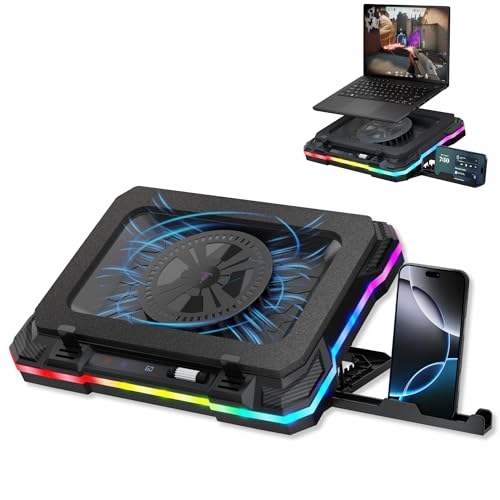
Tilted Nation Gaming Laptop Cooling Pad with USB Hub, USB C + A
Buyers whose peripherals include a mix of USB-An and USB-C devices wanting one hub for both.
Our take Check price for Tilted Nation Gaming Laptop Cooling Pad with USB Hub, USB C + A (opens in a new tab)
Our Picks
Best Overall Pick1 of 6
Kootek Laptop Cooling Pad Cooler Stand with 5 Quiet Fans, Dual USB Hub on Amazon (opens in a new tab)
This pad's listing explicitly confirms a "Dual USB Hub" letting you connect additional USB devices to your laptop through the cooling pad's own upstream connection.
Best for
- Buyers wanting a well-reviewed, feature-rich pad with a confirmed built-in USB hub.
Why we like it
Combined with a 5-fan design and selectable fan modes, it's a dual-purpose accessory.
Confirmed USB hub in the listing. On price, it comes in below ICE COOREL Gaming Laptop Cooling Pad, which is worth weighing if cost is your deciding factor between the two.
On the other side, No stated data-transfer speed for the hub ports.
Key dimensions & specs
- Confirmed dual USB hub
- 5 fans, selectable modes
- 6 height settings
- USB-A to USB-A cable included
Pros
- confirmed USB hub in the listing
- 5-fan selectable cooling
- 6 height settings
Cons
- Type-C devices need a separate adapter
- 5-fan design adds bulk
- No stated data-transfer speed for the hub ports
Best for Gaming Setups2 of 6
ICE COOREL Gaming Laptop Cooling Pad, 2 USB Ports, Phone Stand on Amazon (opens in a new tab)
This pad states 2 USB ports alongside 6 RGB cooling fans and an LCD screen showing fan speed, a gaming-oriented design that includes real port expansion as a secondary feature.
Best for
- Buyers who want a USB hub alongside a gaming-styled cooling pad.
Why we like it
A phone stand rounds out the practical extras.
On the other side, 6-fan design adds bulk.
Key dimensions & specs
- 2 USB ports
- 6 RGB cooling fans
- 6 height settings
- LCD screen, phone stand
Pros
- 2 confirmed USB ports for peripherals
- 6-fan RGB gaming design
- LCD fan-speed display
- Phone stand included
Cons
- No stated USB port speed (2.0 vs 3.0)
- RGB may be unnecessary if you don't want the gaming aesthetic
- 6-fan design adds bulk
Best Dedicated Hub Design3 of 6
Targus Laptop Cooling Pad with Dual Fans + 4-Port USB Hub on Amazon (opens in a new tab)
This is the most explicitly hub-focused product in this guide, its own name states "4-Port USB Hub" directly, the most ports of any pick here.
Best for
- Buyers who want the maximum number of hub ports and are willing to pay for a dedicated workstation design.
Why we like it
Targus positions this as a workstation accessory, turning the cooling pad into a genuine desk hub, not just a pad with an incidental extra port.
Key dimensions & specs
- 4-port USB hub
- Dual fans
- Adjustable height up to 4in
- USB-A connection
Pros
- Most USB ports of any pick in this guide (4)
- Explicitly positioned as a workstation hub
- Established Targus brand
- Adjustable height for external keyboard use
Cons
- Highest price in this guide
- Only dual fans, less airflow than higher fan-count picks
- No stated USB 3.0 speed
Best for Fast Data Transfer4 of 6
KYOLLY Aluminum RGB Gaming Laptop Cooler, 4 USB Ports 3.0 and 2.0 Hub on Amazon (opens in a new tab)
0 (for accessories), more detail than most competitors provide about their hub speed.
Best for
- 0 ports for external drives.
Why we like it
Six turbo fans deliver 1700-2400 RPM airflow.
The real tradeoff against that pick: 6-fan design adds significant bulk.
On the other side, Aluminum adds weight versus plastic alternatives.
Key dimensions & specs
- 4 ports: USB 3.0 and 2.0 mix
- 6 turbo fans, 1700-2400 RPM
- 9-angle height adjustment
- Aluminum construction
Pros
- Explicitly documented USB 3.0 and 2.0 port mix
- 6-fan aluminum design with strong stated airflow
- 9-angle height adjustment
- LCD display with memory function
Cons
- 6-fan design adds significant bulk
- RGB lighting may be unnecessary for non-gaming use
- Aluminum adds weight versus plastic alternatives
Best High-Performance Pick5 of 6
IETS GT500 Powerful Turbo-Fan Laptop Cooling Pad, 3-Port USB Hub on Amazon (opens in a new tab)
This pad's listing explicitly describes a "1 in 3 out USB Hub" with its own dedicated data line, meaning the hub module works independently of the cooling fan's power draw, a more sophisticated design than a simple shared-power hub.
Best for
- Buyers who want a hub that's engineered to work independently of the cooling fan's power system.
Why we like it
A powerful 5000 RPM turbofan with sealed foam delivers strong cooling.
On the other side, High-performance focus means less emphasis on quiet operation.
Key dimensions & specs
- 3-port USB hub, independent data line
- 5000 RPM turbofan
- Sealed foam for cooling efficiency
- Up to 65dB at max speed
Pros
- Hub explicitly described as working independently of fan power
- Very strong stated cooling performance
- Sealed foam design for efficiency
- 3 USB ports
Cons
- High price for the performance tier
- Up to 65dB is loud at maximum speed
- High-performance focus means less emphasis on quiet operation
Best USB-C and USB-A Mix6 of 6
Tilted Nation Gaming Laptop Cooling Pad with USB Hub, USB C + A on Amazon (opens in a new tab)
0 and 2 USB-C ports, a genuine mixed-connector hub useful if your peripherals span both standards.
Best for
- Buyers whose peripherals include a mix of USB-An and USB-C devices wanting one hub for both.
Why we like it
Fan speeds from 600 to 2800 RPM give a wide range for balancing noise and cooling.
On the other side, Higher price than simpler hub-equipped pads.
Key dimensions & specs
- 4-port hub: 2x USB-A 3.0, 2x USB-C
- Fan speeds 600-2800 RPM
- 7 tilt levels
- Built-in phone holder
Pros
- Mixed USB-An and USB-C hub ports for varied peripherals
- Wide fan speed range for noise control
- 7 tilt levels for ergonomic flexibility
- Built-in phone holder
Cons
- Hub explicitly not intended for charging devices
- 15.6" to 19" range only, not for smaller laptops
- Higher price than simpler hub-equipped pads
How We Chose These Laptop Cooling Pads with USB Hubs
Each pick was assessed across 4 criteria weighted for real-world use.
- Confirmed hub presence, not assumed
- We verified each product's real feature list explicitly confirms a multi-port USB hub beyond the pad's own power cable.
- Port count and connector type
- 0) of hub ports where the listing provides that detail.
- We noted whether the hub shares power with the cooling fan or operates on an independent data line, since this affects how much load the hub can handle.
- We considered whether hub ports remain reachable while the laptop sits on the pad in normal use.
What to Look for in a Laptop Cooling Pad with USB Hubs
Key buying criteria so you get the right fit the first time.
Check the pad's stated compatible size range against your laptop's real footprint, not its screen size
6 inches, describes the diagonal measurement of the display panel, not the physical width and depth of the laptop's base that actually sits on top of a cooling pad, and two laptops with the identical screen size can have meaningfully different base dimensions depending on bezel thickness and chassis design.
Cooling pad listings state a compatible size range in inches specifically because they're describing what base footprint fits their surface and fan layout, so treating the screen-size number alone as a fit guarantee is a genuine buying mistake, not just an imprecise shortcut.
Measure your laptop's actual width and depth, or find those dimensions in its own spec sheet, and compare that against the pad's stated range rather than matching screen-size numbers.
Understand that a wider-range pad isn't automatically better for a smaller laptop
Cooling pads spread their fans across the surface in a fixed layout designed around the middle of their stated compatible range, so a pad rated for 12 to 17 inches has its fans positioned to reach a wide variety of vent locations across that whole span, while a laptop toward the small end of that range may not sit directly over as many of those fans as it would on a pad sized more tightly around its own dimensions.
This matters because the cooling benefit of a pad comes specifically from airflow reaching the laptop's actual intake vents, not from the pad's overall surface area, so a smaller laptop on an oversized pad can get less effective cooling than the same laptop on a proportionally sized pad, despite technically fitting within the stated range.
When your laptop sits toward one end of a pad's stated range rather than the middle, check user photos or reviews specifically describing that size laptop's fit before assuming the airflow lines up well.
Confirm your laptop's actual vent location and design, especially for thin ultrabooks and MacBooks
Most cooling pads are designed around bottom-vented laptops, where intake vents sit on the underside of the chassis directly facing the pad's fans, but some laptops, most notably many MacBook models, use a fully sealed or fanless internal design where the chassis itself acts as a heat sink rather than relying on active airflow from underneath.
This is a genuine compatibility gap that a cooling pad's stated inch-range compatibility says nothing about, since a pad can physically fit a MacBook's exact footprint while providing essentially no cooling benefit if that specific model has no bottom vents for the fans to blow into.
Check your specific laptop model's actual cooling design (vented bottom panel versus sealed unibody) before assuming a cooling pad will meaningfully lower its temperature, and treat this as a separate question from simple physical size fit.
Weigh fan count and noise level together, not fan count alone
A pad's fan count, commonly ranging from a single central fan up to five or six smaller fans, is often marketed as a straightforward better-is-more spec, but more fans spinning simultaneously generally means more total noise output, and a pad with independently controllable fan zones lets you balance airflow against noise rather than forcing an all-or-nothing choice.
This is a real everyday tradeoff for anyone using a laptop in a quiet room or on a video call, since a cooling pad running at full multi-fan speed can become audible enough to be distracting, undermining the benefit if you end up turning it off to avoid the noise.
Check whether the listing states selectable fan modes or independently controlled fan zones, not just the total fan count, if noise control matters to your specific environment.
Confirm the power source and port type match your laptop before assuming plug-and-play compatibility
Nearly all cooling pads draw power over a USB cable rather than a separate power adapter, which keeps setup simple, but the cable end that plugs into your laptop is typically USB-A, and a laptop with only USB-C ports (common on newer ultrabooks and MacBooks) will need a separate USB-C adapter or hub to actually power the pad, an extra cost and cable that isn't obvious from the listing photos alone.
This matters because a cooling pad that can't be powered defeats its entire purpose regardless of how well it otherwise fits your laptop's size and vent layout, so it's a genuine prerequisite to check, not an afterthought.
Check the listing's stated cable connector type and confirm it matches an available port on your specific laptop, or budget for an adapter if it doesn't.
How to Choose a Laptop Cooling Pad with USB Hubs
| Recommended pick in this comparison | |
|---|---|
| Tightest size match for your laptop | Kootek Laptop Cooling Pad Cooler Stand with 5 Quiet Fans |
| Widest range, flexible for future upgrades | Tilted Nation Gaming Laptop Cooling Pad with USB Hub |
| Kootek Laptop Cooling Pad Cooler Stand with 5 Quiet Fans | |
| Targus Laptop Cooling Pad with Dual Fans + 4-Port USB Hub | |
| No firm budget ceiling, prioritizing fan count or extras | IETS GT500 Powerful Turbo-Fan Laptop Cooling Pad |
Slim/Fewer Fans vs Multi-Fan High Airflow
- Lighter and more portable with less total noise, at the cost of a smaller cooled surface area. In this comparison: ICE COOREL Gaming Laptop Cooling Pad.
- More total cooling surface and airflow, at the cost of extra bulk and more potential noise at full speed. In this comparison: Kootek Laptop Cooling Pad Cooler Stand with 5 Quiet Fans.
Most buyers should default to a slim pick like ICE COOREL Gaming Laptop Cooling Pad for everyday portability, and only step up to Kootek Laptop Cooling Pad Cooler Stand with 5 Quiet Fans's fan count if you're running demanding workloads that generate real sustained heat.
| Most ergonomic height adjustment range | Kootek Laptop Cooling Pad Cooler Stand with 5 Quiet Fans |
|---|---|
| Simplest setup, fewer adjustments to fuss with | Kootek Laptop Cooling Pad Cooler Stand with 5 Quiet Fans |
For a Fanless or Sealed-Chassis Laptop (Like MacBook) Specifically
- Explicit confirmation that your specific laptop model has bottom-panel intake vents, since a cooling pad provides little benefit on a fully sealed, fanless unibody design regardless of physical fit.
- Every pick here is designed around a vented-bottom laptop; if you're on a fanless MacBook specifically, check our dedicated MacBook Air cooling pad guide for that honesty caveat before buying any pad in this comparison.
- You want what IETS GT500 Powerful Turbo-Fan Laptop Cooling Pad offers: Hub explicitly described as working independently of fan power. That's a real functional upgrade over the budget picks here, not just a brand markup.
- Kootek Laptop Cooling Pad Cooler Stand with 5 Quiet Fans already covers the essentials: confirmed USB hub in the listing. The main thing you'd be paying extra for elsewhere in this list is fan count or height range you may not need.
Frequently Asked Questions
Can I charge my phone through a cooling pad's USB hub?
Several listings in this guide explicitly state the hub is intended for peripherals and data transfer only, not charging. Check the specific product's listing before assuming charging works.
Does the hub slow down if the cooling fan is running at full speed?
It depends on the design. Most pads share one upstream USB connection between the fan and hub. The IETS GT500 pick specifically states its hub has an independent data line, working separately from the fan.
0 offers significantly faster data transfer speeds, useful for external drives. 0 ports, letting you match the right port to each device.
How many hub ports do I actually need?
Consider your real peripheral count, a mouse and keyboard need just 2 ports, while a busier desk setup with drives and other accessories may benefit from the Targus pick's 4 ports.
Is a cooling pad hub as good as a standalone USB hub?
It's a reasonable convenience for basic peripherals, but a dedicated standalone hub may offer more ports, faster speeds, or independent power if your needs are more demanding.
Bottom Line
Best overall: Kootek Laptop Cooling Pad Cooler Stand with 5 Quiet Fans, Dual USB Hub — best overall pick pick in this roundup. See the full verdicts above for every pick, with pros, cons and who each one suits.
Browse all laptop cooling pads with usb hubs on Amazon — Prime-eligible options with current pricing.