
Buying Guide
The Best Laptop Cooling Pads for Everyday Desk Work
We looked at 5 laptop cooling pads side by side, with the trade-offs that separate them and who each one suits.
By Jamie Cole, Lead Product Researcher
10 min read5 products evaluated
We may earn a commission from purchases made through links in this guide. Learn more.
A laptop cooling pad only earns its desk space if it changes something measurable, either the sustained CPU temperature under a long workload or the comfort of your typing angle. Most listings lean on vague phrases like 'keeps your laptop cool,' but a pad's actual benefit depends on whether its fan placement lines up with your specific laptop's real intake and exhaust vents, which vary by brand and are not determined by screen size alone.
This is the flagship, broad guide for the laptop cooling pad cluster on The Office Journal. We compare five pads based on documented sustained-load thermal claims where the listing provides them, fan-to-vent alignment, USB power draw, fan speed versus noise, and elevation angle. Narrower guides in this cluster cover gaming laptops, MacBooks, specific screen sizes, silent and fanless designs, and budget picks, so use this page as the starting point and the others as the deep dive for your specific situation.
Quick Picks
Our 5 recommendations at a glance. Tap a pick for the full verdict.

Best Overall Pick
Kootek Laptop Cooling Pad Cooler Stand with 5 Quiet Fans for 12"-17" Laptop
Buyers who want adjustable airflow intensity rather than a single fixed fan speed.
Our take Check price for Kootek Laptop Cooling Pad Cooler Stand with 5 Quiet Fans for 12"-17" Laptop (opens in a new tab)

Best for USB Power Efficiency
TECKNET Laptop Cooling Pad, Portable Slim Laptop Cooler for 12"-17" Laptops
Buyers who want simple, low-power USB cooling without extra height adjustment options.
Our take Check price for TECKNET Laptop Cooling Pad, Portable Slim Laptop Cooler for 12"-17" Laptops (opens in a new tab)
Best for Quiet Fan Operation
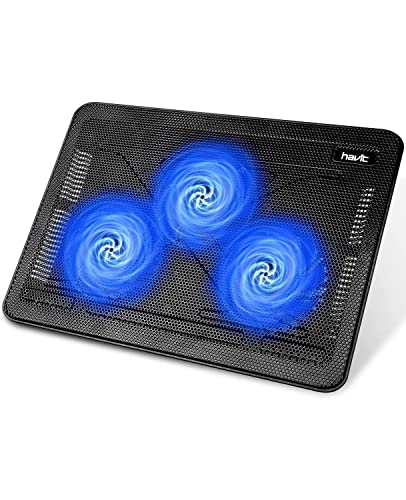
havit HV-F2056 15.6"-17" Laptop Cooler Cooling Pad, Slim Portable USB Powered (3 Fans)
6 to 17 inch laptop who prioritize quiet operation over maximum fan output.
Our take Check price for havit HV-F2056 15.6"-17" Laptop Cooler Cooling Pad, Slim Portable USB Powered (3 Fans) (opens in a new tab)

Best for Sustained Heavy Workloads
llano V12 Gaming Laptop Cooling Pad Laptop Cooler Laptop Cooling Fan Stand
Buyers running sustained heavy workloads, gaming or rendering, who want a documented thermal benefit rather than a vague claim.
Our take Check price for llano V12 Gaming Laptop Cooling Pad Laptop Cooler Laptop Cooling Fan Stand (opens in a new tab)

Best for Automatic Fan Control
Razer Laptop Cooling Pad Adaptive Smart, Intelligent Fan Control
Buyers who want the pad itself to manage the noise versus cooling tradeoff instead of doing it manually.
Our take Check price for Razer Laptop Cooling Pad Adaptive Smart, Intelligent Fan Control (opens in a new tab)
Our Picks
Best Overall Pick1 of 5
Kootek Laptop Cooling Pad Cooler Stand with 5 Quiet Fans for 12"-17" Laptop on Amazon (opens in a new tab)
76 inch corner fans, with two switches that let you run one fan, four fans, or all five together instead of forcing an all-or-nothing airflow decision.
Best for
- Buyers who want adjustable airflow intensity rather than a single fixed fan speed.
Why we like it
That staged control is the closest thing in this lineup to matching fan output to the actual heat your laptop is producing at a given moment.
Staged fan control matches airflow to actual need. On price, it comes in below TECKNET Laptop Cooling Pad, which is worth weighing if cost is your deciding factor between the two.
On the other side, Broad 12"-17" compatibility means fan position won't align perfectly with every chassis.
Key dimensions & specs
- 5 fans, staged 1/4/5-fan control
- 6 height settings
- Dual USB hub
- Fits 12"-17" laptops
- Blue LED fan indicators
Pros
- Staged fan control matches airflow to actual need
- Dual USB hub avoids losing a port
- Six height settings for genuine angle range
- Two stoppers keep the laptop from sliding
Cons
- Running all 5 fans at once is audible in a quiet room
- USB power draw comes from the laptop's own port, factor that into battery life on the go
- Broad 12"-17" compatibility means fan position won't align perfectly with every chassis
Best for USB Power Efficiency2 of 5
TECKNET Laptop Cooling Pad, Portable Slim Laptop Cooler for 12"-17" Laptops on Amazon (opens in a new tab)
Three 110mm fans run at 1200 RPM, pulling air in from the bottom of the pad, which is the layout most bottom-vented Windows laptops actually need.
Best for
- Buyers who want simple, low-power USB cooling without extra height adjustment options.
Why we like it
It draws power directly from a single USB port with no external adapter, and a second pass-through port keeps a mouse or keyboard connected without losing that port to the fan.
On the other side, 1200 RPM is fixed, no speed dial.
Key dimensions & specs
- 3 fans, 1200 RPM
- USB powered, no external adapter
- 2 height settings
- Dual USB ports
- Fits 12"-17" laptops
Pros
- Single USB port power draw with no separate adapter
- Pass-through port avoids losing a connection
- Rubber pads add grip on both sides
- Slim profile for easy storage
Cons
- Only 2 height settings limits ergonomic range
- 3 fans move less air than higher fan-count picks
- 1200 RPM is fixed, no speed dial
Best for Quiet Fan Operation3 of 5
havit HV-F2056 15.6"-17" Laptop Cooler Cooling Pad, Slim Portable USB Powered (3 Fans) on Amazon (opens in a new tab)
The listing specifically markets its three fans as ultra-quiet, aimed at a distraction-free environment rather than maximum raw airflow.
Best for
- 6 to 17 inch laptop who prioritize quiet operation over maximum fan output.
Why we like it
A metal mesh surface gives the laptop a stable carrying platform, and two adjustable height settings let it double as an ergonomic stand rather than a flat pass-through mat.
6 to 17 inch laptops, not smaller ultrabooks.
On the other side, 3 fans provide less total airflow than higher fan-count competitors.
Key dimensions & specs
- 3 ultra-quiet fans
- Metal mesh surface
- 2 height settings
- Extra USB port with power switch
- Fits 15.6"-17" laptops
Pros
- Quieter operation is an explicit design goal, not an afterthought
- Metal mesh gives a stable, scratch-resistant surface
- Dedicated power switch for the extra USB port
- Slim and lightweight for travel
Cons
- Sized specifically for 15.6 to 17 inch laptops, not smaller ultrabooks
- Only 2 height settings
- 3 fans provide less total airflow than higher fan-count competitors
Best for Sustained Heavy Workloads4 of 5
llano V12 Gaming Laptop Cooling Pad Laptop Cooler Laptop Cooling Fan Stand on Amazon (opens in a new tab)
This is the only pad in this guide with a documented sustained-load figure rather than a vague claim, the listing states a 44 degree Celsius reduction across CPU and GPU within 90 seconds, tested during 4K rendering and heavy gaming workloads.
Best for
- Buyers running sustained heavy workloads, gaming or rendering, who want a documented thermal benefit rather than a vague claim.
Why we like it
5 inch turbo fan combined with sealed foam and a removable dust filter is built around that sustained-heat use case, not just casual browsing.
6"-17" Laptop Cooler Cooling Pad. The real tradeoff against that pick: Noticeably more expensive than the rest of this lineup.
On the other side, Needs its own power adapter, one more cable on the desk.
Key dimensions & specs
- 5.5" turbo fan with sealed foam
- 44°C CPU+GPU reduction in 90 sec (manufacturer stated)
- 36W external power adapter
- 3-port USB hub, peripherals only
- Removable dust filter, RGB lighting
Pros
- Documented sustained-load temperature figure, not just a marketing phrase
- External power adapter allows stronger output than USB draw alone
- Removable dust filter protects the laptop's own intake vents
- Reinforced chassis for heavier 15.6-19 inch laptops
Cons
- Noticeably more expensive than the rest of this lineup
- 70dB noise ceiling at full output is loud for a shared room
- Needs its own power adapter, one more cable on the desk
Best for Automatic Fan Control5 of 5
Razer Laptop Cooling Pad Adaptive Smart, Intelligent Fan Control on Amazon (opens in a new tab)
Rather than a single fixed speed, this pad changes fan speed automatically based on measured system temperature, which directly addresses the fan speed versus noise tradeoff other pads leave entirely up to you.
Best for
- Buyers who want the pad itself to manage the noise versus cooling tradeoff instead of doing it manually.
Why we like it
Foam seals form an airtight pressure chamber around a 140mm brushless fan rated up to 3000 RPM, and three magnetic frames let it adapt its footprint from a 14 inch ultra-portable up to an 18 inch laptop.
On the other side, Overkill for light, non-sustained workloads.
Key dimensions & specs
- Auto fan-speed adjustment by temperature
- 140mm brushless fan, up to 3000 RPM
- 3 magnetic frames, 14"-18" laptops
- Razer Synapse preset/custom fan curves
- 3-port USB Type-A hub
Pros
- Automatic speed adjustment removes the guesswork on noise versus cooling
- Magnetic frame system adapts to a wide laptop size range
- Airtight pressure chamber design targets genuine airflow efficiency
- 2-year manufacturer warranty
Cons
- Requires Razer Synapse software for full customization
- Highest price in this guide by a wide margin
- Overkill for light, non-sustained workloads
How We Chose These Laptop Cooling Pads
Each pick was assessed across 5 criteria weighted for real-world use.
- We gave more weight to listings with a specific, documented before/after temperature figure under sustained load than to generic 'keeps your laptop cool' claims with no numbers.
- We compared each pad's fan placement and airflow direction against typical bottom-vented and side-vented laptop layouts, since screen size alone does not determine whether a pad's airflow actually reaches the intake.
- USB power draw and port cost
- We noted whether each pad draws power from the laptop's own USB port or an external adapter, and whether a pass-through port avoids losing a connection.
- Noise versus fan speed tradeoff
- We compared documented or stated noise levels against fan speed and airflow claims rather than assuming louder automatically means better cooling.
- We weighed how many height settings each pad offers and whether a steep airflow-optimized angle comes at the cost of comfortable extended typing.
What to Look for in a Laptop Cooling Pad
Key buying criteria so you get the right fit the first time.
Check the pad's stated compatible size range against your laptop's real footprint, not its screen size
6 inches, describes the diagonal measurement of the display panel, not the physical width and depth of the laptop's base that actually sits on top of a cooling pad, and two laptops with the identical screen size can have meaningfully different base dimensions depending on bezel thickness and chassis design.
Cooling pad listings state a compatible size range in inches specifically because they're describing what base footprint fits their surface and fan layout, so treating the screen-size number alone as a fit guarantee is a genuine buying mistake, not just an imprecise shortcut.
Measure your laptop's actual width and depth, or find those dimensions in its own spec sheet, and compare that against the pad's stated range rather than matching screen-size numbers.
Understand that a wider-range pad isn't automatically better for a smaller laptop
Cooling pads spread their fans across the surface in a fixed layout designed around the middle of their stated compatible range, so a pad rated for 12 to 17 inches has its fans positioned to reach a wide variety of vent locations across that whole span, while a laptop toward the small end of that range may not sit directly over as many of those fans as it would on a pad sized more tightly around its own dimensions.
This matters because the cooling benefit of a pad comes specifically from airflow reaching the laptop's actual intake vents, not from the pad's overall surface area, so a smaller laptop on an oversized pad can get less effective cooling than the same laptop on a proportionally sized pad, despite technically fitting within the stated range.
When your laptop sits toward one end of a pad's stated range rather than the middle, check user photos or reviews specifically describing that size laptop's fit before assuming the airflow lines up well.
Confirm your laptop's actual vent location and design, especially for thin ultrabooks and MacBooks
Most cooling pads are designed around bottom-vented laptops, where intake vents sit on the underside of the chassis directly facing the pad's fans, but some laptops, most notably many MacBook models, use a fully sealed or fanless internal design where the chassis itself acts as a heat sink rather than relying on active airflow from underneath.
This is a genuine compatibility gap that a cooling pad's stated inch-range compatibility says nothing about, since a pad can physically fit a MacBook's exact footprint while providing essentially no cooling benefit if that specific model has no bottom vents for the fans to blow into.
Check your specific laptop model's actual cooling design (vented bottom panel versus sealed unibody) before assuming a cooling pad will meaningfully lower its temperature, and treat this as a separate question from simple physical size fit.
Weigh fan count and noise level together, not fan count alone
A pad's fan count, commonly ranging from a single central fan up to five or six smaller fans, is often marketed as a straightforward better-is-more spec, but more fans spinning simultaneously generally means more total noise output, and a pad with independently controllable fan zones lets you balance airflow against noise rather than forcing an all-or-nothing choice.
This is a real everyday tradeoff for anyone using a laptop in a quiet room or on a video call, since a cooling pad running at full multi-fan speed can become audible enough to be distracting, undermining the benefit if you end up turning it off to avoid the noise.
Check whether the listing states selectable fan modes or independently controlled fan zones, not just the total fan count, if noise control matters to your specific environment.
Confirm the power source and port type match your laptop before assuming plug-and-play compatibility
Nearly all cooling pads draw power over a USB cable rather than a separate power adapter, which keeps setup simple, but the cable end that plugs into your laptop is typically USB-A, and a laptop with only USB-C ports (common on newer ultrabooks and MacBooks) will need a separate USB-C adapter or hub to actually power the pad, an extra cost and cable that isn't obvious from the listing photos alone.
This matters because a cooling pad that can't be powered defeats its entire purpose regardless of how well it otherwise fits your laptop's size and vent layout, so it's a genuine prerequisite to check, not an afterthought.
Check the listing's stated cable connector type and confirm it matches an available port on your specific laptop, or budget for an adapter if it doesn't.
How to Choose a Laptop Cooling Pad
| Recommended pick in this comparison | |
|---|---|
| Tightest size match for your laptop | Kootek Laptop Cooling Pad Cooler Stand with 5 Quiet Fans for 12"-17" Laptop |
| Widest range, flexible for future upgrades | Razer Laptop Cooling Pad Adaptive Smart |
| Kootek Laptop Cooling Pad Cooler Stand with 5 Quiet Fans for 12"-17" Laptop | |
| 6"-17" Laptop Cooler Cooling Pad | |
| No firm budget ceiling, prioritizing fan count or extras | Razer Laptop Cooling Pad Adaptive Smart |
Slim/Fewer Fans vs Multi-Fan High Airflow
- Lighter and more portable with less total noise, at the cost of a smaller cooled surface area. In this comparison: llano V12 Gaming Laptop Cooling Pad Laptop Cooler Laptop Cooling Fan Stand.
- More total cooling surface and airflow, at the cost of extra bulk and more potential noise at full speed. In this comparison: Kootek Laptop Cooling Pad Cooler Stand with 5 Quiet Fans for 12"-17" Laptop.
Most buyers should default to a slim pick like llano V12 Gaming Laptop Cooling Pad Laptop Cooler Laptop Cooling Fan Stand for everyday portability, and only step up to Kootek Laptop Cooling Pad Cooler Stand with 5 Quiet Fans for 12"-17" Laptop's fan count if you're running demanding workloads that generate real sustained heat.
| Most ergonomic height adjustment range | Kootek Laptop Cooling Pad Cooler Stand with 5 Quiet Fans for 12"-17" Laptop |
|---|---|
| Simplest setup, fewer adjustments to fuss with | Kootek Laptop Cooling Pad Cooler Stand with 5 Quiet Fans for 12"-17" Laptop |
For a Fanless or Sealed-Chassis Laptop (Like MacBook) Specifically
- Explicit confirmation that your specific laptop model has bottom-panel intake vents, since a cooling pad provides little benefit on a fully sealed, fanless unibody design regardless of physical fit.
- Every pick here is designed around a vented-bottom laptop; if you're on a fanless MacBook specifically, check our dedicated MacBook Air cooling pad guide for that honesty caveat before buying any pad in this comparison.
- You want what Razer Laptop Cooling Pad Adaptive Smart offers: Automatic speed adjustment removes the guesswork on noise versus cooling. That's a real functional upgrade over the budget picks here, not just a brand markup.
- Kootek Laptop Cooling Pad Cooler Stand with 5 Quiet Fans for 12"-17" Laptop already covers the essentials: Staged fan control matches airflow to actual need. The main thing you'd be paying extra for elsewhere in this list is fan count or height range you may not need.
Frequently Asked Questions
Does a laptop cooling pad actually lower temperatures?
It can, but only if the pad's fan placement aligns with your laptop's real intake vents and the workload is heavy enough to benefit. Look for a specific documented temperature figure rather than a vague cooling claim.
Do cooling pads work on any laptop size?
Most pads state a compatible size range, like 12 to 17 inches, but that describes the platform's fit, not whether the fan lines up with your laptop's specific vent location. Check your laptop's vent placement, not just its screen size.
Will a cooling pad drain my laptop's battery faster?
Yes, slightly, since most pads draw power from the laptop's own USB port rather than an external source. A pad with an external power adapter, like the llano V12, avoids this tradeoff at the cost of an extra cable.
Is a louder cooling pad always cooling better?
Fan speed and noise do not automatically correlate with real thermal benefit. Compare stated RPM, DBA figures, or documented temperature results instead of assuming volume equals performance.
What's the difference between this guide and the gaming or MacBook cooling pad guides?
This is the broad, general-purpose guide across all laptop types. Our gaming laptop cooling pad guide focuses on sustained heavy loads and multi-zone venting, and our MacBook guides address the different internal cooling designs of Apple's fanless and active-fan laptops.
Bottom Line
Best overall: Kootek Laptop Cooling Pad Cooler Stand with 5 Quiet Fans for 12"-17" Laptop — best overall pick pick in this roundup. See the full verdicts above for every pick, with pros, cons and who each one suits.
Browse all laptop cooling pads on Amazon — Prime-eligible options with current pricing.