
Buying Guide
The Best Gaming Monitors Under $100: Picks and Trade-offs
We looked at 6 gaming monitors under $100 side by side, with the trade-offs that separate them and who each one suits.
By Jamie Cole, Lead Product Researcher
11 min read6 products evaluated
Best Gaming Monitors Under $100 range widely on paper, exactly why gaming monitors under $100, one spec isn't enough.
Gaming monitors under $100 comparisons come down to real refresh-vs-GPU fit, given that the same resolution looks softer on a bigger screen.
Quick Picks
Our 6 recommendations at a glance. Tap a pick for the full verdict.

Best Overall
ArcticPro 22 Inch Gaming Monitor 144Hz
Buyers who want the strongest all-around pick in this comparison and would rather not keep shopping around
Our take Check price for ArcticPro 22 Inch Gaming Monitor 144Hz (opens in a new tab)

Also Worth Considering
ArcticPro 22 Inch Monitor 144Hz 120Hz
Buyers who want a genuine alternative to the top pick with a different tradeoff worth comparing directly
Our take Check price for ArcticPro 22 Inch Monitor 144Hz 120Hz (opens in a new tab)

Solid Alternative
Acer 27in FHD 1920x1080 IPS 120Hz Gaming Monitor
Buyers who want a genuine alternative to the top pick with a different tradeoff worth comparing directly
Our take Check price for Acer 27in FHD 1920x1080 IPS 120Hz Gaming Monitor (opens in a new tab)

Another Strong Option
Sceptre Curved 27-inch Prime Gaming Monitor 1500R 100Hz HDMI X2 DisplayPort 1ms
Buyers who want a genuine alternative to the top pick with a different tradeoff worth comparing directly
Our take Check price for Sceptre Curved 27-inch Prime Gaming Monitor 1500R 100Hz HDMI X2 DisplayPort 1ms (opens in a new tab)

Runner-Up Pick
SANSUI 24 Inch Curved 160Hz Gaming Monitor, 1500R Curved Gaming Monitor
Buyers who want a genuine alternative to the top pick with a different tradeoff worth comparing directly
Our take Check price for SANSUI 24 Inch Curved 160Hz Gaming Monitor, 1500R Curved Gaming Monitor (opens in a new tab)

Worth a Look
SANSUI 24 Inch Gaming Monitor 180Hz
Buyers who want a genuine alternative to the top pick with a different tradeoff worth comparing directly
Our take Check price for SANSUI 24 Inch Gaming Monitor 180Hz (opens in a new tab)
Our Picks
Best Overall1 of 6
ArcticPro 22 Inch Gaming Monitor 144Hz
ArcticPro 22 Inch Gaming Monitor 144Hz is our overall pick in this lineup.
Best for
- Buyers who want the strongest all-around pick in this comparison and would rather not keep shopping around
Why we like it
Enjoy the crystal-clear image quality of arcticpro fhd computer monitor with a sharp 1920x1080p full HD resolution, providing more vivid colors and sharper details. The monitor features a maximum refresh rate of 144hz and a rapid response time, designed for both daily work and gaming.
ArcticPro 22 Inch Monitor 144Hz 120Hz is a reasonable point of comparison here, close enough that the actual listing details are worth checking before deciding between them.
Reach for this pick if you want the strongest all-around pick in this comparison and would rather not keep shopping around. Marketed specs and real-world performance can differ, so check independent reviews before assuming the headline number tells the full story.
Key specs
- Full HD resolution
- Smooth performance
- 178° horizontal & vertical viewing angles and -5°±2°/15°±2* tilt angles
Pros
- Full HD resolution
- Smooth performance
- 178° horizontal & vertical viewing angles and -5°±2°/15°±2* tilt angles
- Anti-blue light design
Cons
- Marketed specs and real-world specs often differ
- Check compatibility with your exact setup before buying
Also Worth Considering2 of 6
ArcticPro 22 Inch Monitor 144Hz 120Hz
ArcticPro 22 Inch Monitor 144Hz 120Hz is a strong alternative worth comparing directly against the top pick.
Best for
- Buyers who want a genuine alternative to the top pick with a different tradeoff worth comparing directly
Why we like it
Enjoy the crystal-clear image quality of arcticpro monitor with a sharp 1920x1080p full HD resolution, providing more vivid colors and sharper details for an immersive viewing experience. With a 144hz refresh rate, fast response time and low blue light, arcticpro monitor delivers smooth and better gaming experience.
Against ArcticPro 22 Inch Gaming Monitor 144Hz, neither pick has an obvious edge on paper, so the deciding factor comes down to whichever spec matters most for your specific use case.
Reach for this pick if you want a genuine alternative to the top pick with a different tradeoff worth comparing directly. Compatibility with your exact setup matters more than the spec sheet alone, so confirm it works with your specific gear before buying.
Key specs
- Full HD resolution
- Smooth performance
- 178° horizontal & vertical viewing angles and -5°±2°/15°±2* tilt angles
Pros
- Full HD resolution
- Smooth performance
- 178° horizontal & vertical viewing angles and -5°±2°/15°±2* tilt angles
- Anti-blue light design
Cons
- Check compatibility with your exact setup before buying
- Marketed specs and real-world specs often differ
Solid Alternative3 of 6
Acer 27in FHD 1920x1080 IPS 120Hz Gaming Monitor
Acer 27in FHD 1920x1080 IPS 120Hz Gaming Monitor is a strong alternative worth comparing directly against the top pick.
Best for
- Buyers who want a genuine alternative to the top pick with a different tradeoff worth comparing directly
Why we like it
The acer kb272 g0bi 27" monitor with 1920 x 1080 full HD resolution in a 16:9 aspect ratio presents stunning, high-quality images with excellent detail. Get fast refresh rates thanks to the adaptive-sync support (freesync compatible) product that matches the refresh rate of your monitor with your graphics card.
: fast response time of 1ms enhances the experience, which is the main thing that distinguishes this pick from ArcticPro 22 Inch Gaming Monitor 144Hz.
Reach for this pick if you want a genuine alternative to the top pick with a different tradeoff worth comparing directly. Marketed specs and real-world performance can differ, so check independent reviews before assuming the headline number tells the full story.
Key specs
- images
- Adaptive-sync support
- Responsive!!
- fast response time of 1ms enhances the experience
Pros
- images
- Adaptive-sync support
- Responsive!!: fast response time of 1ms enhances the experience
- 27" Full HD (1920 x 1080) widescreen ips monitor
Cons
- Marketed specs and real-world specs often differ
- Check compatibility with your exact setup before buying
Another Strong Option4 of 6
Sceptre Curved 27-inch Prime Gaming Monitor 1500R 100Hz HDMI X2 DisplayPort 1ms
Sceptre Curved 27-inch Prime Gaming Monitor 1500R 100Hz HDMI X2 DisplayPort 1ms is a strong alternative worth comparing directly against the top pick.
Best for
- Buyers who want a genuine alternative to the top pick with a different tradeoff worth comparing directly
Why we like it
Elevate your gaming prowess with a lightning-fast 1ms br (blur reduction) and a silky-smooth 100hz refresh rate. Protect your eyes and enhance your comfort with blue-light shift technology.
Set next to ArcticPro 22 Inch Gaming Monitor 144Hz, the two land close enough on paper that it's worth comparing both listings directly on the spec that matters most for your setup.
This one is the right call if you want a genuine alternative to the top pick with a different tradeoff worth comparing directly. Compatibility with your exact setup matters more than the spec sheet alone, so confirm it works with your specific gear before buying.
Key specs
- Enhanced gaming experience
- Easy on the eyes
- True to life colors
Pros
- Enhanced gaming experience
- Easy on the eyes
- True to life colors
- Seamless connectivity & performance
Cons
- Check compatibility with your exact setup before buying
- Marketed specs and real-world specs often differ
Runner-Up Pick5 of 6
SANSUI 24 Inch Curved 160Hz Gaming Monitor, 1500R Curved Gaming Monitor
SANSUI 24 Inch Curved 160Hz Gaming Monitor, 1500R Curved Gaming Monitor is a strong alternative worth comparing directly against the top pick.
Best for
- Buyers who want a genuine alternative to the top pick with a different tradeoff worth comparing directly
Why we like it
24 Inch 1500r curved gaming monitor 160hz fhd fast va display for gamer. Up to 160hz refresh rate, mprt 1ms response time, freesync compatibility.
7m display colors, HDR, which is the main thing that distinguishes this pick from ArcticPro 22 Inch Gaming Monitor 144Hz.
Reach for this pick if you want a genuine alternative to the top pick with a different tradeoff worth comparing directly. Marketed specs and real-world performance can differ, so check independent reviews before assuming the headline number tells the full story.
Key specs
- 24 Inch 1500r curved gaming monitor 160hz fhd fast va display for gamer
- Smooth gaming
- 110%Srgb color gamut
Pros
- 24 Inch 1500r curved gaming monitor 160hz fhd fast va display for gamer
- Smooth gaming
- 110%Srgb color gamut
- Multiple ports& humanized design
Cons
- Marketed specs and real-world specs often differ
- Check compatibility with your exact setup before buying
Worth a Look6 of 6
SANSUI 24 Inch Gaming Monitor 180Hz
SANSUI 24 Inch Gaming Monitor 180Hz is a strong alternative worth comparing directly against the top pick.
Best for
- Buyers who want a genuine alternative to the top pick with a different tradeoff worth comparing directly
Why we like it
Es-g24f4: 24 inch full HD (1920*1080) 180hz gaming monitor for home, entertainment and office. 180Hz, 300 nits, 110% srgb; adaptive sync technology.
Weighing this against ArcticPro 22 Inch Gaming Monitor 144Hz, a 30-day money-back and free replacement warranty from order date and lifetime technical support ends up being the detail that matters most for most buyers.
Choose this if you want a genuine alternative to the top pick with a different tradeoff worth comparing directly. Compatibility with your exact setup matters more than the spec sheet alone, so confirm it works with your specific gear before buying.
Key specs
- Es-g24f4
- 24 inch full HD (1920*1080) 180hz gaming monitor for home
- 180Hz, 300 nits, 110% srgb; adaptive sync technology
- Interface & response time
Pros
- Es-g24f4: 24 inch full HD (1920*1080) 180hz gaming monitor for home
- 180Hz, 300 nits, 110% srgb; adaptive sync technology
- Interface & response time
- Ergonomic design
Cons
- Check compatibility with your exact setup before buying
- Marketed specs and real-world specs often differ
How We Chose These Gaming Monitors Under $100
Each pick was assessed across 5 criteria weighted for real-world use.
- Dead Pixel Policies Vary Significantly Between Gaming Monitor Manufacturers
- Not every gaming monitor manufacturer treats a dead pixel the same way under warranty, some guarantee zero dead pixels within an initial return window, others require a minimum defect count before honoring a warranty claim, check this policy specifically before buying, particularly on a premium panel where the expectation for a flawless display is higher..
- A Larger Screen at the Same Resolution Reduces Effective Sharpness
- Resolution and screen size aren't independent specs when it comes to actual sharpness, the same resolution stretched across a bigger panel produces a lower pixel density and a visibly softer image at a given viewing distance, calculate or check the pixels-per-inch figure if sharpness matters to you as much as raw screen size..
- G-Sync and FreeSync Compatibility Isn't Universal Across GPU Brands
- A gaming monitor's adaptive sync technology (NVIDIA G-Sync or AMD FreeSync) reduces screen tearing by matching the monitor's refresh rate to your GPU's output, but full G-Sync certification generally requires an NVIDIA GPU, while FreeSync is more broadly compatible across both AMD and NVIDIA cards in most cases, check the monitor's specific certification against your actual GPU brand rather than assuming any adaptive sync label works with any graphics card..
- Curve Radius Numbers Indicate How Aggressive the Curve Actually Is
- A curved gaming monitor's curve radius (expressed in a number like 1000R or 1800R) indicates how tight the curve is, a lower number means a more aggressive curve, ideal for wider ultrawide panels where a tighter curve keeps the edges at a consistent viewing distance, a higher number is a gentler curve better suited to a standard 16:9 panel, check the radius number against the panel's actual width rather than assuming any curved monitor curves the same amount..
- Backlight Strobing Reduces Motion Blur but Can Conflict With Adaptive Sync
- Backlight strobing and adaptive sync solve different problems on a gaming monitor and often can't run at the same time, strobing meaningfully reduces motion blur but usually disables adaptive sync while active, meaning you're choosing between smoother motion and tear-free gaming depending on the specific game and settings, check whether a monitor supports both simultaneously before assuming it's an either-or choice..
What to Look for in a Gaming Monitor Under $100
Key buying criteria so you get the right fit the first time.
Dead Pixel Policies Vary Significantly Between Gaming Monitor Manufacturers
Not every gaming monitor manufacturer treats a dead pixel the same way under warranty, some guarantee zero dead pixels within an initial return window, others require a minimum defect count before honoring a warranty claim, check this policy specifically before buying, particularly on a premium panel where the expectation for a flawless display is higher.
A Larger Screen at the Same Resolution Reduces Effective Sharpness
Resolution and screen size aren't independent specs when it comes to actual sharpness, the same resolution stretched across a bigger panel produces a lower pixel density and a visibly softer image at a given viewing distance, calculate or check the pixels-per-inch figure if sharpness matters to you as much as raw screen size.
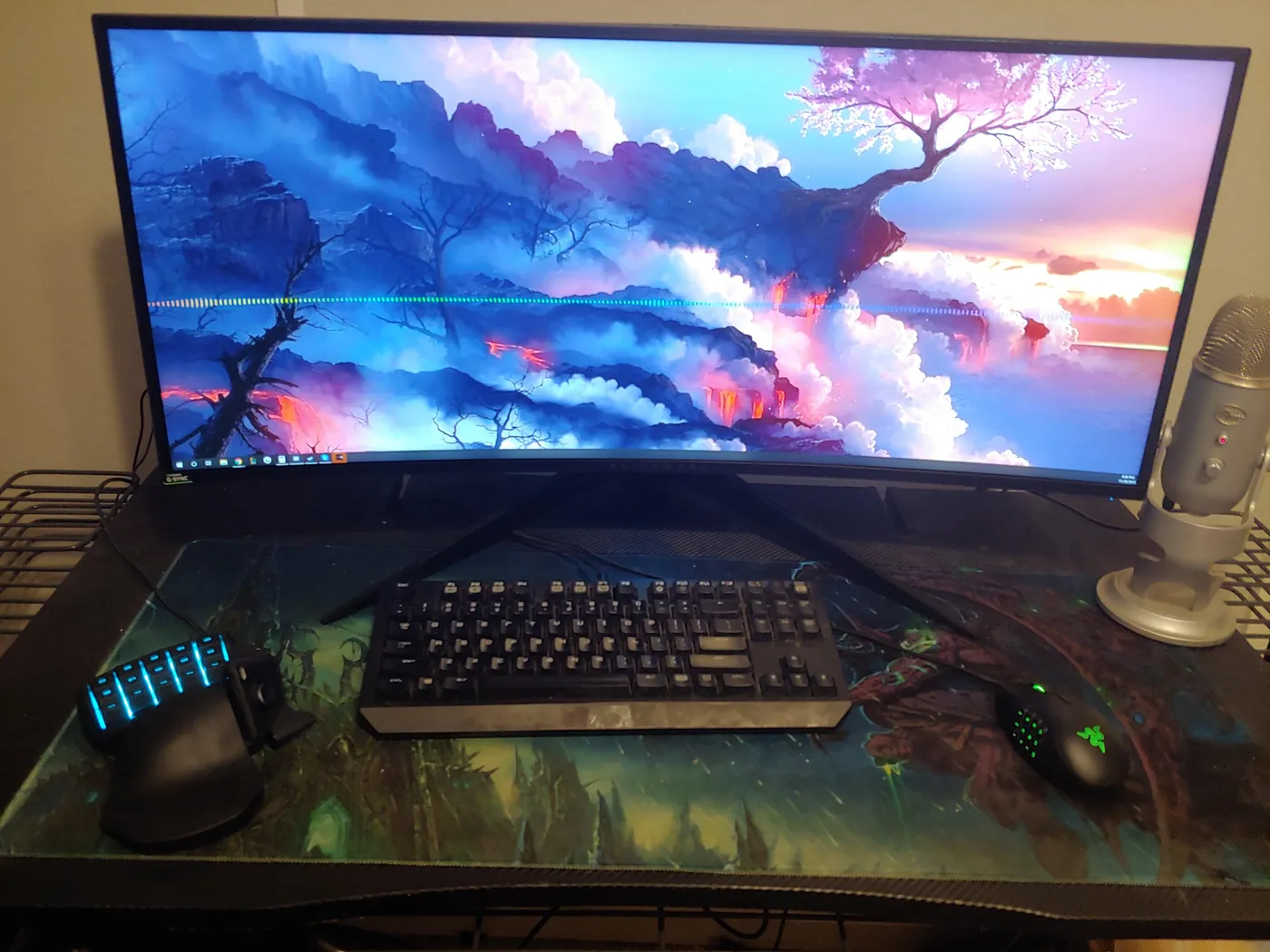
Curved ultrawide monitor on a glass desk with a keyboard G-Sync and FreeSync Compatibility Isn't Universal Across GPU Brands
A gaming monitor's adaptive sync technology (NVIDIA G-Sync or AMD FreeSync) reduces screen tearing by matching the monitor's refresh rate to your GPU's output, but full G-Sync certification generally requires an NVIDIA GPU, while FreeSync is more broadly compatible across both AMD and NVIDIA cards in most cases, check the monitor's specific certification against your actual GPU brand rather than assuming any adaptive sync label works with any graphics card.
Curve Radius Numbers Indicate How Aggressive the Curve Actually Is
A curved gaming monitor's curve radius (expressed in a number like 1000R or 1800R) indicates how tight the curve is, a lower number means a more aggressive curve, ideal for wider ultrawide panels where a tighter curve keeps the edges at a consistent viewing distance, a higher number is a gentler curve better suited to a standard 16:9 panel, check the radius number against the panel's actual width rather than assuming any curved monitor curves the same amount.
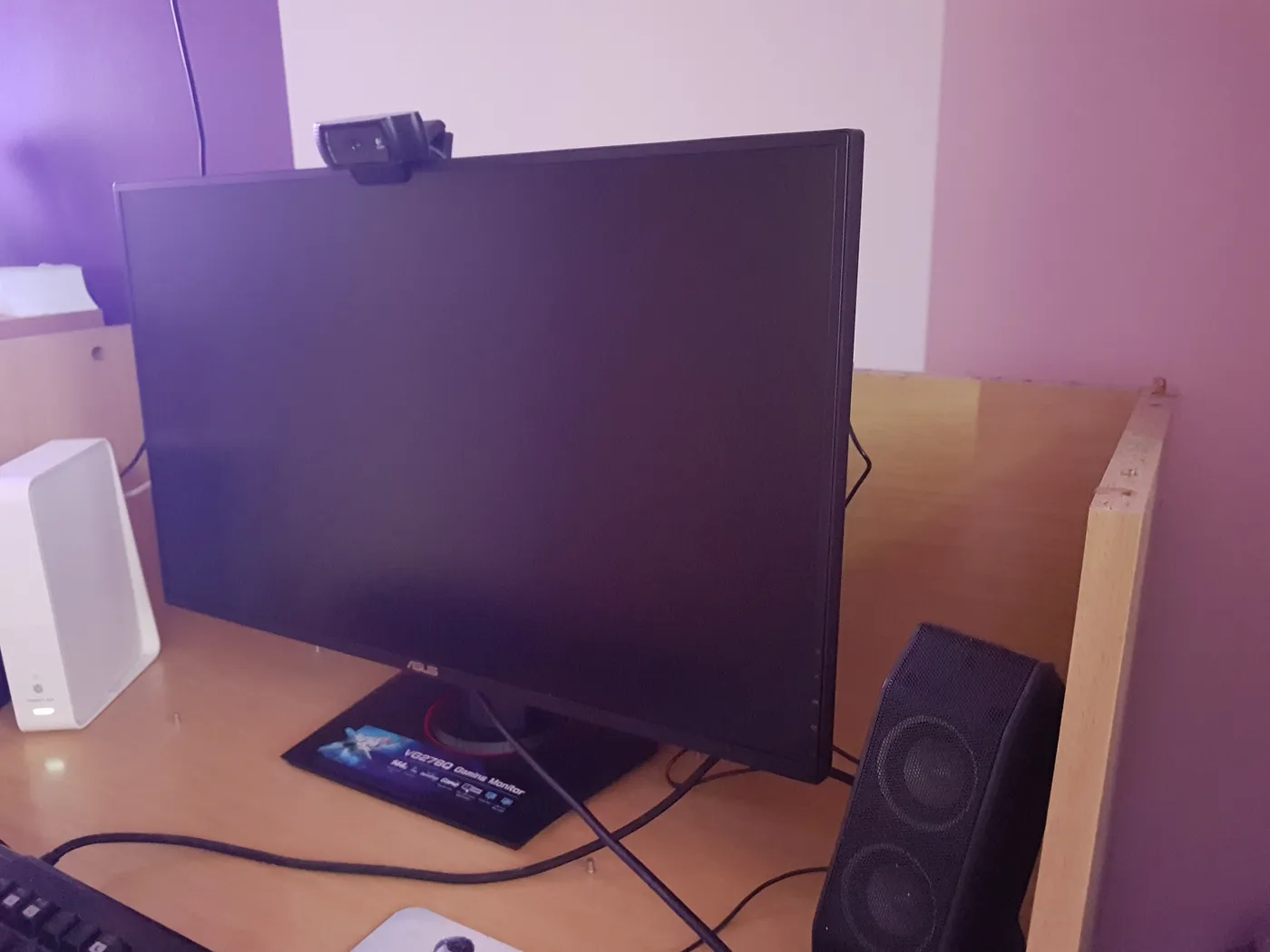
Large monitor on a wooden desk between two speakers Backlight Strobing Reduces Motion Blur but Can Conflict With Adaptive Sync
Backlight strobing and adaptive sync solve different problems on a gaming monitor and often can't run at the same time, strobing meaningfully reduces motion blur but usually disables adaptive sync while active, meaning you're choosing between smoother motion and tear-free gaming depending on the specific game and settings, check whether a monitor supports both simultaneously before assuming it's an either-or choice.
How to Choose a Gaming Monitor Under $100
By GPU Headroom
| Your GPU output | Recommended pick |
|---|---|
| Modest frame rates in your games | ArcticPro 22 Inch Monitor 144Hz 120Hz |
| Solid mid-range frame rates | ArcticPro 22 Inch Gaming Monitor 144Hz |
| High-end GPU pushing high frame rates | SANSUI 24 Inch Gaming Monitor 180Hz |
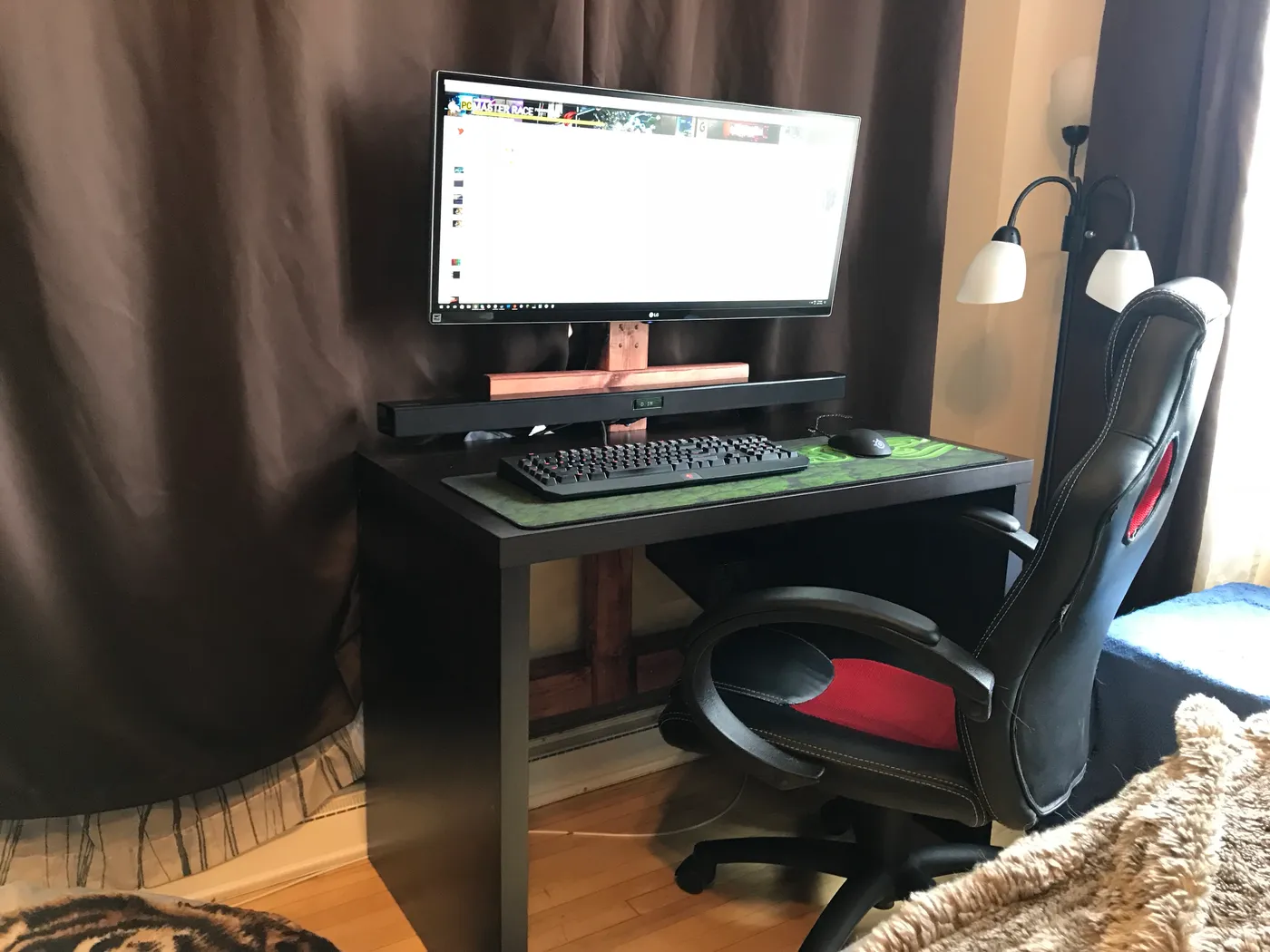
By Budget
| Budget | Recommended pick |
|---|---|
| Lowest price in this lineup | ArcticPro 22 Inch Monitor 144Hz 120Hz |
| Mid-range pick | Acer 27in FHD 1920x1080 IPS 120Hz Gaming Monitor |
| Higher budget | SANSUI 24 Inch Gaming Monitor 180Hz |
G-Sync vs FreeSync
- ArcticPro 22 Inch Monitor 144Hz 120Hz)
- Built and validated specifically for NVIDIA GPUs.
- FreeSync
- Works more broadly across AMD and NVIDIA cards in most cases.
Match this to your actual setup and priorities.
By Screen Curvature
| Your preference | Recommended pick |
|---|---|
| Standard flat panel | ArcticPro 22 Inch Gaming Monitor 144Hz |
| Curved for wider immersion | Acer 27in FHD 1920x1080 IPS 120Hz Gaming Monitor |
For Competitive Gaming Specifically
- Look for
- Independent input lag testing, not just the headline refresh rate number, since the two specs don't always move together.
- In this comparison
- ArcticPro 22 Inch Gaming Monitor 144Hz is worth checking against its specific spec sheet before assuming any pick here covers your exact need.
When to Spend More
- Spend more if
- You need the strongest real-world performance and sturdiest build, where SANSUI 24 Inch Gaming Monitor 180Hz justifies the extra cost.
- Save if
- You want straightforward everyday use without paying for headroom you won't need, where ArcticPro 22 Inch Monitor 144Hz 120Hz already covers the job at the lowest price here.
Frequently Asked Questions
What does the curve radius number mean on a curved gaming monitor?
A lower number means a tighter, more aggressive curve, suited to very wide ultrawide panels, a higher number is gentler and better suited to a standard-width panel.
Is a 1ms gaming monitor actually blur-free?
Not necessarily, the gray-to-gray number is one narrow measurement, panel technology, backlight behavior, and overdrive tuning all affect real perceived motion blur, check independent motion clarity testing instead.
Is a bigger gaming monitor always sharper?
No, stretching the same resolution across a larger screen reduces pixel density, a 32-inch 1440p monitor looks visibly softer than a 27-inch 1440p monitor at the same viewing distance.
Is a 240Hz or 360Hz gaming monitor worth it?
Only if your GPU can actually push frame rates close to that number in the games you play, check your realistic frame rates first, pairing a high-refresh monitor with a GPU that can't fill it wastes the extra capability.
Are built-in gaming monitor speakers good enough?
They're a convenience for quick cable-free audio, but thin form factors limit bass and volume compared to even modest external speakers, treat them as a backup rather than a primary audio solution.
Can I use backlight strobing and adaptive sync at the same time?
Usually not, strobing modes often can't run simultaneously with G-Sync or FreeSync, check whether a specific monitor supports both together before assuming it's not a tradeoff.
Bottom Line
Best overall: ArcticPro 22 Inch Gaming Monitor 144Hz — best overall pick in this roundup. See the full verdicts above for every pick, with pros, cons and who each one suits.
Browse all gaming monitors under $100 on Amazon — Prime-eligible options with current pricing.