
Buying Guide
The Best External Cooling Fans for Mini PCs, Compared
We looked at 7 external cooling fans for mini PCs side by side, with the trade-offs that separate them and who each one suits.
By Jamie Cole, Lead Product Researcher
9 min read7 products evaluated
We may earn a commission from purchases made through links in this guide. Learn more.
External cooling fans are most relevant when a Mini PC runs hot under sustained load but you don't want to open, modify, or service the sealed chassis, whether that's because it's under warranty, difficult to disassemble, or you just want a reversible setup. The fan still has to work with the Mini PC's existing intake and exhaust path, since airflow aimed at the wrong panel provides little benefit.
This guide overlaps with our broader Best Mini PC Cooling Fans guide, since most of the same compact USB fans apply here too. This article narrows the framing specifically to sealed or non-serviceable Mini PCs and includes one purpose-built external mount not covered in the general fan guide.
Quick Picks
Our 7 recommendations at a glance. Tap a pick for the full verdict.

Best Purpose-Built External Mount
IFCASE Cooling Fan Mount for Mac mini
Mac mini owners who want a purpose-built external cooling mount rather than a general-purpose fan placed nearby.
Our take Check price for IFCASE Cooling Fan Mount for Mac mini (opens in a new tab)

Best Documented Airflow
Wathai Cooling Case Fan, 120mm x 25mm, 5V USB
Buyers who want documented airflow numbers on a simple external fan placed next to a sealed Mini PC.
Our take Check price for Wathai Cooling Case Fan, 120mm x 25mm, 5V USB (opens in a new tab)

Best for Quiet Offices
GSCOLER X1 USB Cooling Fan, 18dB Ultra Quiet
Quiet-office setups where fan noise matters more than maximum airflow.
Our take Check price for GSCOLER X1 USB Cooling Fan, 18dB Ultra Quiet (opens in a new tab)

Best Adjustable Option
Marame Quiet Router Cooling Fan Stand, 3 Adjustable Speeds
Buyers who want one external fan that adjusts between quiet idle and higher-airflow sustained-load modes.
Our take Check price for Marame Quiet Router Cooling Fan Stand, 3 Adjustable Speeds (opens in a new tab)

Best for Dual Placement
Easy Cloud 120mm USB Fan, 3 Speeds, 2-Pack
Buyers who want to externally cool both the intake and exhaust sides of a sealed Mini PC at once.
Our take Check price for Easy Cloud 120mm USB Fan, 3 Speeds, 2-Pack (opens in a new tab)
Best for Tight Spaces
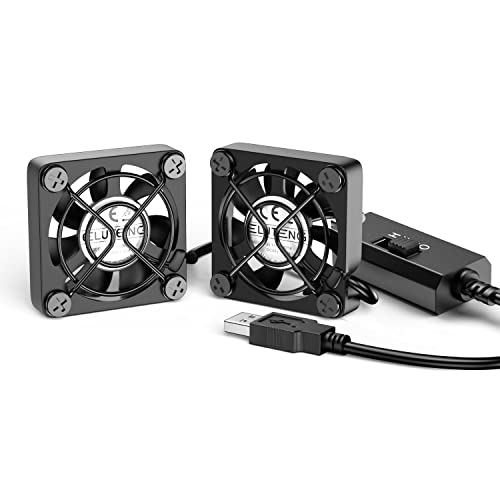
ELUTENG Dual 40mm USB Fan, 3 Speeds
Sealed Mini PC setups where desk space around the chassis is too tight for a full-size external fan.
Our take Check price for ELUTENG Dual 40mm USB Fan, 3 Speeds (opens in a new tab)

Best Long-Life Rating
AC Infinity MULTIFAN Mini, Compact 40mm x 20mm USB Fan
Buyers who want a long-lifespan external fan running continuously next to an always-on Mini PC.
Our take Check price for AC Infinity MULTIFAN Mini, Compact 40mm x 20mm USB Fan (opens in a new tab)
Our Picks
Best Purpose-Built External Mount1 of 7
IFCASE Cooling Fan Mount for Mac mini on Amazon (opens in a new tab)
This is the one product in this guide actually built as an external cooling accessory rather than a repurposed general fan, a wall, under-desk, or monitor-back mount for Mac mini with airflow structure built into the design.
Best for
- Mac mini owners who want a purpose-built external cooling mount rather than a general-purpose fan placed nearby.
Why we like it
It requires no disassembly of the Mac mini itself, exactly the sealed-case use case this guide targets.
Purpose-built external cooling accessory, not a repurposed general fan. On price, it's actually priced above Wathai Cooling Case Fan, which is worth weighing if cost is your deciding factor between the two.
On the other side, Mounted location may be less convenient to access for cleaning.
Key dimensions & specs
- Aluminum alloy, wrap-around design
- VESA 75mm and 100mm compatible
- Wall, under-desk, or monitor-back mounting
- Includes USB 1.1 hub
Pros
- Purpose-built external cooling accessory, not a repurposed general fan
- No disassembly of the Mac mini required
- VESA compatible for monitor arm integration
- Removes the Mini PC from the desk surface entirely
Cons
- Only fits Mac mini 2010-2023 M2 generation
- Highest price in this guide
- Mounted location may be less convenient to access for cleaning
Best Documented Airflow2 of 7
Wathai Cooling Case Fan, 120mm x 25mm, 5V USB on Amazon (opens in a new tab)
7 CFM airflow and 23 DBA noise rating.
Best for
- Buyers who want documented airflow numbers on a simple external fan placed next to a sealed Mini PC.
Why we like it
It sits external to any chassis by design, simply placed near the vent you want to target.
On the other side, Fixed single speed, no adjustment.
Key dimensions & specs
- 120mm x 120mm x 25mm
- 5V 0.2A, 1500 RPM
- 56.7 CFM airflow, 23 DBA noise
- Sleeve bearing, 35,000 hour rated life
Pros
- Specific CFM and DBA figures published
- Explicitly lists Mini PC as an intended use
- Mounting hardware included for a semi-permanent setup
Cons
- Not purpose-built for external Mini PC mounting specifically
- 120mm size needs more desk clearance
- Fixed single speed, no adjustment
Best for Quiet Offices3 of 7
GSCOLER X1 USB Cooling Fan, 18dB Ultra Quiet on Amazon (opens in a new tab)
With an 18dB rated noise level, this is the quietest fan in this guide on paper, useful when the Mini PC sits in a shared or quiet office and added fan noise is a real concern.
Best for
- Quiet-office setups where fan noise matters more than maximum airflow.
Why we like it
It lists Mini PC explicitly among its supported devices alongside routers and streaming boxes.
On the other side, Plastic housing, less durable long-term than metal-framed picks.
Key dimensions & specs
- 130mm x 130mm x 48.6mm
- 120mm fan, 850 RPM, 55.8 CFM
- 18dB(A) rated noise
- Integrated 20.87in USB cable
Pros
- Lowest stated noise rating in this guide
- Explicitly lists Mini PC as an intended device
- Shock-absorbing pads for stable external placement
- Built-in cable reduces setup clutter
Cons
- Lower RPM means less aggressive airflow than higher-speed options
- Plastic housing, less durable long-term than metal-framed picks
Best Adjustable Option4 of 7
Marame Quiet Router Cooling Fan Stand, 3 Adjustable Speeds on Amazon (opens in a new tab)
A 3-speed external fan that lets you scale airflow up for sustained workloads or down for quiet idle periods on the same sealed Mini PC.
Best for
- Buyers who want one external fan that adjusts between quiet idle and higher-airflow sustained-load modes.
Why we like it
Eight anti-vibration feet reduce buzz, useful for a fan sitting external and freestanding next to your setup.
The real tradeoff against that pick: Very small review sample size.
On the other side, Long cable can add clutter if not routed carefully.
Key dimensions & specs
- 120mm fan
- 3-speed switch: low/medium/high
- 8 anti-vibration rubber feet
- Metal safety wire grille
Pros
- Adjustable speed for varying workload intensity
- Anti-vibration feet reduce desk noise
- Metal grille adds physical protection
- Highest star rating in this guide
Cons
- Very small review sample size
- No published CFM or DBA figures for direct comparison
- Long cable can add clutter if not routed carefully
Best for Dual Placement5 of 7
Easy Cloud 120mm USB Fan, 3 Speeds, 2-Pack on Amazon (opens in a new tab)
Two 120mm fans in one listing, useful for external placement at both the intake and exhaust side of a sealed Mini PC simultaneously, something a single-fan pick can't do without buying twice.
Best for
- Buyers who want to externally cool both the intake and exhaust sides of a sealed Mini PC at once.
Why we like it
Each unit includes its own 3-speed controller and anti-vibration feet.
On the other side, Higher top speed likely means more noise at max setting.
Key dimensions & specs
- 120mm fan x2
- 3-speed controller, up to 2000 RPM
- 8 anti-vibration feet per fan
- Dual-ball bearings
Pros
- Two fans for intake and exhaust placement at once
- Higher max RPM than several single-fan picks
- Anti-vibration feet on each unit
- Good value for two fans
Cons
- No specific CFM or DBA figures published
- Managing two external fans means more desk cable clutter
- Higher top speed likely means more noise at max setting
Best for Tight Spaces6 of 7
ELUTENG Dual 40mm USB Fan, 3 Speeds on Amazon (opens in a new tab)
Two small 40mm fans on one cord, sized to tuck into a narrow external gap next to a sealed Mini PC rather than requiring open desk space like a full-size 120mm unit.
Best for
- Sealed Mini PC setups where desk space around the chassis is too tight for a full-size external fan.
Why we like it
The listing notes some audible noise at higher speeds given the compact fan size.
On the other side, No specific CFM or DBA rating published.
Key dimensions & specs
- 40mm x 40mm x 25mm fans, dual
- 3-speed control (low/medium/high)
- Metal frame with finger safety protection
- Hydraulic bearing motor
Pros
- Fits tight external gaps a 120mm fan physically can't
- Dual fans target two spots at once
- 3-speed adjustability
Cons
- Lower airflow volume than 120mm alternatives
- Audible at higher speeds per the listing
- No specific CFM or DBA rating published
Best Long-Life Rating7 of 7
AC Infinity MULTIFAN Mini, Compact 40mm x 20mm USB Fan on Amazon (opens in a new tab)
A compact external fan with a 67,000 hour rated bearing lifespan, notably longer than most alternatives in this guide, useful if the fan will run continuously alongside an always-on Mini PC.
Best for
- Buyers who want a long-lifespan external fan running continuously next to an always-on Mini PC.
Why we like it
AC Infinity states 12 CFM airflow and 18 DBA noise for this specific model.
The real tradeoff against that pick: Lower total airflow than the 120mm options here.
On the other side, Single fan versus dual-fan alternatives at a similar price.
Key dimensions & specs
- 40mm x 40mm x 20mm
- 12 CFM airflow, 18 DBA noise
- Dual-ball bearings, 67,000 hour rated life
- Multi-speed controller
Pros
- Longest rated bearing lifespan in this guide
- Specific CFM and DBA figures published
- Flexible flat or upright placement
Cons
- Lower total airflow than the 120mm options here
- Best suited to smaller Mini PC chassis given its size
- Single fan versus dual-fan alternatives at a similar price
How We Chose These External Cooling Fans for Mini PCs
Each pick was assessed across 4 criteria weighted for real-world use.
- We compared whether each product can add useful cooling without opening or modifying the Mini PC chassis.
- We compared fan placement and direction against typical Mini PC vent layouts, favoring documented CFM figures where available.
- Noise for shared or quiet spaces
- We compared available DBA figures and prioritized listings that publish a specific number over vague quiet claims.
- We considered fan size, mounting options, and whether a product needs open desk space or fits tight gaps around a sealed chassis.
What to Look for in an External Cooling Fan for Mini PCs
Key buying criteria so you get the right fit the first time.
Confirm the cooling accessory actually matches your mini PC's chassis shape and airflow design
Mini PC cooling accessories, whether a cooling stand, an external fan, or a cooling pad, work by improving airflow around the device's existing vents, so their effectiveness depends heavily on where your specific mini PC's own intake and exhaust vents are located, which varies meaningfully between brands and even between generations of the same product line.
An accessory designed to blow air upward into a bottom-vented chassis provides little benefit to a mini PC that vents primarily from the rear or sides, regardless of how much airflow the accessory itself generates, since the cooling benefit only materializes when moving air actually reaches the device's real intake points.
Check your specific mini PC model's vent locations (usually visible in official product photos or its spec sheet) before assuming any generically-marketed cooling accessory will meaningfully help.
Understand that passive stands and active fans solve different problems
A passive cooling stand improves airflow purely through elevation and often an open or perforated design that lets ambient air circulate more freely around the chassis than sitting flat on a desk, requiring no power and adding zero noise, while an active cooling fan or pad forces air movement and can meaningfully lower temperatures under sustained heavy load in a way passive elevation alone cannot.
This matters because a passive stand is a reasonable solution for a mini PC that only occasionally runs warm, while a thermally-constrained device under sustained load, like one running a home server or transcoding video continuously, benefits more from active airflow that a passive stand simply can't provide regardless of its design quality.
Match the accessory type to your actual thermal problem: light everyday use rarely needs active cooling, while continuous heavy workloads benefit from genuine forced airflow.
Check the noise level if the accessory uses an active fan
Any cooling accessory with its own fan adds a new noise source to your desk or media setup, and the noise level, when disclosed at all, is typically given in decibels (DBA) measured at a specific distance, though sellers rarely specify testing conditions consistently, making direct comparisons across listings imperfect but still directionally useful.
This matters specifically because the whole point of many mini PC setups, home theater boxes and quiet home office machines especially, is to avoid the noise of a traditional desktop tower, and adding a loud aftermarket cooling fan can undermine that goal entirely.
Check for a stated noise level and prioritize fans with speed control if quiet operation matters, since a fan that can be throttled down during light use and sped up only under real load offers the best of both a quiet baseline and real cooling headroom when needed.
Verify the power source, since not every cooling accessory is self-powered
Cooling fans and some cooling pads draw power either from a USB connection to the mini PC or host device itself, or from a separate wall adapter, and this distinction affects both setup complexity and whether the accessory turns on and off automatically with the device it's cooling.
A USB-powered accessory typically only runs while the mini PC itself is powered on and providing that USB power, which is usually the desired behavior for cooling, while a separately wall-powered accessory needs its own outlet and stays on independently unless manually switched off, adding a cable and a decision point the buyer needs to plan for in their setup.
Check the listing's stated power source and confirm it matches how you want the cooling accessory to behave relative to your mini PC's own power state.
Check physical clearance and desk space the accessory adds, not just its footprint
A cooling stand or external fan adds real height, width, or depth beyond your mini PC's own dimensions, and on an already-tight desk setup, this added footprint can conflict with a monitor stand, other peripherals, or the available desk depth in ways that aren't obvious from a product photo showing the accessory in isolation.
This is particularly relevant for stands that elevate the mini PC significantly or fans that mount to a specific side, since the resulting combined footprint of mini PC plus accessory is what actually needs to fit your space, not the accessory's dimensions alone.
Measure your actual available desk space with the mini PC's own footprint already accounted for, then check the accessory's added dimensions against what's left over, rather than assuming any accessory marketed as "compact" will automatically fit.
How to Choose an External Cooling Fan for Mini PCs
Every pick in this specific comparison uses a similar cooling approach; check the product names and specs above for the exact passive-versus-fan design.
| GSCOLER X1 USB Cooling Fan | |
| No firm budget ceiling, prioritizing active cooling power | IFCASE Cooling Fan Mount for Mac mini |
Passive Stand vs Active Fan
- Zero noise, no power needed, improves airflow through elevation alone. In this comparison: check each listing to confirm whether it's passive or fan-equipped.
- Genuine forced airflow that helps more under sustained load, at the cost of some noise and a power connection. In this comparison: IFCASE Cooling Fan Mount for Mac mini, Wathai Cooling Case Fan, GSCOLER X1 USB Cooling Fan.
Default to a passive pick for light everyday use, and only step up to an active fan if your mini PC runs warm under sustained load.
| Widest confirmed mini PC compatibility | IFCASE Cooling Fan Mount for Mac mini |
|---|---|
| Most tailored fit for a specific chassis shape |
For a 24/7 Home Server or Media Server Specifically
- Confirmed active airflow rather than passive elevation alone, a stated noise level or speed control, and USB power so it only runs while the mini PC itself is on.
- IFCASE Cooling Fan Mount for Mac mini fits this specifically: Purpose-built external cooling accessory, not a repurposed general fan.
- You want what IFCASE Cooling Fan Mount for Mac mini offers: Purpose-built external cooling accessory, not a repurposed general fan. That's a real functional upgrade over the budget picks here, not just a brand markup.
- GSCOLER X1 USB Cooling Fan already covers the essentials: Lowest stated noise rating in this guide. The main thing you'd be paying extra for elsewhere in this list is cooling power you may not need.
Frequently Asked Questions
Who needs an external cooling fan for a Mini PC?
It's most relevant for a Mini PC that runs hot during sustained workloads and you'd rather not open or modify, often because it's under warranty or the chassis is difficult to service.
Is an external fan better than replacing the internal fan?
External cooling is reversible and requires no disassembly, while an internal repair may address the root cause when the built-in fan or heatsink system is failing.
Can I point any of these fans anywhere at the Mini PC?
Aim airflow at an intake or help exhaust escape. Blowing onto a closed panel can move a lot of air without meaningfully improving internal cooling.
Will an external fan make the setup much louder?
It can, since the Mini PC's own internal fan and the external fan may run at the same time. Picks with a published DBA rating, like the GSCOLER X1 at 18dB, give you a way to estimate the added noise beforehand.
How is this different from the general Mini PC cooling fans guide?
The general guide covers standalone fan products broadly. This guide specifically addresses external supplemental cooling for sealed or non-serviceable Mini PCs, and includes one purpose-built mount not covered there.
Bottom Line
Best overall: IFCASE Cooling Fan Mount for Mac mini — best purpose-built external mount pick in this roundup. See the full verdicts above for every pick, with pros, cons and who each one suits.
Browse all external cooling fans for mini pcs on Amazon — Prime-eligible options with current pricing.