
Buying Guide
The Best Air Purifiers with Air Quality Sensors: Our Picks
We looked at 5 air purifiers with air quality sensors side by side, with the trade-offs that separate them and who each one suits.
By Jamie Cole, Lead Product Researcher
8 min read5 products evaluated
We may earn a commission from purchases made through links in this guide. Learn more.
5 particulate concentration, not VOCs, CO2, or specific gas-phase pollutants, meaning a good reading doesn't necessarily mean your air is clear of odor-causing or gas-phase compounds specifically.
A sensor-driven auto mode saves energy and reduces noise by ramping down when air quality improves, but it also means the fan runs slower during the exact periods you might want maximum capture, a real tradeoff between convenience and consistent performance.
Quick Picks
Our 5 recommendations at a glance. Tap a pick for the full verdict.
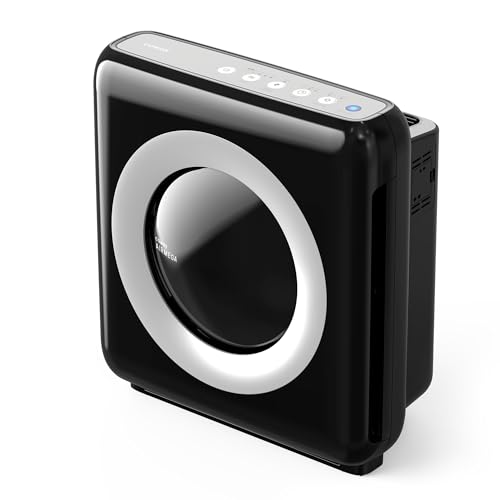
Best Air Purifier with Air Quality Sensor Overall
COWAY Air Purifier for Home Up to 1,748ft², HEPA Filter for Smoke, Allergies, Pet Dander, Odor, Air Quality Monitor, Auto&Eco Mode, Timer, Filter Indicator, 3yr Warranty, Mighty AP-1512HH, Black
Buyers wanting proven real-time particulate feedback and automatic adjustment
Our take Check price for COWAY Air Purifier for Home Up to 1,748ft², HEPA Filter for Smoke, Allergies, Pet Dander, Odor, Air Quality Monitor, Auto&Eco Mode, Timer, Filter Indicator, 3yr Warranty, Mighty AP-1512HH, Black (opens in a new tab)
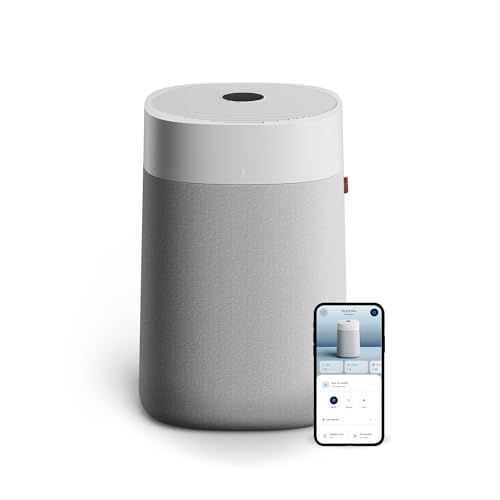
Best High-Airflow Pick with Sensor
Blueair Air Purifiers for Home Large Room, 211i Max Air Purifier for Bedroom, HEPASilent Technology Removes 99.97% of Airborne Viruses, Allergens, Dust, Mold, Odors, Air Quality Sensor
Large rooms wanting sensor-driven auto mode with high airflow capacity
Our take Check price for Blueair Air Purifiers for Home Large Room, 211i Max Air Purifier for Bedroom, HEPASilent Technology Removes 99.97% of Airborne Viruses, Allergens, Dust, Mold, Odors, Air Quality Sensor (opens in a new tab)

Best Smart App Pick with Sensor
LEVOIT Smart Air Purifier for Home Large Room up to 1875 ft Vital 200S-P
Buyers wanting to track sensor readings remotely via an app over time
Our take Check price for LEVOIT Smart Air Purifier for Home Large Room up to 1875 ft Vital 200S-P (opens in a new tab)

Best Budget Pick, No Sensor Tradeoff
LEVOIT Air Purifier for Home Allergies and Pets Hair Smokers in Bedroom, H13 True HEPA Filter, 24db Filtration System Cleaner Odor Eliminators, Remove 99.97% Dust Smoke Mold Pollen, Core 300, White
Buyers who prefer predictable fixed-speed operation over sensor-driven auto mode
Our take Check price for LEVOIT Air Purifier for Home Allergies and Pets Hair Smokers in Bedroom, H13 True HEPA Filter, 24db Filtration System Cleaner Odor Eliminators, Remove 99.97% Dust Smoke Mold Pollen, Core 300, White (opens in a new tab)
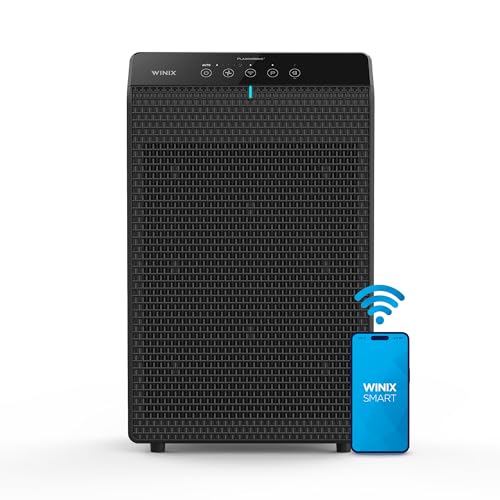
Best Established Pick with PlasmaWave and Sensor Feedback
WINIX 5520 Air Purifier with PlasmaWave Technology
Buyers wanting a proven combination of sensor feedback and odor control
Our take Check price for WINIX 5520 Air Purifier with PlasmaWave Technology (opens in a new tab)
Our Picks
Best Air Purifier with Air Quality Sensor Overall1 of 5
COWAY Air Purifier for Home Up to 1,748ft², HEPA Filter for Smoke, Allergies, Pet Dander, Odor, Air Quality Monitor, Auto&Eco Mode, Timer, Filter Indicator, 3yr Warranty, Mighty AP-1512HH, Black on Amazon (opens in a new tab)
This sensor detects general particulate concentration, not VOCs or CO2 specifically, a good reading means clear particulate air, not necessarily an absence of odor-causing compounds.
Best for
- Buyers wanting proven real-time particulate feedback and automatic adjustment
Why we like it
Auto and Eco modes adjust fan speed automatically. Both are worth keeping in mind before deciding.
Key dimensions & specs
- Air quality monitor with Auto and Eco modes
- Filter indicator
- 3-year warranty
Pros
- Genuine air quality monitor with real-time feedback
- Auto and Eco modes adjust fan speed automatically
- 3-year warranty
Cons
- Sensor detects general particulate, not VOCs or CO2 specifically
- Auto mode ramps down fan speed during clear-reading periods
- Higher price than budget alternatives
Best High-Airflow Pick with Sensor2 of 5
Blueair Air Purifiers for Home Large Room, 211i Max Air Purifier for Bedroom, HEPASilent Technology Removes 99.97% of Airborne Viruses, Allergens, Dust, Mold, Odors, Air Quality Sensor on Amazon (opens in a new tab)
An air quality sensor paired with HEPASilent high-airflow technology, useful for a large room where the sensor-driven auto mode needs to ramp fan speed up quickly when triggered.
Best for
- Large rooms wanting sensor-driven auto mode with high airflow capacity
Why we like it
A sensor-driven auto mode saves energy and noise when air is clear, but understand the fan runs slower during those periods too, a real tradeoff versus running at a fixed high speed continuously.
Key dimensions & specs
- Air quality sensor
- HEPASilent high-airflow technology
- 99.97% removal of airborne particulates
- Large-room rated
Pros
- Air quality sensor paired with high airflow capacity
- HEPASilent technology keeps noise down even at higher fan speeds
- Large-room coverage
- 99.97% particulate removal
Cons
- Higher price than budget alternatives
- Sensor still limited to general particulate detection
Best Smart App Pick with Sensor3 of 5
LEVOIT Smart Air Purifier for Home Large Room up to 1875 ft Vital 200S-P on Amazon (opens in a new tab)
App-based sensor history helps you spot patterns in your room's particulate levels over time, more useful than a single on-unit reading in the moment.
Best for
- Buyers wanting to track sensor readings remotely via an app over time
Why we like it
That said, higher price than budget alternatives.
Key dimensions & specs
- Smart app control with sensor feedback
- Up to 1875 sq ft rated (open room)
- Sensor-driven auto adjustment
Pros
- Smart app control shows sensor history over time
- Large rated coverage
- Sensor-driven auto mode adjusts fan speed
Cons
- Higher price than budget alternatives
- Sensor still limited to general particulate detection
- Larger footprint than compact picks
Best Budget Pick, No Sensor Tradeoff4 of 5
LEVOIT Air Purifier for Home Allergies and Pets Hair Smokers in Bedroom, H13 True HEPA Filter, 24db Filtration System Cleaner Odor Eliminators, Remove 99.97% Dust Smoke Mold Pollen, Core 300, White on Amazon (opens in a new tab)
Running at a manually chosen fixed speed avoids the fan-ramp-down tradeoff of sensor-driven auto mode entirely, a reasonable choice if you prefer predictable, consistent airflow.
Best for
- Buyers who prefer predictable fixed-speed operation over sensor-driven auto mode
Key dimensions & specs
- True HEPA H13, 99.97% particulate removal
- No built-in sensor, manual speed control
- 24dB quoted noise level
Pros
- Avoids sensor-driven fan ramp-down tradeoff entirely
- Affordable price
- Certified True HEPA H13 filtration
Cons
- No real-time air quality feedback
- No automatic adjustment based on sensed conditions
- Manual speed selection only
Best Established Pick with PlasmaWave and Sensor Feedback5 of 5
WINIX 5520 Air Purifier with PlasmaWave Technology on Amazon (opens in a new tab)
An indicator light shows general air quality status at a glance, useful for a quick check without needing to open an app or read a numeric display.
Best for
- Buyers wanting a proven combination of sensor feedback and odor control
Why we like it
Sensor-driven auto mode with at-a-glance indicator light.
Key dimensions & specs
- Sensor-driven auto mode with indicator light
- PlasmaWave odor-neutralizing technology
- True HEPA filtration
Pros
- Sensor-driven auto mode with at-a-glance indicator light
- PlasmaWave addresses odor alongside particulate
- Proven, established design
Cons
- Higher price than the budget pick
- Sensor still limited to general particulate detection
- Larger footprint than compact alternatives
How We Chose These Air Purifiers with Air Quality Sensors
Each pick was assessed across 3 criteria weighted for real-world use.
- 5 particulate concentration, not VOCs, CO2, or specific gas-phase pollutants, and made that limitation clear rather than overselling sensor capability.
- Auto-mode fan ramp-down tradeoff assessed
- Weighed that a sensor-driven auto mode saves energy and noise by ramping down when air quality improves, but also runs slower during those exact periods, a real tradeoff versus fixed-speed operation.
- Feedback method (app, display, indicator light) compared
- Distinguished between smart app history tracking, an on-unit numeric display, and a simple indicator light, since each offers a different level of detail and convenience.
What to Look for in an Air Purifier with Air Quality Sensors
Key buying criteria so you get the right fit the first time.
Verify True HEPA certification, not a "HEPA-type" or "HEPA-like" claim
3 microns, a specific, testable standard, while "HEPA-type" or "HEPA-like" are marketing phrases that carry no such guarantee and often describe filters with meaningfully lower real-world capture rates.
This distinction matters a great deal if you're buying for allergies, asthma, or pet dander specifically, since a HEPA-type filter can look identical in a listing photo while performing well below the certified standard.
Check the listing for the specific phrase "True HEPA" or an H13/H14 filter class rating, and treat a listing that only says "HEPA filtration" with no qualifier as an unverified claim.
Check for activated carbon if odors or VOCs are your actual concern
A HEPA filter, even a certified one, only captures solid particles like dust, pollen, and pet dander, it does essentially nothing for gases, smoke smell, cooking odors, or volatile organic compounds, since those pass straight through a particulate filter.
Only a substantial layer of activated carbon media actually adsorbs those gaseous odors, and a thin carbon pre-filter strip is a much weaker version of this than a dedicated carbon chamber. This matters most if your primary concern is smoke, cooking smell, or chemical odors rather than dust or allergens.
Check the listing specifically for the amount or type of carbon media included, not just whether the word "carbon" appears somewhere in the description.
Match CADR and room coverage to your actual room size, not the max-rated size
CADR (Clean Air Delivery Rate) and a listed maximum room-size coverage figure describe how quickly a purifier can filter air in an ideal, mostly empty room, real rooms with furniture, partial walls, or open floor plans to a hallway perform meaningfully worse than the rated figure suggests.
5 to 2 times your actual room size generally gives noticeably better real-world air turnover.
Measure your room's actual square footage and compare it against the unit's stated coverage area, favoring the higher end of that range rather than the bare minimum.
Check the actual noise level in decibels, not just "quiet" in the title
"Quiet" is a subjective marketing word with no fixed meaning, while a stated decibel figure at the lowest fan speed is a concrete, comparable number, generally anything at or below 30dB is unobtrusive for a home office or bedroom, while a unit only quoting its high-speed noise level can be considerably louder in practice on the setting you'd actually run overnight or during calls.
This matters most if the purifier will run near a desk during video calls or overnight in a bedroom, less if it's placed in a room you're not actively working or sleeping in.
Check whether the listing states a specific low-speed decibel number, and be skeptical of a purifier that only advertises being "whisper quiet" without an actual figure attached.
Factor in filter replacement cost and frequency, not just the purchase price
A cheaper purifier upfront can end up costing more over a year or two if its replacement filters are expensive or need swapping every 2-3 months, while a pricier unit with a 6-12 month filter life and a lower-cost replacement filter can work out cheaper in total ownership cost.
This is easy to overlook when comparing sticker prices alone, but it's a real recurring cost, not a one-time purchase decision.
Check the listing or manufacturer's site for the recommended filter replacement interval and the actual replacement filter price, then estimate a rough annual cost before comparing purchase price alone across different picks.
How to Choose an Air Purifier with Air Quality Sensors
| LEVOIT Air Purifier for Home Allergies and Pets Hair Smokers in Bedroom | |
| LEVOIT Air Purifier for Home Allergies and Pets Hair Smokers in Bedroom |
| LEVOIT Air Purifier for Home Allergies and Pets Hair Smokers in Bedroom | |
| Blueair Air Purifiers for Home Large Room |
Smart App-Connected vs Basic Manual Controls
- Lets you monitor air quality and adjust fan speed remotely, useful if you want automation or scheduling. In this comparison: LEVOIT Smart Air Purifier for Home Large Room up to 1875 ft Vital 200S.
- Simpler and usually cheaper, with nothing to set up or connect. In this comparison: COWAY Air Purifier for Home Up to 1, Blueair Air Purifiers for Home Large Room, LEVOIT Air Purifier for Home Allergies and Pets Hair Smokers in Bedroom, WINIX 5520 Air Purifier with PlasmaWave Technology.
Default to basic manual controls unless you specifically want app-based monitoring or automation.
| LEVOIT Air Purifier for Home Allergies and Pets Hair Smokers in Bedroom | |
| COWAY Air Purifier for Home Up to 1 |
For Allergies or Pet Dander Specifically
- Certified True HEPA filtration with an H13 or higher rating, sized for a room at least as large as where it'll actually run.
- LEVOIT Air Purifier for Home Allergies and Pets Hair Smokers in Bedroom discloses certified True HEPA filtration.
- You need real odor, VOC, or large-room coverage, where Blueair Air Purifiers for Home Large Room's higher price buys real filtration or CADR headroom over the cheaper picks.
- You're covering a small space with a basic dust or allergen concern, where LEVOIT Air Purifier for Home Allergies and Pets Hair Smokers in Bedroom covers the same job at a lower price.
Frequently Asked Questions
Does a good air quality sensor reading mean my air has no VOCs or odors?
5 particulate concentration, not VOCs, CO2, or specific gas-phase pollutants, a clear particulate reading doesn't guarantee an absence of odor-causing compounds.
Does auto mode reduce how well my air purifier actually cleans the air?
Auto mode ramps the fan down when the sensor reads clean air to save energy and reduce noise, meaning airflow is lower during those periods than a fixed high-speed setting would provide.
Is a smart app better than an on-unit display for air quality tracking?
It depends on your needs. A smart app gives historical tracking of readings over time, useful for spotting patterns, while an on-unit display or indicator light gives a faster at-a-glance check without needing a phone.
Should I just run my air purifier at a fixed speed instead of auto mode?
If you want consistent, predictable airflow regardless of momentary sensor readings, yes, a fixed manual speed avoids the fan ramp-down tradeoff that auto mode introduces.
Bottom Line
Best overall: COWAY Air Purifier for Home Up to 1,748ft², HEPA Filter for Smoke, Allergies, Pet Dander, Odor, Air Quality Monitor, Auto&Eco Mode, Timer, Filter Indicator, 3yr Warranty, Mighty AP-1512HH, Black — best air purifier with air quality sensor overall pick in this roundup. See the full verdicts above for every pick, with pros, cons and who each one suits.
Browse all air purifiers with air quality sensors on Amazon — Prime-eligible options with current pricing.