
Buying Guide
The Best 27-Inch OLED 4K Monitors for a Cleaner, More Useful Desk
We looked at 6 27-inch OLED 4K monitors side by side, with the trade-offs that separate them and who each one suits.
By Jamie Cole, Lead Product Researcher
11 min read6 products evaluated
Best 27-Inch OLED 4K Monitors range widely on paper. That means 27-inch oled 4k monitors, details stay hidden.
27-inch oled 4k monitors picks split on honest scaling behavior, since panel type sets real contrast and color.
Quick Picks
Our 6 recommendations at a glance. Tap a pick for the full verdict.
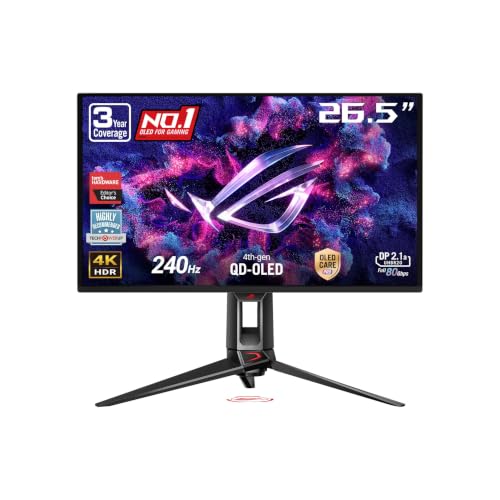
Best Overall
ASUS ROG PG27UCDM 27 Inch 4K 240Hz OLED Gaming Monitor QD-OLED
Buyers who want the strongest all-around pick in this comparison and would rather not keep shopping around
Our take Check price for ASUS ROG PG27UCDM 27 Inch 4K 240Hz OLED Gaming Monitor QD-OLED (opens in a new tab)

Also Worth Considering
ASUS ProArt Display 27" 4K OLED USB-C Professional Monitor (PA279CDV), QD-OLED
Buyers who want a genuine alternative to the top pick with a different tradeoff worth comparing directly
Our take Check price for ASUS ProArt Display 27" 4K OLED USB-C Professional Monitor (PA279CDV), QD-OLED (opens in a new tab)
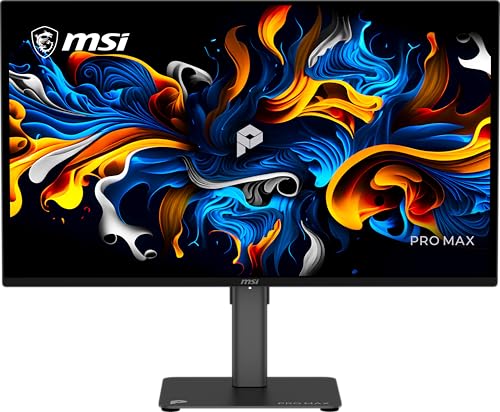
Solid Alternative
MSI PRO MAX 271UPX12G 27-inch 3840x2160(UHD) QD OLED Monitor, 120Hz, DisplayHDR
Buyers who want a genuine alternative to the top pick with a different tradeoff worth comparing directly
Our take Check price for MSI PRO MAX 271UPX12G 27-inch 3840x2160(UHD) QD OLED Monitor, 120Hz, DisplayHDR (opens in a new tab)

Best Value
Dell 27 Monitor S2725QS
Buyers who want a capable pick without paying for headroom you won't use
Our take Check price for Dell 27 Monitor S2725QS (opens in a new tab)

Runner-Up Pick
ASUS ROG XG27UCDMG 27 Inch 4K 240Hz Tandem QD-OLED G-SYNC Gaming Monitor
Buyers who want a genuine alternative to the top pick with a different tradeoff worth comparing directly
Our take Check price for ASUS ROG XG27UCDMG 27 Inch 4K 240Hz Tandem QD-OLED G-SYNC Gaming Monitor (opens in a new tab)

Worth a Look
msi MAG 272UP QD-OLED X24 27-Inch 4K UHD Gaming Monitor
Buyers who want a genuine alternative to the top pick with a different tradeoff worth comparing directly
Our take Check price for msi MAG 272UP QD-OLED X24 27-Inch 4K UHD Gaming Monitor (opens in a new tab)
Our Picks
Best Overall1 of 6
ASUS ROG PG27UCDM 27 Inch 4K 240Hz OLED Gaming Monitor QD-OLED
ASUS ROG PG27UCDM 27 Inch 4K 240Hz OLED Gaming Monitor QD-OLED is our overall pick in this lineup.
Best for
- Buyers who want the strongest all-around pick in this comparison and would rather not keep shopping around
Why we like it
Latest 4th-gen qd-oled technology delivers sharper imagery and crystal-clear text, a longer lifespan over previous-gen oleds.
Set next to ASUS ProArt Display 27" 4K OLED USB-C Professional Monitor (PA279CDV), QD-OLED, the two land close enough on paper that it's worth comparing both listings directly on the spec that matters most for your setup.
This makes sense for anyone who want the strongest all-around pick in this comparison and would rather not keep shopping around. Marketed specs and real-world performance can differ, so check independent reviews before assuming the headline number tells the full story.
Key specs
- High-performance display specifications
- Latest 4th-gen qd-oled technology delivers sharper imagery and crystal-clear text
- Enhanced viewing comfort
Pros
- High-performance display specifications
- Latest 4th-gen qd-oled technology delivers sharper imagery and crystal-clear text
- Enhanced viewing comfort
- Intelligent burn-in protection
Cons
- Marketed specs and real-world specs often differ
- Check compatibility with your exact setup before buying
Also Worth Considering2 of 6
ASUS ProArt Display 27" 4K OLED USB-C Professional Monitor (PA279CDV), QD-OLED
ASUS ProArt Display 27" 4K OLED USB-C Professional Monitor (PA279CDV), QD-OLED is a strong alternative worth comparing directly against the top pick.
Best for
- Buyers who want a genuine alternative to the top pick with a different tradeoff worth comparing directly
Why we like it
1 ms (gtg) response time for smooth rendering. 1000 Nits peak brightness with vesa displayhdr true black 400 for exceptional contrast and color performance.
5, a detail worth checking closely before choosing between this and ASUS ROG PG27UCDM 27 Inch 4K 240Hz OLED Gaming Monitor QD-OLED.
This one is the right call if you want a genuine alternative to the top pick with a different tradeoff worth comparing directly. Compatibility with your exact setup matters more than the spec sheet alone, so confirm it works with your specific gear before buying.
Key specs
- 26.5-Inch 4K uhd (3840 × 2160) qd-oled panel with a 120 Hz
- 1000 Nits peak brightness with vesa displayhdr true black
- Calman verified and factory-calibrated for excellent color accuracy with delta e < 1.5
Pros
- 26.5-Inch 4K uhd (3840 × 2160) qd-oled panel with a 120 Hz
- 1000 Nits peak brightness with vesa displayhdr true black
- Calman verified and factory-calibrated for excellent color accuracy with delta e < 1.5
- Extensive connectivity options
Cons
- Check compatibility with your exact setup before buying
- Marketed specs and real-world specs often differ
Solid Alternative3 of 6
MSI PRO MAX 271UPX12G 27-inch 3840x2160(UHD) QD OLED Monitor, 120Hz, DisplayHDR
MSI PRO MAX 271UPX12G 27-inch 3840x2160(UHD) QD OLED Monitor, 120Hz, DisplayHDR is a strong alternative worth comparing directly against the top pick.
Best for
- Buyers who want a genuine alternative to the top pick with a different tradeoff worth comparing directly
Why we like it
Experience ultra-sharp 3840 x 2160 resolution with advanced qd-oled technology, delivering deeper blacks, vibrant colors, and exceptional contrast for professional-grade productivity and content creation. Smooth 120hz performance with adaptive-sync - enjoy fluid visuals with a 120hz refresh rate and adaptive-sync support, reducing motion blur and screen tearing for a seamless experience across work and entertainment.
Set next to ASUS ROG PG27UCDM 27 Inch 4K 240Hz OLED Gaming Monitor QD-OLED, the two land close enough on paper that it's worth comparing both listings directly on the spec that matters most for your setup.
Go with this pick if you want a genuine alternative to the top pick with a different tradeoff worth comparing directly. Marketed specs and real-world performance can differ, so check independent reviews before assuming the headline number tells the full story.
Key specs
- Experience ultra-sharp 3840 x 2160 resolution with advanced qd-oled technology
- True-to-life color accuracy
- Smooth 120hz performance with adaptive-sync - enjoy fluid visuals
Pros
- Experience ultra-sharp 3840 x 2160 resolution with advanced qd-oled technology
- True-to-life color accuracy
- Smooth 120hz performance with adaptive-sync - enjoy fluid visuals
- Streamline your setup with USB-C connectivity featuring 15w power delivery
Cons
- Marketed specs and real-world specs often differ
- Check compatibility with your exact setup before buying
Best Value4 of 6
Dell 27 Monitor S2725QS
Dell 27 Monitor S2725QS is the best-value option in this roundup, priced lowest without a real capability gap.
Best for
- Buyers who want a capable pick without paying for headroom you won't use
Why we like it
Reduces harmful blue light emissions to 35%, for all-day comfort without sacrificing color accuracy. 03ms response time create a captivating experience for work and play.
Weighing this against ASUS ROG PG27UCDM 27 Inch 4K 240Hz OLED Gaming Monitor QD-OLED, immerse yourself in breathtaking 4K visuals with in-plane switching technology ends up being the detail that matters most for most buyers.
Go with this pick if you want a capable pick without paying for headroom you won't use. Compatibility with your exact setup matters more than the spec sheet alone, so confirm it works with your specific gear before buying.
Key specs
- Improved comfortview
- Refresh rate
- Vivid colors
Pros
- Improved comfortview
- Refresh rate
- Vivid colors
- Re-engineered sound quality
Cons
- Check compatibility with your exact setup before buying
- Marketed specs and real-world specs often differ
Runner-Up Pick5 of 6
ASUS ROG XG27UCDMG 27 Inch 4K 240Hz Tandem QD-OLED G-SYNC Gaming Monitor
ASUS ROG XG27UCDMG 27 Inch 4K 240Hz Tandem QD-OLED G-SYNC Gaming Monitor is a strong alternative worth comparing directly against the top pick.
Best for
- Buyers who want a genuine alternative to the top pick with a different tradeoff worth comparing directly
Why we like it
03ms response time for ultra-smooth gameplay. Advanced 4th-generation qd-oled technology: latest qd-oled technology delivers sharper imagery and crystal-clear text, with a longer lifespan over previous-gen oleds.
Set next to ASUS ROG PG27UCDM 27 Inch 4K 240Hz OLED Gaming Monitor QD-OLED, the two land close enough on paper that it's worth comparing both listings directly on the spec that matters most for your setup.
This one is the right call if you want a genuine alternative to the top pick with a different tradeoff worth comparing directly. Marketed specs and real-world performance can differ, so check independent reviews before assuming the headline number tells the full story.
Key specs
- Advanced 4th-generation qd-oled technology
- latest qd-oled technology delivers sharper imagery and crystal-clear text
- Oled anti-flicker 2.0 technology
- includes a new luminance compensation
- Asus oled care pro with neo proximity sensor
Pros
- Advanced 4th-generation qd-oled technology: latest qd-oled technology delivers sharper imagery and crystal-clear text
- Oled anti-flicker 2.0 technology: includes a new luminance compensation
- Asus oled care pro with neo proximity sensor
- Professional-grade color accuracy
Cons
- Marketed specs and real-world specs often differ
- Check compatibility with your exact setup before buying
Worth a Look6 of 6
msi MAG 272UP QD-OLED X24 27-Inch 4K UHD Gaming Monitor
Msi MAG 272UP QD-OLED X24 27-Inch 4K UHD Gaming Monitor is a strong alternative worth comparing directly against the top pick.
Best for
- Buyers who want a genuine alternative to the top pick with a different tradeoff worth comparing directly
Why we like it
03 ms (gtg) response time for a vesa clearmr 13000 rating; an elite graphene heatsink (fanless) enhances panel durability. 0 helps prevent burn-in, ai supported software (smart crosshair), console modes & game assistance (optix scope); pip/pbb compatible; features a 4-way adjustable stand (vesa 100mm).
Set next to ASUS ROG PG27UCDM 27 Inch 4K 240Hz OLED Gaming Monitor QD-OLED, the two land close enough on paper that it's worth comparing both listings directly on the spec that matters most for your setup.
Go with this pick if you want a genuine alternative to the top pick with a different tradeoff worth comparing directly. Compatibility with your exact setup matters more than the spec sheet alone, so confirm it works with your specific gear before buying.
Key specs
- Msi mag 272up qd-oled x24 gaming monitor combines 10-bit
- Quantum dot oled panel displays 1.07 billion colors
- Ultra-high 240 Hz refresh rate is complemented by an incredibly low 0.03 ms
Pros
- Msi mag 272up qd-oled x24 gaming monitor combines 10-bit
- Quantum dot oled panel displays 1.07 billion colors
- Ultra-high 240 Hz refresh rate is complemented by an incredibly low 0.03 ms
- Msi oled care 2.0 helps prevent burn-in
Cons
- Check compatibility with your exact setup before buying
- Marketed specs and real-world specs often differ
How We Chose These 27-Inch OLED 4K Monitors
Each pick was assessed across 5 criteria weighted for real-world use.
- USB-C Power Delivery Wattage Determines Whether It Can Actually Charge Your Laptop
- Not every USB-C port on a 4K monitor delivers enough power to actually charge a laptop while driving it, the wattage varies meaningfully between models, verify the monitor's specific PD wattage rating against what your laptop needs to charge at a usable rate, a mismatch means your laptop battery slowly drains even while connected..
- Included Stands Vary from Tilt-Only to Full Ergonomic Adjustment
- A 4K monitor's included stand ranges from a basic tilt-only mount to a full ergonomic stand with height, swivel, and pivot adjustment, a tilt-only stand is fine if your desk setup is already at the right height, but if you need to adjust for a standing desk or multiple users, check the stand's actual adjustment range or budget for a separate monitor arm rather than assuming every 4K monitor ships with full ergonomic adjustment..
- Advertised Response Time Numbers Use Best-Case Conditions, Not Real-World Motion
- The response time printed on a 4K monitor's box is a best-case lab number, not a guarantee of real-world motion clarity, aggressive overdrive settings used to hit a low advertised number can actually introduce ghosting or overshoot artifacts in practice, look for independent motion-clarity reviews rather than comparing spec sheet numbers directly..
- 4K at Smaller Screen Sizes Requires OS Scaling, Which Isn't Always Smooth
- A 4K monitor under about 27 inches packs pixels densely enough that text and UI elements render too small at native resolution, requiring OS-level scaling (typically 150% on Windows or similar on macOS) to stay readable, scaling generally works well on modern operating systems but some older or niche applications render blurry or incorrectly sized at non-100% scaling, check whether your specific software handles scaling cleanly before assuming a small 4K panel is trouble-free..
- Input Lag Matters Separately From Refresh Rate for Competitive Gaming Use
- Don't assume a high refresh rate automatically means low input lag on a 4K monitor, they're measured separately and don't always move together, a panel's internal scaler and processing chain add their own delay regardless of refresh rate, check dedicated input lag testing from independent reviewers if competitive gaming responsiveness is the priority..
What to Look for in a 27-Inch OLED 4K Monitor
Key buying criteria so you get the right fit the first time.
USB-C Power Delivery Wattage Determines Whether It Can Actually Charge Your Laptop
Not every USB-C port on a 4K monitor delivers enough power to actually charge a laptop while driving it, the wattage varies meaningfully between models, verify the monitor's specific PD wattage rating against what your laptop needs to charge at a usable rate, a mismatch means your laptop battery slowly drains even while connected.
Included Stands Vary from Tilt-Only to Full Ergonomic Adjustment
A 4K monitor's included stand ranges from a basic tilt-only mount to a full ergonomic stand with height, swivel, and pivot adjustment, a tilt-only stand is fine if your desk setup is already at the right height, but if you need to adjust for a standing desk or multiple users, check the stand's actual adjustment range or budget for a separate monitor arm rather than assuming every 4K monitor ships with full ergonomic adjustment.
Large monitor beside a smaller second screen on a desk Advertised Response Time Numbers Use Best-Case Conditions, Not Real-World Motion
The response time printed on a 4K monitor's box is a best-case lab number, not a guarantee of real-world motion clarity, aggressive overdrive settings used to hit a low advertised number can actually introduce ghosting or overshoot artifacts in practice, look for independent motion-clarity reviews rather than comparing spec sheet numbers directly.
4K at Smaller Screen Sizes Requires OS Scaling, Which Isn't Always Smooth
A 4K monitor under about 27 inches packs pixels densely enough that text and UI elements render too small at native resolution, requiring OS-level scaling (typically 150% on Windows or similar on macOS) to stay readable, scaling generally works well on modern operating systems but some older or niche applications render blurry or incorrectly sized at non-100% scaling, check whether your specific software handles scaling cleanly before assuming a small 4K panel is trouble-free.
Monitor on a desk with a lamp and keyboard Input Lag Matters Separately From Refresh Rate for Competitive Gaming Use
Don't assume a high refresh rate automatically means low input lag on a 4K monitor, they're measured separately and don't always move together, a panel's internal scaler and processing chain add their own delay regardless of refresh rate, check dedicated input lag testing from independent reviewers if competitive gaming responsiveness is the priority.
How to Choose a 27-Inch OLED 4K Monitor
By Primary Use
| Your use | Recommended pick |
|---|---|
| General office and browsing | Dell 27 Monitor S2725QS |
| Color-critical creative work | ASUS ROG PG27UCDM 27 Inch 4K 240Hz OLED Gaming Monitor QD-OLED |
| Fast-paced gaming | Msi MAG 272UP QD-OLED X24 27-Inch 4K UHD Gaming Monitor |
By Budget
| Budget | Recommended pick |
|---|---|
| Lowest price in this lineup | Dell 27 Monitor S2725QS |
| Mid-range pick | ASUS ProArt Display 27" 4K OLED USB-C Professional Monitor (PA279CDV), QD-OLED |
| Higher budget | Msi MAG 272UP QD-OLED X24 27-Inch 4K UHD Gaming Monitor |
IPS vs OLED Panel
- IPS (e.g. Dell 27 Monitor S2725QS)
- Consistent accurate color from wide angles, weaker black levels.
- OLED
- Deeper contrast and faster response, real long-term burn-in risk on static content.
Match this to your actual setup and priorities.
By Screen Size
| Your desk depth | Recommended pick |
|---|---|
| Standard desk distance | ASUS ROG PG27UCDM 27 Inch 4K 240Hz OLED Gaming Monitor QD-OLED |
| Larger or multi-monitor desk | ASUS ProArt Display 27" 4K OLED USB-C Professional Monitor (PA279CDV), QD-OLED |
For Laptop Charging Specifically
- Look for
- A confirmed USB-C power delivery wattage that matches your laptop's actual charging requirement, not just a USB-C port.
- In this comparison
- ASUS ROG PG27UCDM 27 Inch 4K 240Hz OLED Gaming Monitor QD-OLED is worth checking against its specific spec sheet before assuming any pick here covers your exact need.
When to Spend More
- Spend more if
- You need the strongest real-world performance and sturdiest build, where msi MAG 272UP QD-OLED X24 27-Inch 4K UHD Gaming Monitor justifies the extra cost.
- Save if
- You want straightforward everyday use without paying for headroom you won't need, where Dell 27 Monitor S2725QS already covers the job at the lowest price here.
Frequently Asked Questions
Will a USB-C 4K monitor charge my laptop?
Only if its power delivery wattage matches or exceeds your laptop's charging requirement, check the monitor's specific PD wattage spec rather than assuming any USB-C monitor fully charges any laptop.
Is a curved 4K monitor better than flat?
It depends on your use, curved reduces eye travel and adds immersion for gaming or media but distorts straight lines in spreadsheet, CAD, or design work where geometric accuracy matters.
Does HDR on a 4K monitor actually look different?
It depends heavily on the certification tier, DisplayHDR 400 is a low bar with modest brightness gains, DisplayHDR 600 and above reflects capable HDR hardware, check the specific tier rather than trusting the word HDR alone.
Should I get an IPS, OLED, or VA 4K monitor?
IPS gives the most consistent accurate color, OLED gives the deepest contrast and fastest response with a real long-term burn-in risk on static content, VA splits the difference with strong contrast but slower response, match to your primary use.
Do I need wide color gamut coverage?
Only for color-critical work like video editing or print design, general use and office work are well served by standard SRGB coverage, check which gamut standard actually matters for your workflow.
Is a smaller 4K monitor harder to use than a larger one?
It needs OS-level scaling to keep text readable, which works well in most modern software but can render blurry in some older or niche applications, verify your specific software handles scaling before buying a smaller panel.
Bottom Line
Best overall: ASUS ROG PG27UCDM 27 Inch 4K 240Hz OLED Gaming Monitor QD-OLED — best overall pick in this roundup. See the full verdicts above for every pick, with pros, cons and who each one suits.
Browse all 27-inch oled 4k monitors on Amazon — Prime-eligible options with current pricing.