
Buying Guide
The Best Portrait-Mode Portable Monitors for a Cleaner, More Useful Desk
We looked at 8 portrait-mode portable monitors side by side, with the trade-offs that separate them and who each one suits.
By Jamie Cole, Lead Product Researcher
9 min read8 products evaluated
We may earn a commission from purchases made through links in this guide. Learn more.
Not every stand bundled with a "portrait-capable" portable monitor physically supports 90-degree rotation, some fold-out cases have fixed landscape-only viewing angles. Genuine portrait support needs either a rotating stand hinge or a VESA arm. We verified which picks below actually rotate versus which just claim portrait-mode software support without a stand that follows.
Also important: most of these monitors do not auto-sense orientation. Several listings explicitly state you must manually toggle display orientation in your OS settings after physically rotating the stand, not an automatic accelerometer-driven switch like a phone or tablet.
Quick Picks
Our 8 recommendations at a glance. Tap a pick for the full verdict.

Best Overall for Portrait Mode
Veout 16" Portable Monitor for Laptop, 1920x1200P FHD, 4 Colors Kickstand
Buyers who want a rotating stand and don't mind manually toggling orientation
Our take Check price for Veout 16" Portable Monitor for Laptop, 1920x1200P FHD, 4 Colors Kickstand (opens in a new tab)

Best 360° Rotating Stand
FLYTOCCA Portable Monitor, 16 Inch FHD 1200P, Horizontal/Vertical Monitor
Buyers who appreciate upfront honesty about the manual rotation limitation
Our take Check price for FLYTOCCA Portable Monitor, 16 Inch FHD 1200P, Horizontal/Vertical Monitor (opens in a new tab)

Best Detachable Rotating Stand
Orfibz 16" Portable Monitor, 1200P FHD Laptop Screen Extender
Buyers who want a detachable, dual-purpose rotating stand
Our take Check price for Orfibz 16" Portable Monitor, 1200P FHD Laptop Screen Extender (opens in a new tab)

Best One-Button Rotation Control
KYY Portable Monitor for Laptop, Travel Monitor with Stand Support Two Mode
Buyers who want the most convenient physical rotation mechanism with cable-free switching
Our take Check price for KYY Portable Monitor for Laptop, Travel Monitor with Stand Support Two Mode (opens in a new tab)

Best Budget Multi-Mode Pick
MNN 15.6" FHD 60Hz Portable Monitor USB-C HDMI IPS HDR
Budget-focused buyers who want confirmed portrait mode support
Our take Check price for MNN 15.6" FHD 60Hz Portable Monitor USB-C HDMI IPS HDR (opens in a new tab)
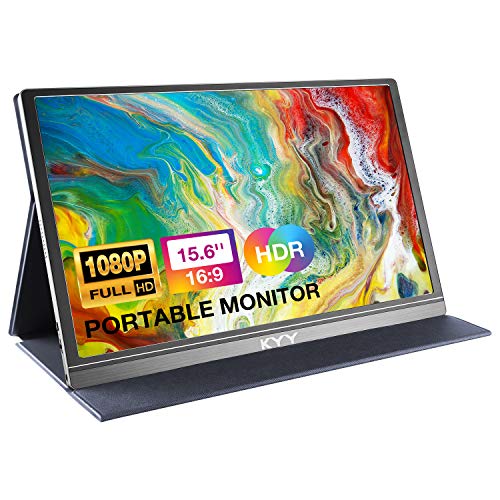
Most Reviewed, Limited Angle Range
KYY Portable Monitor 15.6" 1080P Computer Monitor Screen Extender w/Cover
Buyers who want a proven, low-cost monitor where portrait mode technically works but isn't the primary design focus
Our take Check price for KYY Portable Monitor 15.6" 1080P Computer Monitor Screen Extender w/Cover (opens in a new tab)

Best Sharp Panel for Portrait Coding
VisionOwl Portable Monitor 16 Inch 2.5K QHD 144Hz, 470 Nits
Buyers who want the sharpest available resolution when rotated to portrait for coding or documents
Our take Check price for VisionOwl Portable Monitor 16 Inch 2.5K QHD 144Hz, 470 Nits (opens in a new tab)

Budget 165Hz with Portrait Stand
AHXJKA Portable Monitor 16" 165Hz 1920x1200P 133% sRGB
Buyers who want a budget high-refresh panel with confirmed portrait stand adjustability
Our take Check price for AHXJKA Portable Monitor 16" 165Hz 1920x1200P 133% sRGB (opens in a new tab)
Our Picks
Best Overall for Portrait Mode1 of 8
Veout 16" Portable Monitor for Laptop, 1920x1200P FHD, 4 Colors Kickstand on Amazon (opens in a new tab)
This built-in aluminum stand adjusts from 0-75 degrees and explicitly supports portrait mode, a real hinge-based rotation rather than a fixed-angle cover.
Best for
- Buyers who want a rotating stand and don't mind manually toggling orientation
Why we like it
6-inch 16:9 panel even before rotating, useful for reading long documents in landscape too.
Genuine hinge-based portrait rotation, not just a fixed cover. On price, it's actually priced above FLYTOCCA Portable Monitor, which is worth weighing if cost is your deciding factor between the two.
On the other side, Portrait mode reduces horizontal pixels to 1200, cramped for wide spreadsheets.
Key dimensions & specs
- 16-inch 1920x1200, 16:10, portrait-capable stand
- Stand adjusts 0°-75°
- Dual USB-C + mini-HDMI
- 1.58 lb
Pros
- Genuine hinge-based portrait rotation, not just a fixed cover
- 16:10 ratio gives extra vertical space even in landscape
- Aluminum build
- Reasonable price
Cons
- No auto-rotate sensor, manual OS toggle required
- Portrait mode reduces horizontal pixels to 1200, cramped for wide spreadsheets
Best 360° Rotating Stand2 of 8
FLYTOCCA Portable Monitor, 16 Inch FHD 1200P, Horizontal/Vertical Monitor on Amazon (opens in a new tab)
This listing is unusually direct about the auto-rotate limitation: its own product description explicitly states "auto-rotation is not supported" and instructs you to manually adjust display orientation in your laptop settings, exactly the disclosure most competitors bury or omit.
Best for
- Buyers who appreciate upfront honesty about the manual rotation limitation
Why we like it
The stand itself does rotate 360 degrees between landscape and portrait.
Key dimensions & specs
- 16-inch FHD 1200P, 360° rotating stand
- Dual USB-C + HDMI + USB-A
- Built-in speakers + 3.5mm jack
- 1.62 lb
Pros
- Explicitly discloses the manual-toggle auto-rotate limitation upfront
- Genuine 360° rotating stand
- Built-in speakers and headphone jack
- Reasonable price
Cons
- No auto-rotate sensor, confirmed manual OS toggle required
- Speaker direction changes when rotated to portrait
Best Detachable Rotating Stand3 of 8
Orfibz 16" Portable Monitor, 1200P FHD Laptop Screen Extender on Amazon (opens in a new tab)
A detachable 360-degree rotating stand doubles as a mouse pad when removed, a useful dual-purpose design not seen elsewhere in this guide.
Best for
- Buyers who want a detachable, dual-purpose rotating stand
Why we like it
Like the FLYTOCCA pick, manual OS orientation toggling is required, no auto-rotate sensor here either.
On the other side, 1200P resolution, not the sharpest option.
Key dimensions & specs
- 16-inch 1200P FHD, detachable 360° stand
- Smart cover doubles as mouse pad
- Type-C or HDMI+USB-A connection
- 1.5 lb
Pros
- Highest rating among the portrait-focused picks
- Detachable stand doubles as a mouse pad
- Genuine 360° rotation
- Light and slim
Cons
- Manual OS toggle required, no auto-rotate sensor
- 1200P resolution, not the sharpest option
Best One-Button Rotation Control4 of 8
KYY Portable Monitor for Laptop, Travel Monitor with Stand Support Two Mode on Amazon (opens in a new tab)
This newer KYY model's integrated kickstand supports 65-degree forward/back tilt and a full 90-degree rotation for landscape-to-portrait switching without unplugging cables, a convenient mechanical design.
Best for
- Buyers who want the most convenient physical rotation mechanism with cable-free switching
Why we like it
A single circular control button also manages brightness and volume without digging into an OSD menu.
The real tradeoff against that pick: Still requires manual OS orientation toggle.
On the other side, Mini-HDMI only.
Key dimensions & specs
- 15.6-inch, 65° tilt + 90° rotation stand
- One-button brightness/volume control
- Dual USB-C + mini-HDMI
- 1.65 lb, aluminum alloy
Pros
- Rotates without unplugging cables
- One-button control for quick brightness/volume adjustment
- Aluminum build quality
- Highest rating among the newer picks
Cons
- Still requires manual OS orientation toggle
- Smaller review count reflects a newer listing
- Mini-HDMI only
Best Budget Multi-Mode Pick5 of 8
MNN 15.6" FHD 60Hz Portable Monitor USB-C HDMI IPS HDR on Amazon (opens in a new tab)
This listing explicitly names a Portrait Mode among its Copy/Extended/Second-Screen display mode toggle, a rare direct confirmation at this budget price point.
Best for
- Budget-focused buyers who want confirmed portrait mode support
Why we like it
The cover-stand still needs to be physically repositioned by hand, and OS orientation still needs a manual toggle.
On the other side, Basic 1080p color accuracy.
Key dimensions & specs
- 15.6-inch FHD, explicit Portrait Mode listed
- Dual USB-C + HDMI
- Smart cover stand
- Lowest price in this guide
Pros
- Explicitly lists Portrait Mode as a supported display mode
- Lowest price in this guide
- HDR mode included
Cons
- Cover-stand requires manual repositioning
- No auto-rotate sensor
- Basic 1080p color accuracy
Most Reviewed, Limited Angle Range6 of 8
KYY Portable Monitor 15.6" 1080P Computer Monitor Screen Extender w/Cover on Amazon (opens in a new tab)
This listing confirms it "can work in both landscape and portrait mode," but relies on the same magnetic fold-out cover as its landscape setup, with only two fixed angle grooves rather than an adjustable rotating hinge.
Best for
- Buyers who want a proven, low-cost monitor where portrait mode technically works but isn't the primary design focus
Why we like it
Portrait mode here means propping the cover differently, not a smooth continuous rotation.
6" FHD 60Hz Portable Monitor USB-C HDMI IPS HDR.
On the other side, No auto-rotate sensor.
Key dimensions & specs
- 15.6-inch 1080P, portrait mode via cover repositioning
- Two fixed angle grooves
- 2x USB-C + mini-HDMI
- 1.7 lb
Pros
- Confirmed to support portrait orientation
- Cheap and proven
- Slim and light
Cons
- Portrait via cover repositioning, not a smooth rotating hinge
- Only two fixed viewing angles
- No auto-rotate sensor
Best Sharp Panel for Portrait Coding7 of 8
VisionOwl Portable Monitor 16 Inch 2.5K QHD 144Hz, 470 Nits on Amazon (opens in a new tab)
5K resolution is a genuine benefit for portrait-mode coding or document reading, since rotating any panel reduces usable horizontal pixels, in this case from 2560 down to 1600, still more than a rotated 1080p panel's 1080.
Best for
- Buyers who want the sharpest available resolution when rotated to portrait for coding or documents
Why we like it
6" 1080P Computer Monitor Screen Extender w/Cover. The real tradeoff against that pick: Priciest pick in this guide.
On the other side, Heavier than the dedicated portrait-focused picks.
Key dimensions & specs
- 16-inch 2.5K QHD, 144Hz, 470 nits
- Kickstand supports landscape and portrait
- Full-size HDMI + dual USB-C
- Dual VESA holes
Pros
- Highest resolution in portrait mode of any pick here (1600px wide when rotated)
- Brightest panel in this guide
- Full-size HDMI
- VESA mountable for a fixed portrait desk setup
Cons
- Priciest pick in this guide
- No auto-rotate sensor confirmed
- Heavier than the dedicated portrait-focused picks
Budget 165Hz with Portrait Stand8 of 8
AHXJKA Portable Monitor 16" 165Hz 1920x1200P 133% sRGB on Amazon (opens in a new tab)
This listing explicitly mentions switching freely between landscape and portrait via its 0-120 degree adjustable stand, useful for multitasking layouts.
Best for
- Buyers who want a budget high-refresh panel with confirmed portrait stand adjustability
Why we like it
Its very small review count reflects a newer, lower-volume listing, weigh that against the otherwise solid 1920x1200 spec and 165Hz claim.
On the other side, No auto-rotate sensor confirmed.
Key dimensions & specs
- 16-inch 165Hz, 1920x1200, 0°-120° adjustable stand
- 133% SRGB, HDR
- 2x USB-C + mini HDMI
- 1.5 lb
Pros
- Explicit landscape/portrait switching via adjustable stand
- 165Hz refresh claim at a budget price
- Built-in speakers
- Lightweight
Cons
- Very small review count, limited track record
- Mini HDMI only
- No auto-rotate sensor confirmed
How We Chose These Portrait-Mode Portable Monitors
Each pick was assessed across 3 criteria weighted for real-world use.
- Distinguished picks with a real rotating hinge or 360° bracket from ones where 'portrait support' just means repositioning a fixed-angle folio cover.
- Auto-rotate sensor versus manual OS toggle
- Checked whether each listing claims an automatic orientation sensor or explicitly requires manually changing the display orientation setting after physically rotating the stand, most require the manual toggle.
- Effective horizontal resolution once rotated
- Calculated the usable horizontal pixel width in portrait mode for each panel, since rotating a display trades total horizontal pixels for vertical length.
What to Look for in a Portrait-Mode Portable Monitor
Key buying criteria so you get the right fit the first time.
Check the refresh rate ceiling for each port separately, not just the headline spec
0's bandwidth can't sustain the same data throughput as USB-C at higher resolutions.
This is a common source of buyer disappointment: someone buys a monitor rated 144Hz specifically to pair with a game console over HDMI, only to discover the HDMI port caps at 120Hz or even 60Hz on that specific model, a distinction the headline spec doesn't disclose.
Check the listing specifically for per-port refresh rate figures (USB-C rate versus HDMI rate stated separately), and match the port you'll actually use to the rate you actually need, not the single highest number in the title.
Confirm your specific source device can actually output above 60Hz before paying extra for a high refresh panel
A monitor's refresh rate capability is meaningless if the connected source device can't output a signal above 60Hz in the first place, and this is a common mismatch: many laptop USB-C ports are data-only or video-limited to 60Hz regardless of Thunderbolt or USB4 branding, and handheld gaming PCs like Steam Deck and ROG Ally specifically output capped at 60Hz over USB-C in their current hardware generation, making a 144Hz-rated monitor's extra capability completely unused for that pairing despite the higher price paid for it.
Before buying specifically for the refresh rate, check your exact source device's documented maximum output refresh rate over the connection type you'll actually use (not just its general spec sheet), since a monitor's rated capability and your source device's actual output are two entirely separate specifications that both need to support the higher rate.
Understand that response time (GtG) affects visible motion clarity as much as refresh rate does
Refresh rate (how many times per second the image updates) and response time (how quickly individual pixels can change color, commonly measured in milliseconds as gray-to-gray or GtG) are two separate specs that both affect how smooth and clear fast motion looks, and a high refresh rate paired with a slow response time still produces visible ghosting or blur trailing behind fast-moving objects, since the panel can't physically change pixel colors fast enough to keep up with the higher refresh rate's demands.
This matters because response time is disclosed far less consistently than refresh rate across portable monitor listings, many simply omit it entirely, making direct comparison difficult even when two panels share the same headline refresh number.
Check specifically for a stated GtG response time in milliseconds, and treat a high refresh rate spec with some skepticism if the listing doesn't also disclose response time, since the refresh number alone doesn't guarantee smooth-looking motion.
Check power delivery and cable requirements, since a portable monitor's convenience depends on how it's actually powered
Portable monitors typically draw power either through the same USB-C cable carrying the video signal (single-cable operation, the more convenient setup) or through a separate dedicated power input, and some models support pass-through charging that lets your laptop's own charger power both the laptop and the monitor simultaneously through one connection.
This matters concretely for actual portability: a monitor requiring two separate cables (one for video, one for power) is meaningfully less convenient to set up and pack away than genuine single-cable operation, undermining part of the appeal of a "portable" monitor in the first place.
Check specifically whether the monitor supports single-cable USB-C operation with your source device, and confirm pass-through charging wattage if you want your laptop's charger to power both devices without needing two outlets.
Weigh review volume against star rating, since this category includes both established models and many newer, similar-looking entrants
Portable monitors from well-established sellers with years of accumulated sales carry review counts in the thousands, giving genuine statistical confidence in panel quality and long-term reliability, while newer listings, sometimes from the same manufacturer under a different model number or from less established brands entirely, can carry only a handful of reviews despite looking similarly specified and priced.
When comparing two similarly specified and priced portable monitors, check both the star rating and the review count together, and treat a very small review count as a reason for extra caution even if the rating itself looks strong.
How to Choose a Portrait-Mode Portable Monitor
| Recommended pick in this comparison | |
|---|---|
| 6" FHD 60Hz Portable Monitor USB-C HDMI IPS HDR | |
| AHXJKA Portable Monitor 16" 165Hz 1920x1200P 133% SRGB |
| 6" FHD 60Hz Portable Monitor USB-C HDMI IPS HDR | |
| AHXJKA Portable Monitor 16" 165Hz 1920x1200P 133% SRGB | |
| No firm budget ceiling, prioritizing panel quality or resolution |
USB-C DisplayPort Alt Mode vs HDMI
- Usually the port that hits the panel's full rated refresh rate, and can carry power alongside video on one cable. In this comparison: check each listing's stated USB-C refresh rate directly.
- Reliable for consoles and older sources, but often capped below the panel's full rated refresh, especially at higher resolutions. In this comparison: check each listing's stated HDMI refresh ceiling directly.
Check each listing's per-port refresh specs directly before assuming HDMI matches the headline rate.
| Want a permanent mounted setup | |
|---|---|
| Prefer the included kickstand or case | Veout 16" Portable Monitor for Laptop |
For a Handheld Gaming PC or Console Specifically
- Your exact source device's documented maximum output refresh rate over the connection type you'll use, checked independently from the monitor's own rated capability, since handhelds like Steam Deck and ROG Ally commonly cap at 60Hz over USB-C.
- Veout 16" Portable Monitor for Laptop fits this specifically: Genuine hinge-based portrait rotation, not just a fixed cover.
- 5K QHD 144Hz offers: Highest resolution in portrait mode of any pick here (1600px wide when rotated). That's a real functional upgrade over the budget picks here, not just a brand markup.
- 6" FHD 60Hz Portable Monitor USB-C HDMI IPS HDR already covers the essentials: Explicitly lists Portrait Mode as a supported display mode. The main thing you'd be paying extra for elsewhere in this list is headroom you may not actually use.
Frequently Asked Questions
Will my portable monitor automatically switch to portrait orientation when I rotate it?
Most portable monitors, including several in this guide that state it explicitly, require you to manually change the display orientation setting in your operating system after physically rotating the stand.
Do all portrait-mode portable monitors have a rotating stand?
Some listings achieve portrait mode by repositioning a fixed-angle folio cover rather than using a genuine rotating hinge or 360° bracket. Check the stand mechanism specifically before assuming smooth rotation.
How much horizontal space do I lose in portrait mode?
It depends on the panel's native resolution. A 2560x1600 panel still gives you 1600 pixels wide in portrait, while a 1920x1080 panel only gives 1080 pixels wide, a meaningfully cramped difference for code or document work.
Will the built-in speakers still sound good in portrait mode?
Not as good as in landscape. Speakers designed to fire toward you in landscape orientation end up firing sideways once rotated to portrait, which measurably reduces perceived volume and clarity.
Bottom Line
Best overall: Veout 16" Portable Monitor for Laptop, 1920x1200P FHD, 4 Colors Kickstand — best overall for portrait mode pick in this roundup. See the full verdicts above for every pick, with pros, cons and who each one suits.
Browse all portrait-mode portable monitors on Amazon — Prime-eligible options with current pricing.