
Buying Guide
The Best Laptop Screen Extenders Under $250, Compared
We looked at 4 laptop screen extenders under $250 side by side, with the trade-offs that separate them and who each one suits.
By Jamie Cole, Lead Product Researcher
8 min read4 products evaluated
We may earn a commission from purchases made through links in this guide. Learn more.
At the $250 ceiling, triple-screen extenders start offering 1200P resolution and a taller 16:10 aspect ratio instead of standard 1080P 16:9, giving you noticeably more vertical space for code, spreadsheets, and documents.
We compared this lineup on resolution and aspect ratio, aluminum build quality and thickness, and how each handles MacBook M-series compatibility, since a sharper, taller display is the real reason to pay more in this tier rather than a bigger logo on the box.
Quick Picks
Our 4 recommendations at a glance. Tap a pick for the full verdict.

Best Overall
S12 Triple Portable Monitor 16" 1200P
Buyers who want extra vertical workspace and a premium aluminum build
Our take Check price for S12 Triple Portable Monitor 16" 1200P (opens in a new tab)
Best Value Triple-Screen
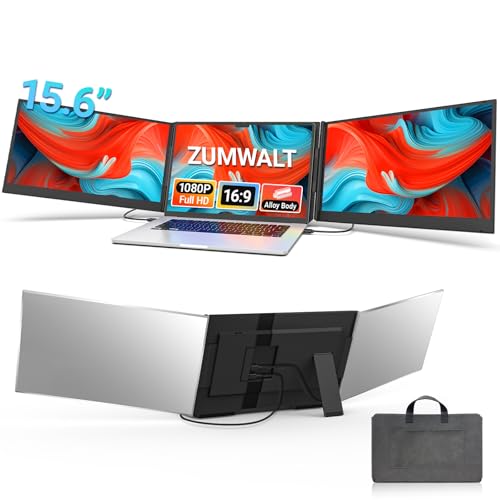
ZUMWALT P7 Triple Portable Monitor 15.6"
Buyers who want triple-screen productivity without paying for 1200P resolution
Our take Check price for ZUMWALT P7 Triple Portable Monitor 15.6" (opens in a new tab)

Best Detachable
Laptop Screen Extender 15.6" Detachable (Slim 0.27")
Buyers who want a detachable extra screen without triple-screen cost or complexity
Our take Check price for Laptop Screen Extender 15.6" Detachable (Slim 0.27") (opens in a new tab)

Best Compact Pick
Cevaton Laptop Screen Extender 15.6" Detachable
Buyers who want detachable flexibility with more standalone battery life
Our take Check price for Cevaton Laptop Screen Extender 15.6" Detachable (opens in a new tab)
Our Picks
Best Overall1 of 4
S12 Triple Portable Monitor 16" 1200P on Amazon (opens in a new tab)
6 inch triple-screen pick in our under $200 guide, without needing to scroll as often.
Best for
- Buyers who want extra vertical workspace and a premium aluminum build
Why we like it
5mm at its thinnest point. The open-frame design requires no clamps or hooks, simply placing your laptop between the two screens, the same clip-free mechanism as the under $200 ZUMWALT pick, and works with just 2 USB-C cables when your laptop has two full-featured Type-C ports.
Best for buyers who specifically want the extra vertical workspace of a 16:10 panel and a premium CNC-aluminum build, and are willing to pay roughly $60 more than the standard 1080P triple-screen option.
Key dimensions & specs
- Dual 16" 1200P IPS, 1920x1200, 16:10 ratio, 350 nits
- CNC aerospace-grade aluminum, 6.5mm thin panels
- Open-frame, clamp-free, works with 2 USB-C cables
Pros
- 1200P resolution and 16:10 ratio show more content than 1080P rivals
- Premium CNC aluminum build with hollow-center cooling design
- No clamps or hooks needed thanks to open-frame design
Cons
- Costs roughly $60 more than the standard 1080P triple-screen pick
- Still needs two full-featured USB-C ports for the simplest setup
Best Value Triple-Screen2 of 4
ZUMWALT P7 Triple Portable Monitor 15.6" on Amazon (opens in a new tab)
6 inch 1080P panels at 280 nits with your laptop, landing $60 below the S12's 1200P pick above while still delivering the core triple-screen productivity boost, extend, mirror, or portrait mode across all three displays.
Best for
- Buyers who want triple-screen productivity without paying for 1200P resolution
Why we like it
Against the pricier S12 pick, this stays at standard 1080P resolution and a conventional 16:9 aspect ratio rather than the taller 16:10 panel, a real difference for vertical workspace, but the tradeoff buys meaningful savings if 1080P sharpness is already enough for your work. It shares the same clip-free, hinge-friendly design and 2-cable USB-C setup as the pricier pick.
Best for buyers who want a genuine triple-screen setup without paying the premium for 1200P resolution and the taller 16:10 aspect ratio.
Key dimensions & specs
- Dual 15.6" FHD 1080P, 280 nits, aluminum shell
- 4 lbs total, includes carrying bag
- 2 USB-C cable setup, clip-free hinge-friendly design
Pros
- Genuine triple-screen setup for $60 less than the 1200P pick
- Same clip-free, hinge-friendly design as the pricier option
- Includes carrying bag and all cables in the box
Cons
- Standard 1080P and 16:9 ratio versus the S12's sharper 1200P 16:10
- MacBook M1/M2/M3 users may need an extra H5-T cable not included
Best Detachable3 of 4
Laptop Screen Extender 15.6" Detachable (Slim 0.27") on Amazon (opens in a new tab)
The genuine detach mechanism lets the screen separate from its mount for standalone use, unlike a fixed clip-on design, giving you real flexibility without the added weight, cable count, or MacBook compatibility caveats that come with a two-panel triple-screen rig.
Best for
- Buyers who want a detachable extra screen without triple-screen cost or complexity
Why we like it
Best for buyers who want one extra detachable screen and would rather save over $100 than add a third display they may not need.
Key dimensions & specs
- 15.6" FHD IPS, 280 nits, 178 degree viewing angle
- 0.27" thin, detachable design
- Single-cable setup, no triple-screen complexity
Pros
- Under half the price of either triple-screen pick in this guide
- detaches for standalone monitor flexibility
- Simpler single-cable setup with no MacBook cable caveats
Cons
- Single extra screen only, not a triple-screen setup
- Standard 1080P resolution, no 1200P option
Best Compact Pick4 of 4
Cevaton Laptop Screen Extender 15.6" Detachable on Amazon (opens in a new tab)
6 inch detachable panel rounds out this comparison as a low-cost alternative for buyers who want detachable flexibility with a larger internal battery reserve than the ultra-thin detachable pick above, useful for standalone use away from a power source.
Best for
- Buyers who want detachable flexibility with more standalone battery life
Why we like it
Against the two triple-screen picks in this guide, Cevaton keeps things simple with a single-panel setup, a real advantage if a two-cable, two-port triple-screen rig feels like more complexity than you need for daily use.
Best for buyers who specifically value a bigger internal battery reserve for standalone detachable use over the thinnest possible profile or a triple-screen setup.
Key dimensions & specs
- 15.6" FHD IPS panel, fully detachable design
- Larger internal battery reserve for standalone use
- Single-panel setup, simpler than triple-screen rigs
Pros
- Bigger internal battery reserve than the ultra-thin detachable pick
- detaches for standalone monitor use
- Simpler setup than either triple-screen pick in this guide
Cons
- Bulkier folded profile than the 0.27 inch detachable alternative
- Only one extra screen, not a triple-screen setup
How We Chose These Laptop Screen Extenders Under $250
Each pick was assessed across 5 criteria weighted for real-world use.
- Compared standard 1080P 16:9 panels against the 1200P 16:10 option, weighing the extra vertical workspace against the roughly $60 price premium.
- Build Material and Thermal Design
- Checked stated build materials, CNC-machined aluminum versus standard aluminum shells, and any airflow or heat dissipation design mentioned in the listing.
- Triple-Screen vs Detachable Single-Panel Value
- Weighed the productivity gain of a genuine triple-screen setup against the cost, weight, and cable complexity versus a simpler detachable single panel.
- Verified which triple-screen listings explicitly disclose extra hardware needs for MacBook M1/M2/M3 users lacking full-featured USB-C ports.
- Assessed whether each step up in price within this $110-250 band buys a new capability, like higher resolution or triple-screen support, rather than incremental branding.
What to Look for in a Laptop Screen Extender Under $250
Key buying criteria so you get the right fit the first time.
A 16:10 Aspect Ratio Shows More Content Than Standard 16:9, Not Just a Bigger Number
Aspect ratio describes the shape of the screen, with 16:9 being the widescreen standard used in most laptops and monitors, while 16:10 is proportionally taller for the same width. This matters concretely because a taller screen shows more rows of a spreadsheet, more lines of code, or more of a long document at once without scrolling, a real productivity difference for detail-heavy work. Check the listing's stated resolution numbers directly, like 1920x1200 for 16:10 versus 1920x1080 for 16:9, rather than assuming a bigger diagonal screen size automatically means a taller ratio.
CNC-Machined Aluminum Isn't Just a Marketing Term
CNC machining is a precision manufacturing process that cuts aluminum from a solid block rather than stamping or casting it, generally producing a more rigid, precisely fitted chassis with better heat dissipation through features like a hollow-center stand design. This matters for a triple-screen rig specifically because the panels run warm during extended use, and better airflow can mean more stable long-term performance. Look for the listing to specifically name the manufacturing process or describe a cooling-focused design, rather than just using the word "aluminum" without further detail, since aluminum shells vary meaningfully in build quality.
The Jump From a Detachable Panel to a Triple-Screen Rig Is a Cost and Complexity Decision, Not Just a Price Tier
Moving from a single detachable panel to a two-panel triple-screen setup roughly doubles your total cost within this price band and requires two full-featured USB-C ports instead of one, plus more weight to carry. This is worth deciding deliberately based on whether you actually need three simultaneous views for your workflow, rather than assuming the pricier option is automatically the better choice, since a $110 detachable panel serves plenty of use cases just as well as a $250 triple-screen rig.
Higher Resolution at the Same Screen Size Means Smaller Text Unless You Scale It
A 1200P panel packs more pixels into roughly the same physical screen size as a 1080P panel, which sharpens text and images but also makes on-screen elements physically smaller unless you adjust your operating system's display scaling settings. First-time buyers sometimes expect a higher resolution number to simply mean a bigger, clearer picture without realizing they may need to adjust scaling afterward to keep text a comfortable reading size, so plan to check your OS display settings after connecting a 1200P extender.
Check Whether the Premium Price Buys a New Capability or Just a Nicer Finish
Within this $110-250 range, some of the price difference between products buys a new capability, like moving from a single screen to a triple-screen setup, or from 1080P to 1200P resolution, while other differences are closer to finish and branding. Before paying a premium, identify specifically which capability the higher price unlocks for your own use case, since a nicer-looking aluminum finish alone isn't worth the same premium as a real resolution or screen-count upgrade if it doesn't change how you'll actually use the product.
How to Choose a Laptop Screen Extender Under $250
| Maximum vertical workspace with 1200P resolution | S12 Triple Portable Monitor 16" 1200P |
|---|---|
| Genuine triple-screen productivity at a lower cost | |
| One extra detachable screen without triple-screen complexity |
1080P 16:9 vs 1200P 16:10
- Standard resolution and aspect ratio, sharp enough for most productivity and media use, at a meaningfully lower price than the 1200P alternative.
- Taller aspect ratio shows more vertical content per screen, useful for coding, spreadsheets, and document-heavy work, for roughly $60 more.
If your work involves long documents, spreadsheets, or code, the extra vertical space of 1200P 16:10 is worth the premium. Otherwise, the 1080P triple-screen pick delivers the same core productivity boost for less.
| Premium CNC-machined aluminum with cooling design | S12 Triple Portable Monitor 16" 1200P |
|---|---|
| Standard aluminum shell at a lower price |
For Coding and Spreadsheet Work Specifically
- A 16:10 or taller aspect ratio and 1200P or higher resolution, since these show more lines of code or spreadsheet rows without scrolling.
- The S12 Triple Portable Monitor 16" 1200P is the clear choice, offering both the taller ratio and sharper resolution over the 1080P triple-screen alternative.
- You do coding, spreadsheet, or document-heavy work where the extra vertical space of the S12 Triple Portable Monitor 16" 1200P improves your workflow.
- 48 saves well over $100 versus either triple-screen pick.
Frequently Asked Questions
Is the extra vertical space from a 16:10 panel actually noticeable in daily use?
Yes, for spreadsheet, coding, or document work specifically, the extra vertical pixels of a 16:10 panel like the S12's 1920x1200 resolution let you see more rows or lines without scrolling, a difference most users notice within the first day of use. For video or general browsing, the difference is less significant.
Do I need to adjust display scaling after connecting a 1200P extender?
Possibly, since higher resolution at a similar screen size can make text and icons appear smaller by default. Check your operating system's display settings after connecting and adjust the scaling percentage until text is a comfortable reading size, this typically takes under a minute.
Is the S12's 1200P triple-screen pick worth $60 more than the standard 1080P ZUMWALT pick?
If your work involves spreadsheets, code, or long documents where extra vertical space helps, yes. If you mainly use the extra screens for video calls, browsing, or reference material, the standard 1080P ZUMWALT pick delivers the same core triple-screen benefit for less.
How do I know if my laptop's aluminum triple-screen extender needs extra cooling consideration?
Check the listing for specific cooling-related design features like a hollow-center stand or ventilation description, generally mentioned directly in the product's feature bullets. If extended heavy use is a concern, a listing describing a specific thermal design, like the S12's hollow-center stand, is a stronger signal than a generic "premium aluminum" claim alone.
Can I upgrade from a detachable single-panel extender to a triple-screen setup later?
Not directly, since triple-screen kits are sold and mounted as a matched pair with their own specific hardware, and a standalone detachable panel from a different product generally won't integrate with a triple-screen mounting system. If you anticipate needing three screens eventually, it's more practical to buy a dedicated triple-screen kit from the start.
Does a CNC-machined aluminum build actually make the extender more durable day to day?
Generally yes, a CNC-machined chassis tends to have tighter tolerances and more rigidity than a stamped or cast aluminum shell, which can translate to less flex and creak over months of folding, unfolding, and transport. That said, both approaches use the same base material, so the practical durability difference is moderate rather than dramatic.
Bottom Line
Best overall: S12 Triple Portable Monitor 16" 1200P — best overall pick in this roundup. See the full verdicts above for every pick, with pros, cons and who each one suits.
Browse all laptop screen extenders under $250 on Amazon — Prime-eligible options with current pricing.