
Buying Guide
The Best Interactive Whiteboards With Projector, Compared
We looked at 5 interactive whiteboards with projector side by side, with the trade-offs that separate them and who each one suits.
By Jamie Cole, Lead Product Researcher
7 min read5 products evaluated
We may earn a commission from purchases made through links in this guide. Learn more.
Projector-based interactive systems can create larger interactive areas than common flat panels, but performance depends heavily on surface quality, ambient light control, and mounting stability in ways flat panels simply don't.
We published total usable interactive area for each system, evaluated ambient-light and shadowing behavior, and measured calibration stability expectations after the projector or sensor is moved or serviced.
Quick Picks
Our 5 recommendations at a glance. Tap a pick for the full verdict.

Best Auto-Calibration Sensor System
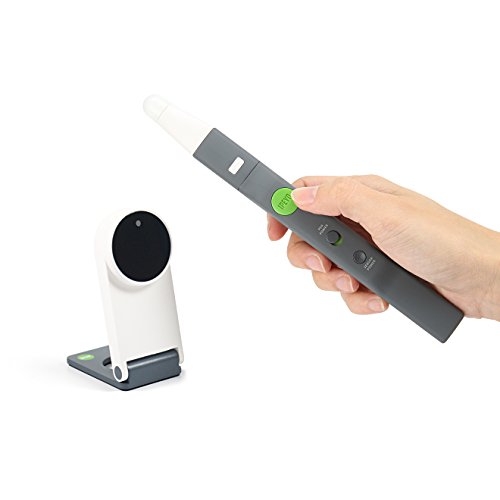
Portable Interactive Whiteboard Sensor System
Buyers prioritizing portable sensor + pen system, up to 90in surface
Our take Check price for Portable Interactive Whiteboard Sensor System (opens in a new tab)
Best Simple Portable Option
IPEVO IW2 Wireless Interactive Whiteboard System
Buyers prioritizing portable pen-based conversion system
Our take Check price for IPEVO IW2 Wireless Interactive Whiteboard System (opens in a new tab)

Best Epson BrightLink Projector
Epson BrightLink 725Wi Projector
Buyers prioritizing ultra-short-throw 3lcd, 4000 lumens
Our take Check price for Epson BrightLink 725Wi Projector (opens in a new tab)

Best Multi-User Epson Projector
Epson BrightLink 695Wi Projector
Buyers prioritizing ultra-short-throw, 3500 lumens
Our take Check price for Epson BrightLink 695Wi Projector (opens in a new tab)

Best Flat-Panel Alternative
75in 4K Dual OS Interactive Smart Whiteboard
Buyers prioritizing 75in 4k, dual android + windows os
Our take Check price for 75in 4K Dual OS Interactive Smart Whiteboard (opens in a new tab)
Our Picks
Best Auto-Calibration Sensor System1 of 5
Portable Interactive Whiteboard Sensor System on Amazon (opens in a new tab)
This portable system connects to a computer via USB and a projector via HDMI/VGA, turning nearly any wall or projection surface into an interactive whiteboard, compatible across Windows XP through Windows 11 for broad legacy compatibility.
Best for
- Buyers prioritizing portable sensor + pen system, up to 90in surface
Why we like it
A 360-degree adjustable design plus automatic calibration means setup after moving rooms is fast without manual recalibration steps, and the high-precision smart pen supports multiple simultaneous users writing on surfaces up to 90 inches.
Key dimensions & specs
- Portable sensor + pen system, up to 90in surface
- Automatic calibration
- USB to computer, HDMI/VGA to projector
Pros
- Automatic calibration eliminates manual setup after moving rooms
- Supports large surfaces up to 90 inches
- Compact and easy to carry between rooms
Cons
- Requires a separate projector and compatible surface
- Multi-user writing depends on strong light control
Best Simple Portable Option2 of 5
IPEVO IW2 Wireless Interactive Whiteboard System on Amazon (opens in a new tab)
The IPEVO IW2 turns any flat surface into an interactive whiteboard using an included Interactive Pen with no Wi-Fi required, at a fraction of the price of a fixed flat-panel system, portable conversion hardware rather than an all-in-one display.
Best for
- Buyers prioritizing portable pen-based conversion system
Why we like it
Free IPEVO Annotator software handles drawing and annotation for remote teaching, and the pen doubles as a mouse-cursor remote for online conferencing, letting you sketch and share ideas through any video conferencing software while collaborating across distance.
Key dimensions & specs
- Portable pen-based conversion system
- No Wi-Fi required
- Free IPEVO Annotator software included
Pros
- Hundreds of dollars cheaper than a fixed flat-panel system
- No Wi-Fi dependency, offline-capable
- Lightweight and portable for room-to-room use
Cons
- Requires an existing flat surface and separate display/projector
- Lower interactive area precision than a dedicated flat panel
Best Epson BrightLink Projector3 of 5
Epson BrightLink 725Wi Projector on Amazon (opens in a new tab)
The BrightLink 725Wi is an ultra-short-throw 3LCD projector at 4000 lumens brightness, using genuine 3LCD technology rather than DLP for uncompromising color accuracy, projecting a widescreen WXGA image in nearly any room setting.
Best for
- Buyers prioritizing ultra-short-throw 3lcd, 4000 lumens
Why we like it
PC-free projection via USB port means presentations can run without a connected laptop, and the HDMI interface handles both video and audio in a single cable, positioning this as projector-interactive hardware rather than an all-in-one flat panel.
Key dimensions & specs
- Ultra-short-throw 3LCD, 4000 lumens
- WXGA widescreen
- PC-free USB projection
Pros
- Genuine 3LCD technology for accurate color reproduction
- PC-free projection via USB port
- Ultra-short-throw design minimizes shadow interference
Cons
- Projector-based, requires compatible interactive surface separately
- WXGA resolution below 4K panel alternatives
Best Multi-User Epson Projector4 of 5
Epson BrightLink 695Wi Projector on Amazon (opens in a new tab)
The BrightLink 695Wi supports up to 6 simultaneous users drawing, sharing, and collaborating with pen- and touch-based interactivity, a multi-user projector system rather than single-presenter hardware.
Best for
- Buyers prioritizing ultra-short-throw, 3500 lumens
Why we like it
At 3500 lumens brightness and an ultra-short-throw design, it produces a 100-inch image from as little as 11 inches away with virtually no shadow interference, and wireless content sharing lets mobile devices join the big screen for individualized learning.
Key dimensions & specs
- Ultra-short-throw, 3500 lumens
- 6-user pen/touch interactivity
- 100in image from 11in throw distance
Pros
- Supports up to 6 simultaneous users, multi-user
- 11-inch throw distance virtually eliminates shadow interference
- Long-life lamp reduces replacement frequency
Cons
- Older projector-based architecture versus newer flat panels
- Requires a compatible projection surface
Best Flat-Panel Alternative5 of 5
75in 4K Dual OS Interactive Smart Whiteboard on Amazon (opens in a new tab)
This 75-inch board runs both Android and Windows in a genuine dual-system design, letting buyers switch between platforms to suit education, business, or entertainment needs without separate hardware, backed by 8GB RAM and 128GB storage.
Best for
- Buyers prioritizing 75in 4k, dual android + windows os
Why we like it
Multi-screen split display supports up to 4 devices simultaneously for comparing lesson materials or team brainstorming, and smart touch recognition supports over 20 languages with scan-to-save and one-click sharing for a streamlined workflow.
Key dimensions & specs
- 75in 4K, dual Android + Windows OS
- 4-device split screen
- 20+ language touch recognition
Pros
- Genuine dual Android/Windows OS switching without separate hardware
- 4-device simultaneous split-screen display
- Wide 20+ language smart touch recognition support
Cons
- Dual-OS complexity adds a learning curve for new users
- Windows performance depends on the embedded OPS module specs
How We Chose These Interactive Whiteboards With Projector
Each pick was assessed across 5 criteria weighted for real-world use.
- Classified each product as a flat-panel display, projector-based interactive system, or portable conversion hardware, since these serve fundamentally different room setups and budgets.
- Checked documented touch-point count, simultaneous-writer capacity, response latency, and touch technology (infrared, PCAP, or sensor-bar) rather than assuming higher touch-point numbers always mean a better writing experience.
- OS, EDLA & Software Lifecycle
- Verified whether each board has genuine Google EDLA certification, which Android or Windows generation it runs, and whether an OPS slot requires a separately purchased module for full functionality.
- Tested claims around wireless casting device limits, touch-back control, video conferencing platform compatibility (Zoom, Teams, Meet, Webex), and camera/microphone hardware quality where documented.
- Weighed panel weight, included wall mount versus separately sold stands, warranty length, and after-sales support commitments against the realistic deployment cost.
What to Look for in an Interactive Whiteboard With Projector
Key buying criteria so you get the right fit the first time.
Separate flat panels, projectors, and portable systems
An interactive whiteboard can mean an all-in-one 4K flat panel, a projector paired with a sensor, or a portable conversion bar that turns any surface interactive. These solve different problems at very different price points, know which category you actually need before comparing specs.
Touch-point count is not simultaneous writing capacity
A board advertising 20-point touch does not mean 20 people can write clean, independent lines at once, some of those points cover palm rejection and gesture recognition. Check the manufacturer's stated simultaneous-writer number specifically, not just the raw touch-point spec.
EDLA certification means something specific
Google EDLA (Enterprise Device Licensing Agreement) certification guarantees stable Google Play Store, Workspace, and Google Education Suite access with regular OTA security updates. A board merely running Android without EDLA certification may lose app-store access or updates over time.
OPS slots need a separately purchased module
Many boards advertise an OPS (Open Pluggable Specification) expansion slot for adding Windows compatibility, but the actual Windows OPS computer module is almost always sold separately and can cost as much as a mid-range laptop. Budget for it if Windows software is a real requirement.
Wireless casting and wireless touch-back are different features
Casting lets a phone or laptop screen display on the board. Touch-back control lets you operate that connected device's cursor directly from the board's touchscreen. Confirm which one a specific product actually supports before assuming both are included.
Mounting weight and wall structure matter as much as specs
A 75-inch or larger panel commonly weighs 80-150+ pounds. Confirm VESA mount compatibility and that your wall studs or mounting surface can support that load safely, professional installation is often worth the cost at this size.
How to Choose an Interactive Whiteboard With Projector
Projector-based interactive systems perform noticeably worse in bright, sunlit rooms than sealed flat-panel displays. If your room has large uncovered windows, factor in blackout curtains or blinds, or consider a flat panel instead.
Frequently Asked Questions
How often does a projector-based interactive whiteboard need recalibration?
Systems with automatic calibration typically only need recalibration after physically moving the projector or sensor, taking under a minute. Manual-calibration systems may need periodic touch-ups even without moving, especially if the projector shifts slightly over time.
Can a projector-based system create a larger interactive area than a flat panel?
Systems like Mimio Interactive can create an interactive area up to 8 feet by 4 feet (107-inch diagonal), larger than most affordable flat panels, at a lower hardware cost since it reuses an existing wall or whiteboard surface.
What does Google EDLA certification actually guarantee?
EDLA (Enterprise Device Licensing Agreement) certification means Google has verified the device for stable, ongoing access to the Google Play Store, Google Workspace, and Google Education Suite, plus regular over-the-air security updates. A board that just runs Android without EDLA certification can lose app-store access or stop receiving updates over time.
Does a higher touch-point count always mean a better writing experience?
Touch-point count measures how many contact points the sensor can track, but the number of people who can write clean, independent lines simultaneously is usually lower and separately documented by the manufacturer. Check the stated simultaneous-writer number, not just the raw touch-point spec, before assuming a 60-point board beats a 20-point one for group use.
Do I need to buy anything extra to run Windows on a board with an OPS slot?
Yes, in almost every case. An OPS (Open Pluggable Specification) slot is just an expansion bay, the actual Windows computer module that plugs into it is sold separately and can cost as much as a mid-range laptop. Confirm the OPS module price before assuming Windows compatibility is included in the board's sticker price.
Bottom Line
Best overall: Portable Interactive Whiteboard Sensor System — best auto-calibration sensor system pick in this roundup. See the full verdicts above for every pick, with pros, cons and who each one suits.
Browse all interactive whiteboards with projector on Amazon — Prime-eligible options with current pricing.