
Buying Guide
The Best 144Hz Portable Monitors for a Better Desk Setup
We looked at 7 144Hz portable monitors side by side, with the trade-offs that separate them and who each one suits.
By Jamie Cole, Lead Product Researcher
9 min read7 products evaluated
We may earn a commission from purchases made through links in this guide. Learn more.
A monitor's panel can be rated 144Hz while the actual link delivered by your source device caps at 60Hz. 144Hz over USB-C requires DisplayPort Alt Mode with sufficient bandwidth, not just a spec sheet number, and several picks below only hit 144Hz over USB-C while their HDMI port is limited to 120Hz, a distinction worth knowing before you cable up a console.
Also worth knowing: handheld gaming PCs like Steam Deck and ROG Ally typically output capped at 60Hz over USB-C regardless of the monitor's rated refresh, making a 144Hz panel spec irrelevant for that specific pairing.
Quick Picks
Our 7 recommendations at a glance. Tap a pick for the full verdict.
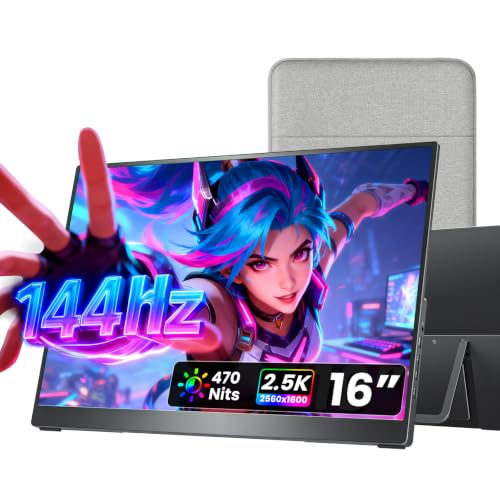
Best Overall 144Hz Pick
cocopar Portable Monitor 16 Inch 2.5K QHD 110% sRGB 144Hz USB-C, 120Hz HDMI
Buyers who want an honest per-port 144Hz/120Hz spec rather than an inflated single number
Our take Check price for cocopar Portable Monitor 16 Inch 2.5K QHD 110% sRGB 144Hz USB-C, 120Hz HDMI (opens in a new tab)

Best Brightness at 144Hz
VisionOwl Portable Monitor 16 Inch 2.5K QHD 144Hz, 470 Nits
Buyers who want the brightest 144Hz screen for gaming in well-lit rooms
Our take Check price for VisionOwl Portable Monitor 16 Inch 2.5K QHD 144Hz, 470 Nits (opens in a new tab)
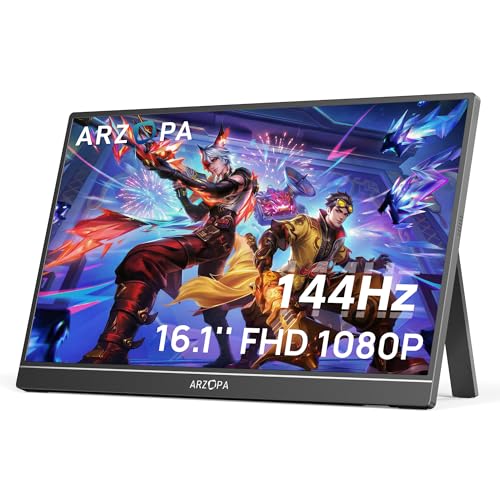
Best Budget 144Hz Pick
ARZOPA 16.1'' 144Hz Portable Gaming Monitor, 106% sRGB
Budget-focused buyers who want a straightforward 1080p/144Hz guarantee across both port types
Our take Check price for ARZOPA 16.1'' 144Hz Portable Gaming Monitor, 106% sRGB (opens in a new tab)

Best Wide Color Gamut at 144Hz
Upperizon Portable Monitor 16 inch 2K QHD 145% sRGB, 144Hz USB-C, 120Hz HDMI
Buyers who split time between 144Hz gaming and color-sensitive creative work
Our take Check price for Upperizon Portable Monitor 16 inch 2K QHD 145% sRGB, 144Hz USB-C, 120Hz HDMI (opens in a new tab)

Best 30W Adapter Included
Upperizon Portable Monitor 16 inch 2K QHD 106% sRGB, 144Hz USB-C, 120Hz HDMI
Buyers who want their own dedicated power adapter included rather than relying on a laptop charger
Our take Check price for Upperizon Portable Monitor 16 inch 2K QHD 106% sRGB, 144Hz USB-C, 120Hz HDMI (opens in a new tab)
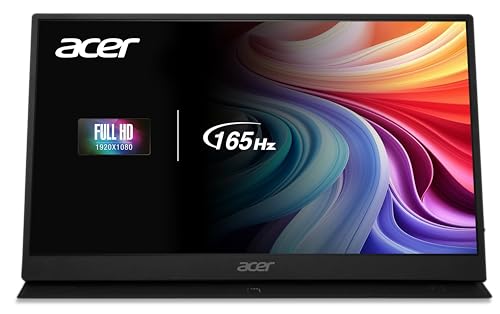
Widest Adaptive Sync Support
acer Nitro Portable Gaming Monitor 15.6" FHD 165Hz AMD FreeSync
Buyers with an AMD GPU who want genuine FreeSync certification at 144Hz+
Our take Check price for acer Nitro Portable Gaming Monitor 15.6" FHD 165Hz AMD FreeSync (opens in a new tab)

Highest Headroom Above 144Hz
ARZOPA 16.1'' 180Hz 2.5K Portable Monitor, 2560x1440 QHD
PC gamers with capable GPUs who want headroom above the 144Hz tier
Our take Check price for ARZOPA 16.1'' 180Hz 2.5K Portable Monitor, 2560x1440 QHD (opens in a new tab)
Our Picks
Best Overall 144Hz Pick1 of 7
cocopar Portable Monitor 16 Inch 2.5K QHD 110% sRGB 144Hz USB-C, 120Hz HDMI on Amazon (opens in a new tab)
This is one of the few listings in this guide that discloses per-port refresh honestly: 144Hz over USB-C, 120Hz over HDMI, a useful distinction since many competing listings quote only the higher USB-C number without clarifying the HDMI ceiling.
Best for
- Buyers who want an honest per-port 144Hz/120Hz spec rather than an inflated single number
Why we like it
At 2560x1600, this is comfortably within USB-C DisplayPort Alt Mode bandwidth for 144Hz without needing Display Stream Compression.
5K QHD 144Hz for one main reason. Honest, explicit per-port refresh rate disclosure. 5K QHD 144Hz, which is worth weighing if cost is your deciding factor between the two.
5K resolution stays within USB-C bandwidth for full 144Hz. On the other side, Higher price than 1080p-only 144Hz picks.
Key dimensions & specs
- 16-inch 2.5K QHD, 144Hz USB-C / 120Hz HDMI
- 110% SRGB, metal chassis
- Full-size HDMI + dual USB-C
- Dual VESA holes
Pros
- Honest, explicit per-port refresh rate disclosure
- 2.5K resolution stays within USB-C bandwidth for full 144Hz
- Full-size HDMI
- Metal build quality
Cons
- Only 120Hz over HDMI, not the full 144Hz
- Response time (GtG) not explicitly disclosed
- Higher price than 1080p-only 144Hz picks
Best Brightness at 144Hz2 of 7
VisionOwl Portable Monitor 16 Inch 2.5K QHD 144Hz, 470 Nits on Amazon (opens in a new tab)
At 470 nits, this is the brightest 144Hz-rated panel in this guide, useful if you're gaming near a window.
Best for
- Buyers who want the brightest 144Hz screen for gaming in well-lit rooms
Why we like it
Same 2560x1600 resolution as the top pick, comfortably within USB-C bandwidth for full 144Hz without DSC.
5K QHD 110% SRGB 144Hz USB-C.
5K resolution within USB-C bandwidth for full rate. On the other side, Pricier than budget 1080p 144Hz picks.
Key dimensions & specs
- 16-inch 2.5K QHD, 144Hz, 470 nits
- 110% SRGB, metal chassis
- Full-size HDMI + dual USB-C
- Dual VESA holes
Pros
- Brightest 144Hz panel in this guide
- 2.5K resolution within USB-C bandwidth for full rate
- Full accessory kit included
- Full-size HDMI
Cons
- Source device must support 144Hz for the spec to matter
- Response time not explicitly disclosed
- Pricier than budget 1080p 144Hz picks
Best Budget 144Hz Pick3 of 7
ARZOPA 16.1'' 144Hz Portable Gaming Monitor, 106% sRGB on Amazon (opens in a new tab)
5K picks above where the HDMI port drops to 120Hz.
Best for
- Budget-focused buyers who want a straightforward 1080p/144Hz guarantee across both port types
Why we like it
This is the more straightforward 144Hz guarantee across ports in this guide, provided your source device itself can output 144Hz.
Key dimensions & specs
- 16.1-inch 144Hz, 1080P FHD, 106% SRGB
- 2x USB-C + mini-HDMI
- Built-in kickstand
- No adaptive sync listed
Pros
- 1080p keeps 144Hz achievable over both USB-C and HDMI
- Budget price for a 144Hz panel
- Built-in kickstand
- Solid rating
Cons
- Mini-HDMI requires an adapter cable
- No adaptive sync/FreeSync listed
- Lower resolution than the 2.5K picks
Best Wide Color Gamut at 144Hz4 of 7
Upperizon Portable Monitor 16 inch 2K QHD 145% sRGB, 144Hz USB-C, 120Hz HDMI on Amazon (opens in a new tab)
This 145% SRGB (100% DCI-P3) claim is the widest gamut among the 144Hz picks in this guide, useful if you split time between gaming and color-sensitive creative work.
Best for
- Buyers who split time between 144Hz gaming and color-sensitive creative work
Why we like it
Same honest 144Hz-USB-C/120Hz-HDMI split as the top pick.
1'' 144Hz Portable Gaming Monitor.
On the other side, Pricier than the ARZOPA budget pick.
Key dimensions & specs
- 16-inch 2K QHD, 145% SRGB / 100% DCI-P3
- 144Hz USB-C / 120Hz HDMI
- Aluminum chassis, VESA compatible
- 1.6 lb
Pros
- Widest color gamut of the 144Hz picks here
- Honest per-port refresh rate disclosure
- Aluminum build with VESA mount
- Full accessory kit included
Cons
- Still only 120Hz over HDMI
- Pricier than the ARZOPA budget pick
Best 30W Adapter Included5 of 7
Upperizon Portable Monitor 16 inch 2K QHD 106% sRGB, 144Hz USB-C, 120Hz HDMI on Amazon (opens in a new tab)
A close sibling to the rank-4 pick at a lower price and slightly narrower 106% SRGB gamut.
Best for
- Buyers who want their own dedicated power adapter included rather than relying on a laptop charger
Why we like it
Includes a 30W PD adapter in the box, useful if your laptop's own charger is on the lighter side and you'd rather not share power budget with the display.
On the other side, Still only 120Hz over HDMI.
Key dimensions & specs
- 16-inch 2K QHD, 106% SRGB
- 144Hz USB-C / 120Hz HDMI
- 75x75mm VESA + smart cover
- Includes 30W PD adapter
Pros
- Includes its own 30W power adapter
- Honest per-port refresh rate spec
- VESA compatible
- Lower price than the wider-gamut sibling
Cons
- 106% SRGB narrower than the DCI-P3 sibling pick
- Still only 120Hz over HDMI
Widest Adaptive Sync Support6 of 7
acer Nitro Portable Gaming Monitor 15.6" FHD 165Hz AMD FreeSync on Amazon (opens in a new tab)
Technically rated 165Hz, this Acer panel is included here because it comfortably covers the 144Hz tier too, and it's the only pick in this guide with genuine AMD FreeSync certification, a real benefit if your source GPU is AMD-based.
Best for
- Buyers with an AMD GPU who want genuine FreeSync certification at 144Hz+
Why we like it
At 1080p, bandwidth isn't a concern at either 144Hz or 165Hz.
On the other side, 6ms GtG is slower than dedicated esports monitors.
Key dimensions & specs
- 15.6-inch FHD, 165Hz, AMD FreeSync
- 2x USB-C + 2x Mini HDMI
- 75x75mm VESA, zero-frame design
- 6ms GtG response time
Pros
- Genuine AMD FreeSync certification, rare in this guide
- Established Acer brand reputation
- 1080p keeps both 144Hz and 165Hz easily achievable
- Explicit 6ms response time disclosed
Cons
- Very small review count on this listing
- Mini HDMI only
- 6ms GtG is slower than dedicated esports monitors
Highest Headroom Above 144Hz7 of 7
ARZOPA 16.1'' 180Hz 2.5K Portable Monitor, 2560x1440 QHD on Amazon (opens in a new tab)
Rated above 144Hz at 180Hz, this panel gives headroom if your PC GPU can actually sustain frame rates that high, though remember the jump from 144Hz to 180Hz is imperceptible unless your source consistently renders well above 144fps.
Best for
- PC gamers with capable GPUs who want headroom above the 144Hz tier
Why we like it
Mini-HDMI here, requiring an adapter cable for console/older-device use.
6" FHD 165Hz AMD FreeSync. The real tradeoff against that pick: 144-to-180Hz jump is imperceptible without a source sustaining 150+fps.
Key dimensions & specs
- 16.1-inch 180Hz, 2.5K QHD, 107% SRGB
- 2x USB-C + mini-HDMI
- Built-in kickstand
- HDR support
Pros
- Headroom above 144Hz if your GPU can use it
- Sharp 2.5K resolution
- Built-in kickstand
- HDR mode
Cons
- 144-to-180Hz jump is imperceptible without a source sustaining 150+fps
- Mini-HDMI only
How We Chose These 144Hz Portable Monitors
Each pick was assessed across 3 criteria weighted for real-world use.
- Checked whether each listing discloses separate USB-C and HDMI refresh rate ceilings, since many panels hit 144Hz only over USB-C while capping at 120Hz over HDMI.
- Bandwidth reality at the stated resolution
- Confirmed whether 144Hz at the panel's resolution fits within standard USB-C DisplayPort Alt Mode bandwidth without requiring Display Stream Compression (DSC).
- Noted that handheld gaming PCs like Steam Deck and ROG Ally typically cap at 60Hz over USB-C, making a 144Hz panel spec irrelevant for that specific source.
What to Look for in a 144Hz Portable Monitor
Key buying criteria so you get the right fit the first time.
Check the refresh rate ceiling for each port separately, not just the headline spec
0's bandwidth can't sustain the same data throughput as USB-C at higher resolutions.
This is a common source of buyer disappointment: someone buys a monitor rated 144Hz specifically to pair with a game console over HDMI, only to discover the HDMI port caps at 120Hz or even 60Hz on that specific model, a distinction the headline spec doesn't disclose.
Check the listing specifically for per-port refresh rate figures (USB-C rate versus HDMI rate stated separately), and match the port you'll actually use to the rate you actually need, not the single highest number in the title.
Confirm your specific source device can actually output above 60Hz before paying extra for a high refresh panel
A monitor's refresh rate capability is meaningless if the connected source device can't output a signal above 60Hz in the first place, and this is a common mismatch: many laptop USB-C ports are data-only or video-limited to 60Hz regardless of Thunderbolt or USB4 branding, and handheld gaming PCs like Steam Deck and ROG Ally specifically output capped at 60Hz over USB-C in their current hardware generation, making a 144Hz-rated monitor's extra capability completely unused for that pairing despite the higher price paid for it.
Before buying specifically for the refresh rate, check your exact source device's documented maximum output refresh rate over the connection type you'll actually use (not just its general spec sheet), since a monitor's rated capability and your source device's actual output are two entirely separate specifications that both need to support the higher rate.
Understand that response time (GtG) affects visible motion clarity as much as refresh rate does
Refresh rate (how many times per second the image updates) and response time (how quickly individual pixels can change color, commonly measured in milliseconds as gray-to-gray or GtG) are two separate specs that both affect how smooth and clear fast motion looks, and a high refresh rate paired with a slow response time still produces visible ghosting or blur trailing behind fast-moving objects, since the panel can't physically change pixel colors fast enough to keep up with the higher refresh rate's demands.
This matters because response time is disclosed far less consistently than refresh rate across portable monitor listings, many simply omit it entirely, making direct comparison difficult even when two panels share the same headline refresh number.
Check specifically for a stated GtG response time in milliseconds, and treat a high refresh rate spec with some skepticism if the listing doesn't also disclose response time, since the refresh number alone doesn't guarantee smooth-looking motion.
Check power delivery and cable requirements, since a portable monitor's convenience depends on how it's actually powered
Portable monitors typically draw power either through the same USB-C cable carrying the video signal (single-cable operation, the more convenient setup) or through a separate dedicated power input, and some models support pass-through charging that lets your laptop's own charger power both the laptop and the monitor simultaneously through one connection.
This matters concretely for actual portability: a monitor requiring two separate cables (one for video, one for power) is meaningfully less convenient to set up and pack away than genuine single-cable operation, undermining part of the appeal of a "portable" monitor in the first place.
Check specifically whether the monitor supports single-cable USB-C operation with your source device, and confirm pass-through charging wattage if you want your laptop's charger to power both devices without needing two outlets.
Weigh review volume against star rating, since this category includes both established models and many newer, similar-looking entrants
Portable monitors from well-established sellers with years of accumulated sales carry review counts in the thousands, giving genuine statistical confidence in panel quality and long-term reliability, while newer listings, sometimes from the same manufacturer under a different model number or from less established brands entirely, can carry only a handful of reviews despite looking similarly specified and priced.
When comparing two similarly specified and priced portable monitors, check both the star rating and the review count together, and treat a very small review count as a reason for extra caution even if the rating itself looks strong.
How to Choose a 144Hz Portable Monitor
By Rating Confidence: Highest Rated vs Most Reviewed
| Recommended pick in this comparison | |
|---|---|
| 5K QHD 110% SRGB 144Hz USB-C | |
| 5K QHD 110% SRGB 144Hz USB-C |
| 1'' 144Hz Portable Gaming Monitor | |
| Upperizon Portable Monitor 16 inch 2K QHD 106% SRGB | |
| No firm budget ceiling, prioritizing panel quality or resolution |
USB-C DisplayPort Alt Mode vs HDMI
- Usually the port that hits the panel's full rated refresh rate, and can carry power alongside video on one cable. In this comparison: check each listing's stated USB-C refresh rate directly.
- Reliable for consoles and older sources, but often capped below the panel's full rated refresh, especially at higher resolutions. 5K QHD 110% SRGB 144Hz USB-C, Upperizon Portable Monitor 16 inch 2K QHD 145% SRGB, Upperizon Portable Monitor 16 inch 2K QHD 106% SRGB.
If you're connecting a console or HDMI-only source specifically, verify the actual HDMI refresh ceiling on your chosen pick, since several picks here cap lower over HDMI than their headline spec suggests.
| Want a permanent mounted setup | 5K QHD 110% SRGB 144Hz USB-C |
|---|---|
| Prefer the included kickstand or case | 1'' 144Hz Portable Gaming Monitor |
For a Handheld Gaming PC or Console Specifically
- Your exact source device's documented maximum output refresh rate over the connection type you'll use, checked independently from the monitor's own rated capability, since handhelds like Steam Deck and ROG Ally commonly cap at 60Hz over USB-C.
- 5K QHD 144Hz fits this specifically: Brightest 144Hz panel in this guide.
- 5K QHD 144Hz offers: Brightest 144Hz panel in this guide. That's a real functional upgrade over the budget picks here, not just a brand markup.
- 1'' 144Hz Portable Gaming Monitor already covers the essentials: 1080p keeps 144Hz achievable over both USB-C and HDMI. The main thing you'd be paying extra for elsewhere in this list is headroom you may not actually use.
Frequently Asked Questions
Will I get 144Hz if I connect this monitor to my PS5 or Xbox over HDMI?
Not on most picks in this guide. 5K panels here cap at 120Hz over HDMI, only reaching the full 144Hz over USB-C from a compatible laptop source.
Does my laptop need a special port to get 144Hz over USB-C?
Yes, your laptop's USB-C port needs to support Thunderbolt 3/4 or DisplayPort Alt Mode with sufficient bandwidth. Many laptop USB-C ports are data-only and won't output video at all, let alone at 144Hz.
Is a 144Hz portable monitor worth it for a Steam Deck or ROG Ally?
Generally not for the refresh rate specifically. Handheld gaming PCs typically output capped at 60Hz over USB-C, making a 144Hz panel's extra spec unused for that pairing.
5K if I want guaranteed 144Hz everywhere?
1080p is the safer bet. 5K panels often cap at 120Hz over HDMI specifically.
Bottom Line
Best overall: cocopar Portable Monitor 16 Inch 2.5K QHD 110% sRGB 144Hz USB-C, 120Hz HDMI — best overall 144hz pick pick in this roundup. See the full verdicts above for every pick, with pros, cons and who each one suits.
Browse all 144hz portable monitors on Amazon — Prime-eligible options with current pricing.